Here’s something I saw when walking the dog: An elegant weapon, for a more civilized age.

Here’s something I saw when walking the dog: An elegant weapon, for a more civilized age.

An in-depth longread by Derek Thompson at The Atlantic.
This solitude epidemic is not the same as loneliness. Despite public statements to the contrary, we’re not in the middle of a loneliness epidemic. We’re just choosing to be alone, Thompson notes:
… compared with 2003, Americans are more likely to take meetings from home, to shop from home, to be entertained at home, to eat at home, and even to worship at home. Practically the entire economy has reoriented itself to allow Americans to stay within their four walls. This phenomenon cannot be reduced to remote work. It is something far more totalizing—something more like “remote life.”
…
the cardinal rule of contemporary apartment design is that every room is built to accommodate maximal screen time.
…
Despite a consumer economy that seems optimized for introverted behavior, we would have happier days, years, and lives if we resisted the undertow of the convenience curse—if we talked with more strangers, belonged to more groups, and left the house for more activities.
Social media and other screen time means we’re never truly alone, which is part of the problem. We don’t get time to recharge.
But Thompson ends on a hopeful note. He quotes political scientist Robert D. Putnam, author of the seminal 2000 book Bowling Alone:
” I have a view that is uncommon among social scientists, which is that moral revolutions are real and they change our culture," Robert Putnam told me. In the early 20th century, a group of liberal Christians, including the pastor Walter Rauschenbusch, urged other Christians to expand their faith from a narrow concern for personal salvation to a public concern for justice. Their movement, which became known as the Social Gospel, was instrumental in passing major political reforms, such as the abolition of child labor. It also encouraged a more communitarian approach to American life, which manifested in an array of entirely secular congregations that met in union halls and community centers and dining rooms. All of this came out of a particular alchemy of writing and thinking and organizing. No one can say precisely how to change a nation’s moral-emotional atmosphere, but what’s certain is that atmospheres do change. Our smallest actions create norms. Our norms create values. Our values drive behavior. And our behaviors cascade.
The anti-social century is the result of one such cascade, of chosen solitude, accelerated by digital-world progress and physical-world regress. But if one cascade brought us into an anti-social century, another can bring about a social century. New norms are possible; they’re being created all the time. Independent bookstores are booming–the American Booksellers Association has reported more than 50 percent growth since 2009–and in cities such as New York City and Washington, D.C., many of them have become miniature theaters, with regular standing-room-only crowds gathered for author readings. More districts and states are banning smartphones in schools, a national experiment that could, optimistically, improve children’s focus and their physical-world relationships. In the past few years, board-game cafés have flowered across the country, and their business is expected to nearly double by 2030. These cafés buck an 80-year trend. Instead of turning a previously social form of entertainment into a private one, they turn a living-room pastime into a destination activity. As sweeping as the social revolution I’ve described might seem, it’s built from the ground up by institutions and decisions that are profoundly within our control: as humble as a café, as small as a new phone locker at school.
Since last year, I have been making more of an effort to get out into the community, in my own introverted, nerdy socially maladroit way. I’ve joined the Masons and rejoined the board of the La Mesa-Foothills Democratic Club. Also, inspired by this whimsical Tumblr post, I’ve started a personal calendar of local community events that it might be fun to go to. All of this is a start.
James Marriott at the Times of London:
The technocratic, good-mannered, optimistic and consensual politics we grew up with and which have prevailed in the West since the Second World War is not a normality to which we will inevitably return, but a part of history.
So far this new era seems to be marked by rejection of tolerance, reading and science in favor of bigotry, illiteracy and superstition. Life expectancy is actually declining.
I remain hopeful that this trend will change course yet again and we’ll move forward into a world that’s even better than the 20th Century. But that’s not the direction trend lines are now going.
I’m pleased to back the Kickstarter for Cory Doctorow’s latest novel, Picks and Shovels, the return (and also debut!) of two-fisted accountant Marty Hench.
Dr. Daniela J. Lamas at The New York Times:
A provocative large study published last year in The New England Journal of Medicine suggests that at least one in four people who appear unresponsive actually are conscious enough to understand language. As a doctor who sometimes sees patients like this, these findings are, in a word, terrifying.
Studies like this raise the possibility that there are tens of thousands of men and women locked inside their own minds, isolated to a degree I cannot even imagine. They are voiceless and largely invisible, with some of them being cared for in nursing facilities.
It’s good to see the Justice Department formally recognize the 1921 Tulsa Massacre, in which 300 Black residents were killed, as a “coordinated, military-style attack,” but disappointing that the finding only comes after the murderers responsible for the attacks can be brought to justice.
Just finished the 10-day trial of 2025 and I’ve decided not to subscribe.
Kudos to MacStories, an excellent site for Apple nerds for pulling the plug on its Meta accountsin the face of “dehumanizing and harmful moderation policies.” I’m a regular MacStories reader and subscribe to Club MacStories.
“The Brave Little Toaster.” A delicious, dark dystopian science fiction short-short story by Cory Doctorow @pluralistic@mamot.fr.
The company isn’t simply promoting free speech. It is not removing restrictions. It is not adopting a neutral, “anything goes” policy. Meta actively supports bigotry and hate.
Something I saw while walking the dog: This bird, walking around on the ground, as big as a medium-sized dog.

Siri says it’s either a turkey buzzard or a wild turkey.
Minnie was still for a while but then she lunged to the end of her leash and the bird said “fuck off” and flew away.
Chris Arnade, writing on New Year’s Day:
The US, compared to the rest of the world, is optimistic because it is still the land of possibilities. You can remake yourself here, because we are generally forgiving, and provide everyone many chances to reclaim who they are. We don’t only give second chances, we give third, fourth and fifth ones.
Some of that is because of our size — there are many different Americas in the same nation, and if you fail in one, you pick yourself off the mat, move to another America, and try again. Some of that is from the Judaeo-Christian notion, baked into our nation’s culture from birth, that while humans are fundamentally flawed they are also gifted with free will and capable of transformation. Nobody is perfect, and while perfection can never be achieved, not at least here in the city of man, you can, and should, work towards it. The US, with its wealth of possibilities, provides many different routes you can take.
That pervasive sense of what is possible is missing from a lot of the world, where the focus is more on what can’t be done, or what shouldn’t be done, which is why our current biggest political issue is debating what to do with all the people who want to move here. We have an embarrassment of possibilities and riches, and despite all of our problems, that shouldn’t be forgotten.
We are an ideal for a large portion of the world, and while that ideal isn’t always a reality that we live up to, very few people come here, then turn around and go back, because with enough dedication, you can create your own form of fulfillment here. The US is a vast federation of micro communities and micro cultures, all bound together by the belief, however tentative and nebulous, in the American Dream.
Arnade is frequently critical of the US, so his tribute here is more sincere.
And he’s got a great eye for street photography, making the ordinary beautiful. He includes a few excellent photos of that type in this essay.
My New Year’s technology resolution is to quit brainlessly switching apps — task managers, notes apps, browsers, RSS readers, etc. — for no good reason.
I’ll continue to try out new apps if they do new things, because I enjoy that kind of thing and get value from it.
I am wrapping up one final round of switches to get everything just right before my resolution goes into effect. I am extremely conscious this may be self-sabotaging my goal.
The life-changing practice of keeping a calendar of community events “like a blue-haired senior who needs to be bused from her retirement home to on weekends for cultural enrichment…. I have an honest-to-god enrichment calendar now. It exists specifically as a place to put all the stuff that I might want to do on a random evening or weekend.“
What hope, digital America? Big tech companies are undermining US regulatory policy to expand their own growth, jeapordizing US industrial leadership, says my Fierce Network colleague Steve Saunders.

via sjvn, who says, “This seems more apt than usual.” Thanks!

via. Thanks!

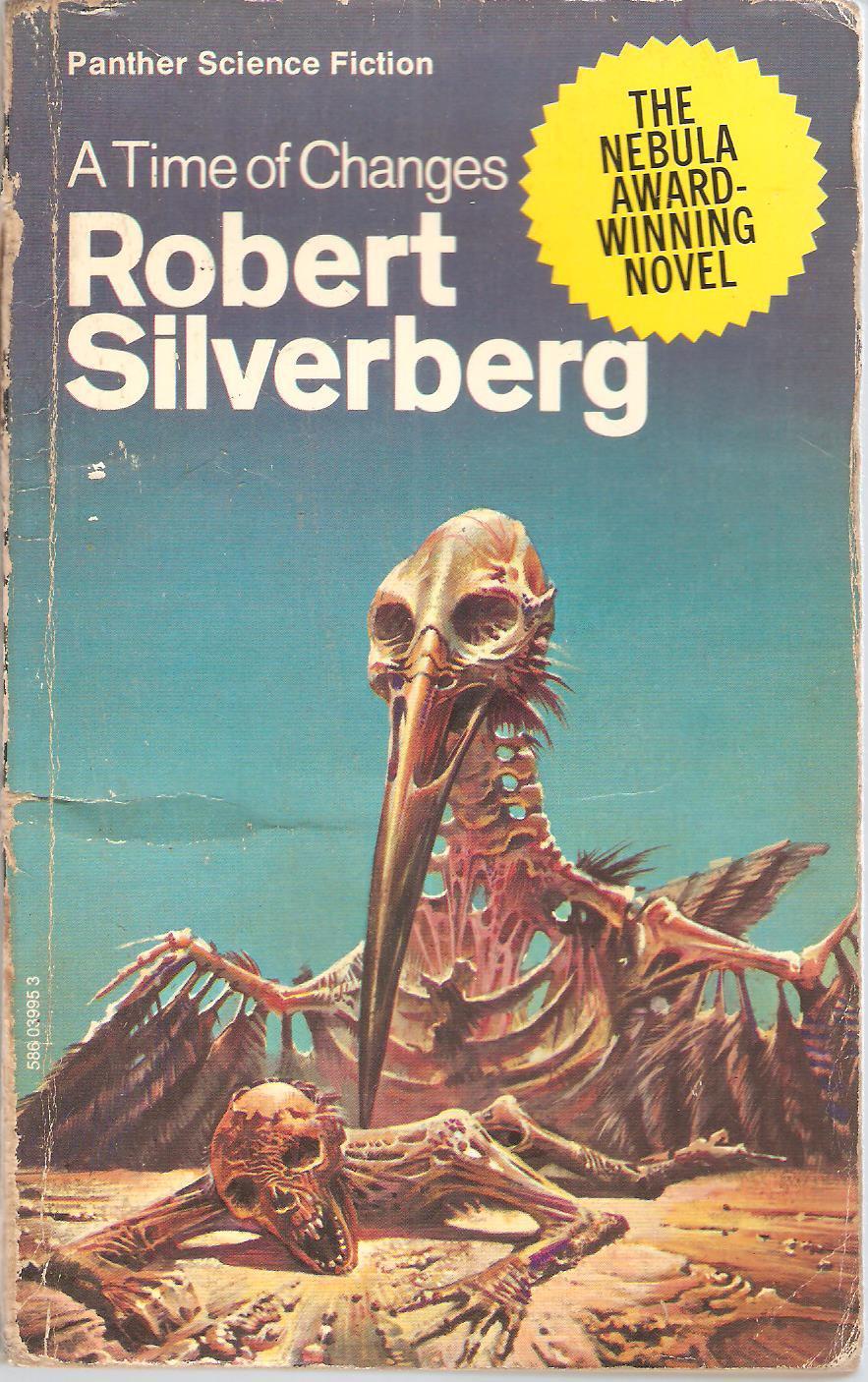
Cover by John Berkey. When I was a kid it bothered me that the illustration looked nothing like Asimov’s robots.
Donald Trump will never be able to implement Project 2025 because the document is rife with contradictions, reflecting fault lines in the Republican Party that Democrats can take advantage of, writes Cory Doctorow @pluralistic@mamot.fr. One such fracture will likely be tested soon, as bird flu spreads: RFK Jr. is of course anti-vax, as are other top MAGA leaders, but this is a view not shared by other top Trump health picks, who “emphatically support vaccines.”
The Trump coalition is a coalition of single-issue advocates. Cory calls them “cranks,” explaining he means the term non-pejoratively and says he, too, is a crank: “someone who is overwhelmingly passionate about a single issue, whose uncrossable bright lines are not broadly shared. Cranks can be right or they can be wrong, but we’re hard to be in coalition with, because we are uncompromisingly passionate about things that other people largely don’t even notice, let alone care about.”
Money quotes:
Project 2025 is “neofeudalist fanfic shit out by the most esoteric Fedsoc weirdos the world has ever seen.”
“Project 2025 isn’t just a guide to the masturbatory fantasies of the worst people in American politics – far more importantly, it is a detailed map of the fracture lines in the GOP coalition, the places where it is liable to split and shatter. This is an important point if you want to do more about Trumpism than run around feeling miserable and scared. If you want to fight, Project 2025 is a guide to the weak spots where an attack will do the most damage.”
“Cranks make hard coalition partners. Trump’s cranks are cranked up about different things – vaccines, culture war trans panics, eugenics – and are total normies about other things. The eugenicist MD/economist who wants to ‘let ‘er rip’ rather than engage in nonpharmaceutical pandemic interventions is gonna be horrified by total abortion bans and antivax. These cranks are on a collision course with one another.”
“The lesson of Project 2025 is that the entire Trump project is one factional squabble away from collapse at all times.”
When I was a kid I thought conga lines would play a much greater role in my adult social life than they have.
I’ve been annoyed by Facebook as software for at least six years. The software makes it hard to post the kinds of things I like to post in the manner I like to post them, and also makes it hard to zero in on reading just what I want to read when I want to read it. I see that trend continuing.
Zuckerberg’s announcement this week was just the last straw for me. TIme to pull off the Band-Aid.
I’m still not 100% sure I made the right choice. And I haven’t decided I will actually cancel my account. I may keep it in case something comes up. And I will likely stealthily check notifications, at least for a while.
LA fires are a good reminder that the only difference between me and any refugee is luck.
I have been thinking about quitting Meta for at least six years, but I finally did it yesterday.
Yesterday’s bullshit was one step too far. It isn’t just that they are throwing in the towel on fact-checking, but also that they explicitly say that some anti-LGBTQ and ethnic hate speech is ok. You want to say LGBTQ people are deranged or that Chinese people spread Covid? That’s fine with Zuck!
I also hate that Zuck was blinged out like an 18th Century French monarch when making these proclamations. I liked my billionaires better when they pretended in public to be middle class.
I’m also quitting Insta and Threads. But I hardly used those before.
I haven’t canceled the accounts yet. I want to leave them up for a bit so people can see that I’m going, and where I’ve gone.
Critics of Idaho’s proposed same-sex marriage ban say it’s a “sad distraction” from real issues.
You bet it is. All this Republican culture war bullshit is just to keep you from noticing that Trump & Co. are robbing you.

The man under Cousin Itt’s costume

The end of the Great Wall of China
From the comments: “It’s like he’s crying because they tried something new and it got weird”

Thanks, Tom!
I’ve been followed by Charlize Theron and Scarlett Johannsen on Bluesky this week.
I believe, in fact, these accounts may not be authentic.
That was fast: After reading this coverage from Casey Newton, I can’t in good conscience stay on Facebook or any Meta property any longer. I’ll leave my accounts active for now, but I’m not looking at them anymore.
I’ve been fed up with Facebook for a long time, and today’s news does not make me love it more. However, there are people I want to stay in touch with on Facebook. Neither quitting nor staying is satisfactory.
The Heritage Foundation plans to “identify and target” Wikipedia editors whom the groups believes to be anti-Semitic. This is a vigilante campaign disguised as an attempt to protect Jews. This Jew does not need or welcome that kind of protection.
Trump wants to rename the Gulf of Mexico and use the military to claim Greenland from Demark, a NATO ally.
It’s going to be a fun four years.
It’s wild to me that Theodore Levine, the actor who played the demonic Buffalo Bill in “Silence of the Lambs” also played the kind, long-suffering Chief Stottlemeyer on “Monk.”
My hands are so dry, cracked and painful this week that I’ve started using hand lotion, which I have never done before. It’s really very nice.
How long do I have to use the lotion before my brain stops saying the “Silence of the Lambs” thing?
I’m disappointed by Zuck’s latest decisions to cave in to Trump’s threats, but I can’t say I’m surprised. Billioinaires gotta billionaire.
These events further cement my decision to consolidate more of my social media activity on mitchw.blog, with automatic syndication using Micro.blog to Mastodon, BlueSky and Tumblr.


It Was the Day of the Robot by Frank Belknap Long
Coney Island, 1961, Diane Arbus
Nude Interracial Love Dance. via
After reading this explanation of Hookmark, I am thinking of giving the app another try. I like the idea of being able to easily access all documents related to whatever document I’m looking at or working on. “Documents,” in this context, refers to any object on my Mac — documents, web pages, emails, etc.
I’m glad to see Rusty Foster is back writing “Today in Tabs” and I hope it doesn’t consume him.
It turns out that if you look at social media for a few minutes a couple times a day you don’t miss anything and it doesn’t destroy your soul. No one’s gonna do that, I know, I’m just saying.
Simon Wiilson: “You should start a blog. Having your own little corner of the internet is good for the soul!" Two relatively low-effort categories of things to write about on your blog: “write about things you’ve learned, and write about things you’ve built!” And a third: Write about things you found aka linkblogging.
The University of Virginia school of medicine’s Division of Perceptual Studies (DOPS) searches for scientific evidence of reincarnation or other life after death. They do a lot of interviews of small children who seem to have memories of past lives.
Former DOPS founder Dr. Ian Stevenson devised a simple test: He closed a padlock and put it in a box in the researchers' office. Only he knew the combination. He died in 2007.
Do You Believe in Life After Death? These Scientists Study It. By Saskia Solomon at the New York Times.
I’m a skeptic, but I love that groups like DOPS exist, studying low-probability but revolutionary phenomena like life after death, reincarnation, magic, time travel, UFOs, etc.
This article reminds me of one of my favorite novels: “Summerland,” by Hannu Rajamieni. The premise is that scientists discovered definitive proof of life after death in the late 19th Century and invented a device to communicate with the dead. The novel’s action takes place in the 1930s, among British spies fighting the Cold War against the Soviet Union in both this life and the next.
“I have been saying ‘What?’ every single sentence.” Rereading “Encycopedia Brown” as an adult is bonkers..
“He could have been famous,” a Redditor joked, according to Carolyn Wazer at Snopes.
The band included Donald Fagen and Walter Becker and was called the Leather Canary.
According to an authorized biography of Chase, “Chevy didn’t think he was good enough and left the band, advising them to find a better drummer.”
Chase was born Cornelius Crane Chase; the nickname comes from the medieval English “Ballad of Chevy Chase,” according to Wikipedia.
I’m about to start reading: The Lincoln Lawyer, by Michael Connelly. I’m reading all off Connelly’s books in order. This is number 16.
Hamilton Nolan:Here’s a New Year’s resolution for Trump’s America: no snitching. “If you saw something, no you didn’t.”
Also:
What’s giving me hope right now
Trump’s election in 2016 produced widespread shock, followed by a fruitless four years of quasi-religious belief that our precious norms would save us from his ravages. This time around, we have that experience to teach us all that those norms are utterly illusory. Resisting a slide into fascism means building institutions powerful enough to counter Trump on his own terms.
Nolan puts his hope in resurgent labor.
This is how nations decline. You don’t always turn into Nazi Germany. You turn into Russia, or Hungary, or other creaky and corrupt strongman states where everything is kind of a scam and everyone is hustling to please the gangster in charge. That, my friends, is the path we are on here.
America’s basic problem is that we have an economic system that concentrates great wealth in few hands and we have a political system in which money is allowed to buy political power in a straightforward way and now, on top of that, we have a President who fully embraces—who lives for—the opportunity to make the world bow to him by exploiting those systems. It’s a bit surreal watching this all unfold right in front of us. This is the script of imperial downfall, of a mighty nation that has been teeing itself up to crumble by having no moral scruples finally jumping onto the garbage chute with both feet. Watching all of the highly respected CEOs of America’s most powerful and respectable and, according to a widespread characterization, “liberal” companies donate millions of dollars to the Trump inauguration, unalloyed bribes paid for political protection, is just—it’s not subtle. Detecting the grand direction of America has never required less insight.
…
This is the final form of unregulated capitalism, where fantastically rich and often childlike titans run the world’s most powerful nation for their own pleasure, and what was once thought of as “civil society” cowers in the corner in an effort to avoid provoking the beast.
UCSD plans to use AI cameras in hospital rooms, but says privacy will be protected. This seems like a valid use of surveillance — if it works, about which I am skeptical.
The flu is surging in San Diego. “It went from pretty quiet to busy all of a sudden.” Yet vaccinations are down significantly. [Paul Sisson at the San Diego Union-Tribune.]
America’s self-destructive streak is discouraging.
Celeste Davis: Why male college enrollment is dropping. As more women attended college, men started perceiving universities as feminine spaces. And men flee feminine spaces.
At my job, I mostly work with women now. Same for the local Democratic Club, where I volunteer. Somehow, I have managed to avoid catching girl cooties.
Home for the Holidays (1996). Holly Hunter, a mid-30s single mother and museum curator, flies home to visit her family on Thanksgiving and finds her family is painfully weird, and she doesn’t fit in. But then everything clicks for her.
I saw this movie when it first came out and once or twice more in the late 90s, but not since then. This time, I had the insight that this is a coming-of-age movie about Holly Hunter’s character leaving her young adulthood behind her. By the end of the movie, she is no longer an adult trying to fit into her childhood home. She’s just an adult visiting her family.
The movie has great writing, direction by Jodie Foster, and is well-acted by a wonderful cast: In addition to Hunter, we have Anne Bancroft, Charles Durning, pre-rehab Robert Downey Jr., Dylan McDermott, Geraldine Chaplin and middle-aged Steve Guttenberg.
I could do a scene-by-scene discussion of this movie. But I’ll stop here.
Tombstone (1993). Val Kilmer gets praise as Doc Holliday, and he deserves it, but also spare some praise for the late great Powers Boothe, who chews the scenery magnificently as the villainous Curly Bill Brocius.
Another main villain of the movie, Johnny Ringo, played by Michael Biehn, is a nihilist. Ringo hates himself and the world. Curly Bill loves the world and loves life and takes joy in cruelty.
In that way, Curly Bill is a lot like Spike from “Buffy the Vampire Slayer.”
Wolfs (2024) George Clooney and Brad Pitt are two mob fixers called to cover up a crime scene. They are lone wolves, forced to work together. The ending is confusing at first, but I gathered later that this movie was intended as the first of two parts. And now, the second part will never be made because of a dispute with Apple. Still worth watching.
The Big Sleep (1946). Bogey, as detective Philip Marlowe, solves crimes and sparks with Lauren Bacall. The storyline of this movie is legendarily complicated and confusing; at one point, the director called author Raymond Chandler from the set to find out who committed one of the murders and Chandler responded lol idk.
The Fabelmans (2022). Supposedly a fictionalized autobiography by Stephen Spielberg, but he later said everything in it is true.
Interstellar (2014). Matthew McConaughey in spaaaaaaace. A rare movie where he does not say “alright alright alright.” Now I know where this meme comes from.
Fall Guy. Comedy-drama starring Ryan Gosling as a stuntman called on to do something involving solving a crime. I don’t remember the specifics, but I remember the movie was fun.
Batman Begins. I saw this one on a plane years ago and hated it. We watched it on the big TV in the living room in 2024, and I liked it. It turns out that watching a movie on a six-inch screen while slightly nauseated is not the best way to appreciate cinema.
White House Down. Die Hard in the White House starring Channing Tatum.
The Accountant. Ben Affleck is a forensic accountant and lethal mercenary. Ridiculous premise, but surprisingly good and occasionally even heartwarming.
Which reminds me: I forgot a book on my 2024 favorite books list: The Bezzle, by Cory Doctorow, the second in his Marty Hench series, which also features a hardboiled forensic accountant.
It turns out that “hardboiled forensic accountant” is a genre.
Beverly Hills Cop: Axel F. 2024 Sequel to the popular Eddie Murphy movies of the 80s. It does what it says on the tin.
Farewell, My Lovely Robert Mitchum is Philip Marlowe in this 1975 movie with Charlotte Rampling, Sylvia Miles, Harry Dean Stanton, and Jack O’Halloran (most famous for Superman II) as Moose Malloy.
Rise of the Planet of the Apes, Dawn of the Planet of the Apes and War for the Planet of the Apes. But not Kingdom of the Planet of the Apes, which didn’t click for me.
Road House. Jake Gyllenhaal beats people. Fun, great music and scenic Florida locations. You did not think remaking the bad 80s Patrick Swayze original would be a good idea, but you were wrong.
American Fiction. Comedy-drama about a Black, button-down professor fed up with woke culture who uses a pen name to write a super-woke fraudulent memoir and is caught up in a maelstrom when the book becomes a runaway bestseller.
I hate saying “woke,” but I can’t think of anything else here.
The trailer does a good job of capturing the movie’s intelligence and humor but does not capture the story’s surprising heart.
This is not an anti-woke movie, despite the premise. I would not recommend an anti-woke movie.
Mr. Holmes. Ian McKellen plays an aged Sherlock Holmes, struggling with dementia, living in the country, tending his bees and reconstructing the specifics of a case that drove him away from London and into retirement three decades before.
The Emperor’s New Clothes. What if Napoleon escaped from exile on St. Helena and returned to France to raise an army and reclaim his throne, but instead failed to contact his underground network of supporters and had to go undercover as a common grocer?
American Fiction and The Emperor’s New Clothes are testimonies to the value of committing to the bit. You take a slight premise — something that by rights should be nothing more than a Saturday Night Live skit — take it seriously, follow it through to its conclusion, and it can come out great.
Stage Door. 1937 comedy-drama starring Katharine Hepburn, Ginger Rogers, Adolphe Menjou and, in a small role, Lucille Ball, about young struggling actresses living in a boarding house in New York.
The Maltese Falcon. Humphrey Bogart as Sam Spade. I think I saw this only once before, on a little kitchen-table black-and-white TV around 1980. I missed so much. Much of the action is in the characters' faces and body language.
The Six Triple Eight. A Black Women’s Air Corps battalion during World War II is called on to sort millions of pieces of personal mail for soldiers. The mail has been stored in warehouses since the beginning of the war. The movie makes it clear that personal mail is not a luxury; it is essential to keeping up morale for soldiers and their families.
As one of the heroes notes, these women are fighting two wars, one against Hitler and another against flagrant white racism.
Kerry Washington gives a great performance as Captain Charity Adams, who commands the platoon with an erect spine and stentorian voice. Her goals are two-fold: To deliver on the mission of delivering the mail, and prove that Black women are up to the task. Her nemesis is General Halt, a fat, bald racist Southerner who seems to despise Adams and her battalion more than he hates Hitler. Halt is portrayed with delicious awfulness by Dean Norris from Breaking Bad. I could barely stand to look at him by the end of the movie.
Desk Set. Katharine Hepburn heads up the research department of a TV network and is threatened by Spencer Tracy, a consultant hired to bring in a computer. I was delighted to see that the computer in this 1952 movie behaved exactly like a 2024 LLM: give it a question in plain English and you get an answer that’s clear, credible and likely to be wrong. Spoiler for a 73-year-old movie: Tracy’s character explains at the end that the computer is not there to replace the researchers but to free the researchers up for more valuable work. This is exactly what AI companies tell us here in 2024.
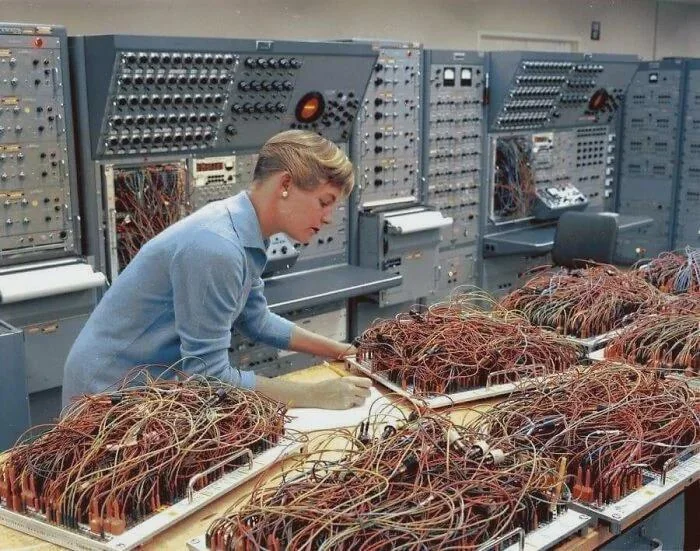
The set for the computer is brilliant — so many blinkenlights! The pieces of the computer, including the blinkenlights panel, were later used in the movie and TV show Voyage to the Bottom of the Sea. This computer is my mental ideal of how computers ought to look.
Woman of the Year. Hepburn and Tracy again. There were a couple of moderately racist gags in the beginning that threw me off for a bit, and I never quite recovered because Tracy’s character is a dishrag. Still, it makes my favorites list because of the snappy dialogue and cinematography and because it’s Hepburn and Tracy.
His Girl Friday. Cary Grant and Rosalind Russell in a heartwarming romcom about two awful people who find true love with each other.
The Guardian, quoting Yale historian and author Timothy Snyder:
“I think we overestimate Trump and we underestimate Musk,” Snyder said. “People can’t help but think that Trump has money, but he doesn’t. He’s never really had money. He’s never even really claimed to have money. His whole notion is that you have to believe that he has money. But he’s never been able to pay his own debts. He’s never been able to finance his own campaigns.
“Musk, with an amount of money that was meaningless to him, was able to finance Trump’s campaign, essentially.”
As Trump tries to control Congressional Republicans, he threatens lawsuits and primary challenges, and Musk will fund all that, making Trump increasingly dependent on Musk, Snyder says.
The problem is that this is, at the fundamental level, a terrible idea.
There’s a reason that mathematics doesn’t use English. There’s a reason that every professional field comes with its own flavour of jargon. There’s a reason that contracts are written in legalese, not plain natural language. Natural language is really bad at being unambiguous.
Scott Lewis at Voice of San Diego:
A few weeks ago, a man in the alley behind our house began screaming. Screaming is not unusual around us, unfortunately. But usually it comes and goes – less frequent than the airplanes, more frequent than the helicopters.
One man walks around screaming all the time. Long beard, bike. Sometimes he begs on the corner. Sometimes he disappears for weeks. But he’s always back and almost always screaming.
This wasn’t him. We know him. This was deeper, closer and more disturbed. And it wasn’t going away. It scared my daughter. I went back there with the flashlight and found the man. He was ensconced in a combination of blankets and garbage. He was ranting incoherently, unaware of me even as I tried to get his attention.
I finally yelled “Hey!” He turned and looked right at me. “You’re freaking people out.”
He snapped out of it. “I’m so sorry. I know, I know. I don’t know what to do. I don’t know where to go.”
The way he snapped out of it turned my anger and fear immediately into pity and wonder. It was like he was two people. The one made mad, screaming at the cold, fueled by the drugs, the trauma. And the one below the surface almost watching himself.
It was cold. San Diego is more comfortable than most places to be homeless but try sleeping in 45 degrees. It is bone-chilling cold. I couldn’t do it. I couldn’t last more than a night or two before … well, before I did things that would probably lead to screaming.
We are now entering the eighth year of the homeless crisis…. We are numb to so much of it. The suffering and poverty. The disorder and chaos.
…
San Diego is facing a catastrophe. The city is teeming with suffering. Its infrastructure is crumbling. Its cost of living is extreme and escalating rapidly. People are leaving. The region’s growth projections, for the first time in decades, show a peak and downturn not because people don’t want to be here but because they can’t afford to be. Public school enrollment is down.
San Diego’s history, however, is full of moments when it seemed irredeemable. Every city has a similar story – moments of prosperity followed by recessions, public health crises, disasters, despair but then great leaps in design, construction and innovation followed by growth and prosperity.
We can, once again, meet the moment. But in 2025, it will take something we did not see in 2024: creativity and leadership.
Welsh continues to be a lone voice saying the war in Ukraine is going very badly for Ukraine, and he predicts victory for Russia in 2025. The major news media are pointing the other way — that Russia is getting clobbered.
That doesn’t make Welsh wrong. In 2003 everybody knew the US invasion of Iraq was a great idea, the Iraqis would welcome us with flowers and we’d be out in a jiffy.
He looks back on the book here and mentions that parts of it are now dated.
The ony part that stands out in my memory as dated is that the soldiers' communications-compute devices are called “PDAs.” Now they’d be called “phones.”
The novel is a lesson in marketing. It’s got a good gimmick. The gimmick is that in the far future of the novel, medical science has advanced so that it’s inexpensive to rejuvenate old people and send them out as soldiers.
That kind of gimmick will cause people to pick it up in a bookstore and take a closer look. But a gimmick isn’t enough; the book also has to be good to generate the kinds of reviews and word-of-mouth that really push sales. And Old Man’s War is, indeed, a good book.
Woody Fraser, Pioneering Producer of Daytime Talk Shows, Dies at 90. “He spiced up the format in creating ‘The Mike Douglas Show’ and brought ‘Good Morning America’ to life. But his career ended under a cloud of sexual harassment claims.”
Ian Welsh does a better job than I did articulating what I was trying to say in my earlier post on this:
H1-B visas obviously take jobs from Americans. Yes, companies must say they doesn’t, but they do. H1B workers can’t leave their employers unless they have another lined up immediately, so they do what they’re told or go home. As such, they obviously have reduced bargaining power compared to natives or landed immigrants. This drives down wages for natives, “if you won’t do it, we’ll get an immigrant to, and they’ll take the wage we’re offering.”
The left-wing argument against guest workers, and H1B visas are just tech guest workers, is that if we genuinely need workers, then they should be over here either as landed immigrants or on a visa which allows them to quit and have some reasonable time to find another employer. A class of workers with reduced rights will obviously be preferred by management and will reduce the bargaining power of native workers.
Also, Vivek Ramaswami is spouting nonsense when he claims that America’s problem is cultural, because we venerate prom queens and jocks more than nerds. Nerds were no more popular in the 1950s through the 70s then they are today and yet America led the engineering world in those decades. The reason we’re lagging is because we’ve outsourced that work to China.
Newly deciphered manuscript is oldest written record of Jesus Christ’s childhood. He hated having to play dodge ball in gym class.
Interactive dingus shows the popularity of names over time. I’m surprised to see “John” declining toward zero; it was a hugely popular name when I was growing up.
100 Small Acts of Love. “My husband always picks me up at the airport when I travel solo. He parks his car and comes in to wait for me.” (Note to Julie: The preceding quote is not a message. I’m fine with Uber.)
I read about 13 books this year. Here are my favorites:
“Nobody’s Fool,” “Somebody’s Fool,” and “Everybody’s Fool," a trilogy by Richard Russo, set in the small town of North Bath in upstate New York, following the lives of a dozen or more characters over 20 years. There are two murder investigations in the series, but the novels aren’t plot-driven; they are a series of episodes. The action covers most of a century, including generous flashbacks,
I first read “Nobody’s Fool” when it was published in 1993, and the characters have inhabited my brain for most of my life. The main character of “Nobody’s Fool,” Donald “Sully” Sullivan, is 60. I was young enough to be his son when I first read the book; indeed, he has a son in that novel who is older than I was then. Now I’m a little older than Sully himself, though my knees are in much better shape than his.
The second book in the series came out in 2016, and the third in 2023, and I read them both as they came out and loved them so much that I listened to the whole series on audiobooks in 2024.
I love living in North Bath with these people, which is weird because North Bath is dying, and the people are kind of broken.
“Nobody’s Fool” was made into a movie starring Paul Newman as Sully, Jessica Tandy as his friend, landlady and former schoolteacher, Mrs. Peoples; Bruce Willis in a rare non-action role; and Melanie Griffith. The movie features talented character actors, including Pruitt Taylor Vince and Margo Martindale and, in a very early role, the late great Philip Seymour Hoffman, as the idiotic and headstrong policeman, Doug Raymer. Hoffman’s casting was a stroke of luck; he’s fine, but it’s a small, one-dimensional role, and it didn’t tap Hoffman’s enormous talent. However, Raymer is the main character of the two sequel novels, where we learn he’s a much more sympathetic and intelligent character than he appears to be in the first book. There was some discussion of making the second book into a movie starring Hoffman, which would have been fantastic. But I haven’t heard anything about the movies since Hoffman’s death.
I love the movie “Nobody’s Fool,” although the writers tacked a shmaltzy, wholesome ending on it. The novel’s ending is hopeful and upbeat but darker; the characters' victories are smaller than in the movie and achieved with greater difficulty. I like the novel’s ending better.
“Elsewhere: A Memoir,” by Russo (again). Most of Russo’s novels are autobiographical; he grew up in Gloversville, a small town in upstate New York, which had once had a factory manufacturing women’s leather gloves. If you watch many old movies, you’ll know that women used to wear gloves routinely every day, and if you live in the world, you know they don’t anymore unless it’s cold. And gloves aren’t made in the USA anymore. Like North Bath and other towns in Russo’s work, Gloversville struggles to stay alive. In “Elsewhere,” we learn that Russo’s father was a charming small-town rogue, much like Sully and characters in Russo’s other work; his mother raised him, and Russo left Gloversville to go to college and rarely returned in later life. But Russo has returned to Gloversville again and again in his writing.
Spoiler (sorry): We learn in this book that Sully’s mother was a formidable woman who succeeded professionally working for an engineering company, very much a man’s world in the 1960s. However, she struggled with obsessive-compulsive disorder, which eventually poisoned her life. Russo’s father was a compulsive gambler. Russo tells us that he himself has the same disorders — as a young man, he was a compulsive pinball player (!) and gambler, but he eventually turned his compulsiveness to writing stories. Russo reflects that if his compulsiveness had taken a less socially acceptable turn, his life would have been very different, perhaps much like his father’s. But instead the world lavishly rewarded Russo, who has won a Pulitzer Prize.
Russo won the prize for “Empire Falls,” but the North Bath trilogy are my favorite of his books.
I have known two people with connections to Gloversville — surprising because Gloversville is such a small, remote town. One, a woman, grew up there. I was excited when I found out and questioned her about the town, but she seemed to find my questions creepy, so I dropped it. I got the impression that, like Russo, this woman put Gloversville in her rearview mirror as soon as she was old enough to get out of town and, unlike Russo, she never looked back afterward.
“Mohawk,” by Russo (again). Another story of feckless, charming fathers and a sprawling cast in a struggling small town in upstate New York. Russo’s first novel. I listened to the audiobook.
“Alas, Babylon,” by Pat Frank, about an American small town struggling to survive after a nuclear war. Another struggling small town — this one in Florida — another feckless, charming hero coming of age and taking responsibility for the people around him. I loved this book and read it many times as a boy, read it again during the pandemic and thought it was still great, and listened to the audiobook in 2024 to prepare to discuss the book on the “Hugos There” podcast. I loved doing that podcast; I did it once before, several years ago, to discuss “A Canticle for Lebowitz,” by Walter M. Miller. Both novels are post-apocalyptic. I have no special love for that genre; it just worked out that I love those two books, and those are the ones I discussed.
“Big Magic: Creative Living Beyond Fear,” by Elizabeth Gilbert. Nonfiction about learning to live a creative life in the real world. Gilbert is the author of the wildly bestselling “Eat, Pray, Love,” and for years I dismissed her books as New Age women’s self-help nonsense with a lot of crystals and scented candles (yes, I know that’s awful of me). But I have heard Gilbert interviewed on a couple of podcasts (including Design Matters, hosted by my childhood friend Debbie Millman — thanks Debbie!) and I learned from those interviews that Gilbert is tough, smart, hard-headed and pragmatic. Yes, she dips deeply into occult waters, but I think of that as metaphor and go with it. I highly recommend Gilbert’s novel “City of Girls.” And I guess I need to read “Eat, Pray, Love.”
“A Son of the Circus,” by John Irving. A successful Indian doctor splits his time between Toronto and India and doesn’t feel at home in either world. This is a very long, sprawling novel and, like the North Bath trilogy, it doesn’t have much of a plot — though it does have murders to solve — and focuses on the rich cast of characters and Indian locations.
“The Long Way to a Small Angry Planet,” and “A Closed and Common Orbit,” by Becky Chambers. These are hugely popular books of a genre known as cozypunk, which means they’re about the characters and their interactions rather than the plot. This story is set in the distant future on a small merchant starship.
I grew up reading science fiction and branched out into crime fiction in my 20s. I read fiction for plot — the characters have a problem and solve it with their wits and violence. I often struggle with more episodic novels, where a part of me thinks nothing happens. I struggled with the Chambers novel and “Son of the Circus.”
“Joyland,” by Stephen King. A young man leaves college to take a summer job in a carny. Does he encounter horrors? Of course he does — a serial killer, which is pretty tame as King horrors go. But “Joyland” is mainly about a character who finds community and connection in a small town. I sense a trend in my reading.
“The Closers,” “The Narrows” and “Lost Light,” by Michael Connelly, who has devoted his career to about 35 crime novels, mostly focused on present-day Los Angeles. Connelly’s novels have different main characters — Detective Harry Bosch, defense attorney Mickey Haller (the Lincoln Laywer), a retired FBI agent, a crime journalist — but, interestingly, they all inhabit the same universe. Minor characters in one series turn up in another, and sometimes, two of the main characters cross over. I’m reading the books in order — 11 down and much more to go! Connelly is a master of writing a sentence that compels you to read the next and doing it again and again and again.
Currently Reading
“Storm Front,” by Jim Butcher. Book 1 of the Dresden Files.
“The Infernal Machine,” by Steven Johnson. A history of dynamite, anarchist terrorism, and the rise of professional policing at the turn of the 20th Century.
The Constitution provides that an oath-breaking insurrectionist is ineligible to be president. This is the plain wording of Section 3 of the 14th Amendment to the Constitution. “No person shall … hold any office, civil or military, under the United States, or under any state, who, having previously taken an oath … to support the Constitution of the United States, shall have engaged in insurrection or rebellion against the same, or given aid or comfort to the enemies thereof.” This disability can be removed by a two-thirds vote in each House.
Disqualification is based on insurrection against the Constitution and not the government. The evidence of Donald Trump’s engaging in such insurrection is overwhelming. The matter has been decided in three separate forums, two of which were fully contested with the active participation of Trump’s counsel.
Never going to happen, of course. The US is sliding into autocracy and the Republican majority is pushing it downhill.
ht @davew
I don’t remember ever having imaginary friends when I was a child. On the other hand, I’ve loved stories — books, TV shows, movies — my whole life. So maybe I’ve always had imaginary friends, and never outgrew them!
I just realized a problem with Facebook’s latest AI strategy: Most people outgrow imaginary friends when they grow up.
Like many people, I canceled my Washington Post subscription when the Post declined to endorse a Presidential candidate this year. At the time, I thought I might come back if I missed it. But I didn’t miss it. The Post is not what it was during Trump’s first term; it’s replaceable.
That leaves the US with one good national newspaper, the New York Times. And that’s not healthy. Local journalism is dead in the US, too — also unhealthy.
@manton says he will never resubscribe to the WaPo. I’m not so rigid; I’ll come back if the Post starts doing work worth paying for again.
Meta wants to fill your social media feeds with AI-generated characters. They’ll have bios and profile photos and generate content, but they’ll be bots.
A big problem for Meta is that it is institutionally very dumb. … There are lots of smart people working there and its leadership clearly understands something about how people use social media.
But there is a vast sense of dumb in its attempts to deliver the next generation of its products.
I’m still very active on Facebook, but getting less so as Meta overthinks its products and my real-life friends and family wander away. I just want Facebook to just get the hell out of my way and let me see posts from the people, groups and pages I follow. That’s it. I’m fine with them throwing me the occasional ad to make money; Facebook ads are entertaining.
I don’t post these links to Facebook anymore because nobody sees them.
h/t @manton
Even Boomers who have saved for retirement are worried about outliving their money, and are living frugally to get by, according to a new study by Prudential Financial. This article focuses on wealthy retirees, but the study looks at retireees who are married with as little as $100,000 in assets, which is not much at all.
Today, I learned that HFY science fiction is a thing and that the acronym goes back at least 10 years. Although the subgenre goes back much longer — Isaac Asimov called it out.
Jimmy Carter Deserved Our Thanks and Respect, Not Our Sneers — Nicholas Kristof says Carter, who was reviled and ridiculed, will be remembered as one of America’s great Presidents and statesmen. “Hundreds of millions of people around the globe are living better lives because of his relentless efforts to overcome violence and disease.”
Military families scramble as new a anti-LGBTQ+ rule is poised to become law. — Republicans endanger military families.
I posted a multi-paragraph post to mitchw.blog earlier today, and my blogging software deleted all the paragraph breaks. Argh! However, I finally got it sorted, so if you are curious to read about my favorite TV shows of the year, it’s safe now.
Google Street View helped solve a year-old Spanish murder cause. Caught photos of what appeared to be a man dragging a corpse down a street and stuffing it into the trunk of a car.
The images were captured in the incredibly small town of Tajueco in Spain. And by small, I mean it’s home to barely over 100 people.
… this was a return trip for Google, but the company’s last visit occurred nearly 15 years ago.
Heather Cox Richardson analyzes the infighting in the Trump coalition. It’s the DOGEs, led by Elon Musk, versus the MAGAs. I can’t believe I agree with Laura Loomer here, but really I want both sides to lose.
Man on the Inside. Ted Danson plays a retired and widowed engineering professor who answers an ad from a private detective to go undercover in a fancy San Francisco retirement home to find out who stole a resident’s valuable ruby necklace. Danson’s character approaches the job with verve and gusto. He falls in love with the community. He’s never in any physical danger (it’s not that kind of mystery).
The show is funny, entertaining and also philosophical and wise about aging, which I’ve been thinking a lot about lately because it is something I’m doing and plan to continue.
Sally Struthers stands out among many good performances, a reminder that she is a fine actor. Her career and reputation got done dirty after “All in the Family.” Yeah, she got fat. So what?
Ted Danson’s character lives in a beautiful house, immaculately kept. Every day, he puts on nice pants, a nice shirt, and often a neatly pressed sports jacket and tie with matching pocket square. This has inspired me to start dressing better every day — no, I’m not going as far as Ted Danson’s character, but lately I’ve been putting on a shirt with a collar rather than a T-shirt, and I’m easing out the sweatshirts in favor of sweaters and a flannel shirt. Hey, it’s a start.
Evil. A Black priest, Muslim-American atheist science wiz and lapsed Catholic woman psychologist investigate a Satanic cult in New York, on behalf of the Catholic Church. Scary, dramatic and funny. Watching it, I was many times reminded of an interview by actress Dee Wallace Stone, in which she said she loved doing horror because of the range it gave her as an actor: You got to do all the emotions portrayed in comedy and drama, plus terror (obviously) and murderous rage.
Katja Herbers plays the psychologist Kristen Bouchard, and she goes from wholesome Mom to professional psychologist, cool-headed demon hunter and occasional sex vixen when the role demands it. She’s a Dutch actor, but she believably plays an educated native New Yorker. Mike Colter (“The Good Wife,” “Luke Cage”) plays David Acosta, who is at first studying to become a priest and then becomes one. He’s a big, handsome fellow, and of course there is much sexual tension between him and Dr. Bouchard. Aasif Mandvi, formerly a correspondent on The Daily Show, plays Ben Shakir, the Muslim-American atheist and science wiz. Also watch for the four Bouchard prepubescent daughters who are almost always together and talk at the same time; Christine Lahti as Dr. Bouchard’s hot Mom; Michael Emerson, known to me from “Lost,” playing a smarmy villain in that actor’s excellent, smarmy style; Andrea Martin, known to me from SCTV and “My Big Fat Greek Wedding,” as a tough nun; and Wallace Shawn as a priest.
The show is surprisingly smart on the conflict between faith and science, and on portraying the Church as a corruptible human institution and also a vessel of God. As I become more spiritual, one of the characters' throwaway lines about religion and science has become a touchstone for me — that God exists and loves us, but reveals Himself entirely through the workings of the universe.
The Lincoln Lawyer. Mickey Haller, a high-priced Los Angeles lawyer, defends murder suspects who happen to be innocent and also happen to have scads of money to keep him in fancy suits and Lincoln cars. Becki Newton steals the show as Lorna Crane, Haller’s ex-wife, friend and office manager, who looks, dresses and talks like a Real Housewife but is smart and ruthless in defense of the innocent. It’s a lighthearted, unchallenging show.
The Diplomat. Keri Russell, ex of “The Americans” and “Felicity,” plays a U.S. Ambassador to Great Britain, and Rufus Sewell plays her husband, a former diplomat who can’t stop meddling in state affairs. Light, complexly plotted and fun, with a “West Wing” vibe.
High Potential. A quirky former cleaning lady for the LAPD turns out to be a genius and helps them solve crimes.
Slow Horses. I loved the first season, but Julie hated it, so I’ll either find time to watch it on my own or forget about it. I’ve got two ten-hour flights in February and March, and I’ve already got about 73 hours of TV lined up for them.
Bad Monkey. Based on a Carl Hiaasen novel, and the only thing I’ve ever seen onscreen that captures Hiaasen’s dark humor — one gag in the show involves a severed arm — his big heart, quirky characters and keen sense of Florida locations. The show stars Vince Vaughn. Gen X irony seems to be the extent of his acting range, but he’s great at that, so he’s cast pretty well here.
Doctor Who.
Fallout. A gross-out post-nuclear apocalyptic science fiction comedy-drama. Walton Goggins has a dual role, in flashbacks as a handsome, wholesome cowboy actor of the late 1950s and early 1960s, who becomes a murderous mutated ghoul with a missing nose. Goggins is such a great actor he doesn’t need a nose.
Shogun.
Manhunt. A 19th Century procedural about the hunt for John Wilkes Booth in the days following Lincoln’s assassination. Oligarchs take advantage of the power vacuum following Lincoln’s assassination to ensure they get their payday and that American Blacks get Jim Crow instead of true emancipation.
Resident Alien. Comedy science fiction starting Alan Tudyk as an alien trying to blend in in a present-day American small town and slowly falling in love with the community. It’s “Northern Exposure,” but it’s an alien in Colorado instead of a New York Jew in Alaska. Hey, both main characters are doctors.
All Creatures Great and Small. Life in a country veterinary practice in rural Yorkshire, England in the 1930s. Peak comfort TV. Lots of people wearing sweaters.
Funny Woman. Based on a Nick Hornby novel and set in the 1960s, a beauty contest winner from England’s Blackpool comes to London dreaming of becoming a comedy star like her idol, Lucille Ball. After some struggling actress travails, she stars in a hit sitcom of the era and rubs shoulders with the beautiful people on Carnaby Street. Season Two is currently airing in the UK, but I’ve seen no indication of its coming to the US. However, I’m in no rush; much as I loved the show and novel it was based on, the story seemed complete in one season.
Julia. A historical drama about Julia Child’s cooking show launch in the early 1960s and her rise as a celebrity chef. Disappointingly canceled after two seasons.
1923. Angst and gunplay in 1923 Montana, starring Harrison Ford and Helen Mirren, and created by Taylor Sheridan. A prequel series to “Yellowstone.” The characters are miserable and violent all the time, and any joy they feel is fleeting and merely a setup for more misery and violence. So we loved it.
For All Mankind
The Rockford Files. The 1970s TV series is finally streaming without commercials, on Amazon Prime. It still holds up. The dialogue is fast and witty, the plots are complex and twisty, James Garner as Rockford is as dry and cool as a good martini. Yeah, the clothes are goofy but the cars are cool.
“Columbo” is on Amazon Prime too, also presumably without commercials. I’m looking forward to watching that.
Shetland. Season nine of the murder mystery set in the remote, desolate and beautiful Shetland Islands in northern Great Britain. If you didn’t get enough people wearing sweaters in “All Creatures Great and Small,” you’ll get even more here. So much wool it makes me scratchy to watch.
Star Wars: Skeleton Crew Pew pew pew.
WSJ: The Progressive Moment in Global Politics Is Over . Maybe so. But what next?
House GOP Fixin' To Screw Up Speaker Vote, Imperil Trump’s Inauguration, Cause Us To Die Laughing. Gary Legum at Wonkette: “It’s wild to think that at some point down the road, the fate of the planet could really hinge on what decision these fuckwits make here.”
The NYPD and New York City government are in freefall. Fun to watch, unless you live in New York, as Tim Cushing at Techdirt notes:
Lately, I’m keeping in mind George Carlin’s line that when you’re born you get a ticket to the freakshow and when you are born in America you get a front-row seat.
Carlin was dark in his final years, or at least his stage persona was. And I don’t think you can maintain a persona for as much time as Carlin did without it being true. He cheered for mass death. He hated the human race but loved people, which are two views I am finding more sympathy for as I am now just eight years younger than he was when he died.
When I read the news, I am disgusted by the human race, but when I meet people in life or work, I’m more inclined to love them as they are, without judging them.
I started using my current barber soon after the pandemic lockdown ended. I’m pretty sure that at that time, they did not take Apple Pay, and they had an ancient, slow credit card reader, so I just paid them cash, because it was more convenient. The last time I went in for a haircut, I forgot to bring my wallet, so before I sat down, I asked if they take Apple Pay. They do now.
That’s the last place on Earth I paid cash for anything. I’m living the cash-free life now.
Brett’s @ttscoff@nojack.easydns.ca mention of Drafts as a place he stores lists makes me think I should use Drafts more as a place where some text lives, not just a place where it starts. Then I think that sometimes I like to save images too, which makes Drafts less useful to me. Then I think, should I use Bear? Then I think: Why use anything else when Apple Notes is right there?
This is far from the first time my brain has gone around this particular hamster wheel.
Our stop was the Lafayette Hotel, which has been remodeled recently and looks delightfully bonkers, with an over-the-top early-midcentury theme.

Here’s a reproduction of the hotel in gingerbread.

And the view from the hotel lobby bar, where we sat for 15 minutes waiting for a table, with an estimated 25 minutes to go and getting hungry.

So we opted for the traditional Chinese food dinner.
Trump isn’t joking about wanting to control Greenland and the Panama Canal. Trump’s talk will push America’s allies closer to China.
Louisiana forbids public health workers from promoting COVID, flu and mpox shots. State health officials are spreading anti-vax lies that will kill many people and immiserate families.
RIP Michael Brewer, whose “One Toke Over the Line” was a hippie anthem.
Michael Brewer, half of the folk-rock duo Brewer & Shipley, who scored an unlikely Top 10 hit in 1971 with “One Toke Over the Line” — one of the most overt pop odes to marijuana of the hippie era and presumably the only one to be performed on the squeaky-clean “Lawrence Welk Show” — died on Tuesday at his home near Branson, Mo.
I had to put Minnie out in the backyard for a half hour this afternoon to keep her out of the way of the cleaners. She looked at me like I’d abandoned her on the side of the road in the North Dakota woods in February at midnight, where she would be eaten by bears.
I am reading: The Infernal Machine by Steven Johnson 📚. Published in May of this year, this book is a history of the violent anarchists of New York 110 years ago and the police investigations of them. The book has become timely with the murder of UnitedHealthcare’s CEO and Luigi Mangione’s arrest.
“The Democratic Party needs to be the party of ‘fuck you.'"
Yes to this. No compromise with MAGA.
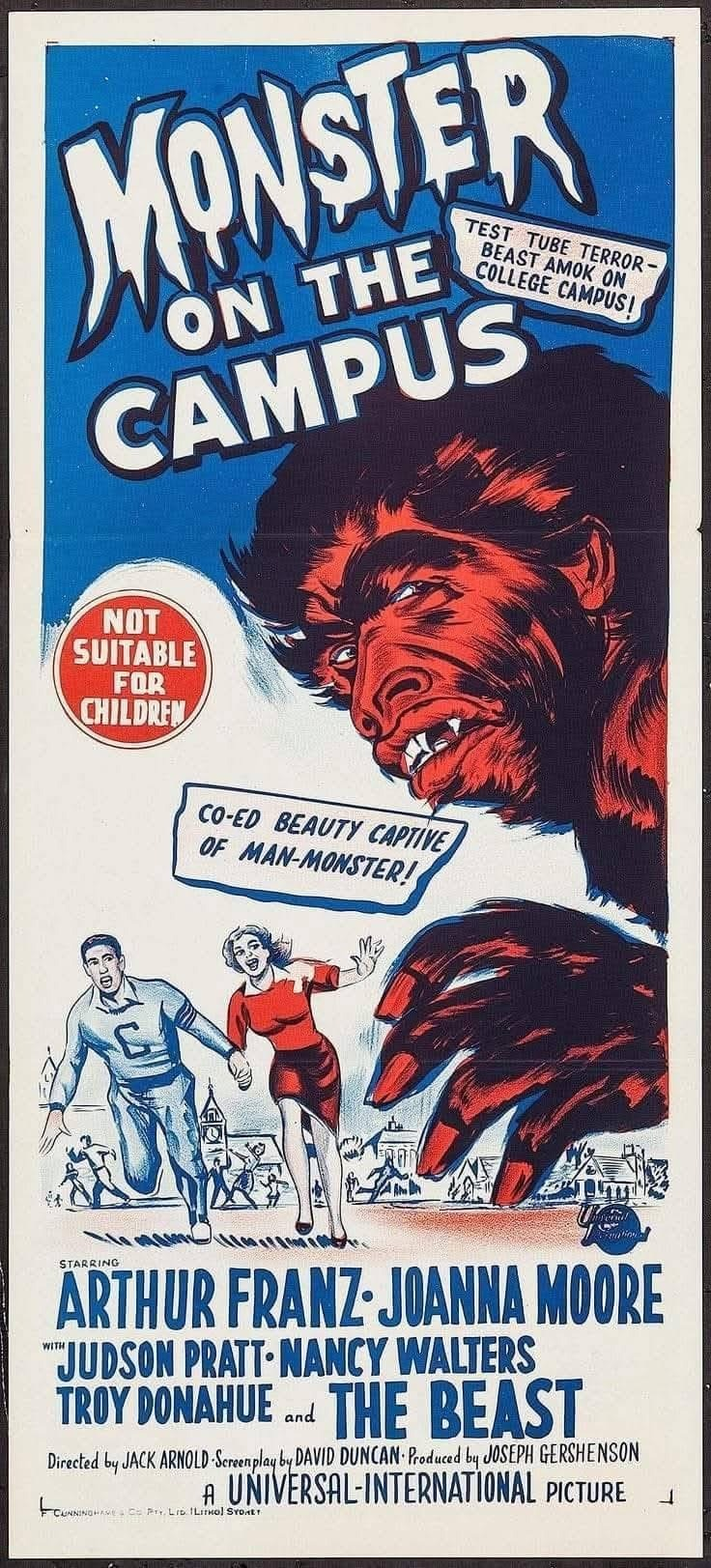
Tonight’s movie:
You called down the thunder, well now you’ve got it! … The cowboys are finished, you understand me? I see a red sash, I kill the man wearing it! So run, you cur! Run! Tell all the other curs the law’s coming. You tell ‘em I’m coming, and hell’s coming with me, you hear? Hell’s coming with me!
“When you regulate the internet as if it’s all just Facebook, all that will be left is Facebook."
The UK Online Safety Act is killing communities. Small, locally run communities cannot afford to comply. Only billion-dollar tech monopolies will survive.
Mike Masnick at Techdirt:
Policymakers have repeatedly brushed off warnings about these consequences, insisting that concerns are overblown or merely fear-mongering from big tech companies looking to avoid regulation. But it’s not. And we’re seeing the impact already.
The promise of the internet was supposed to be that it allowed anyone to set up whatever they wanted online, whether it’s a blog or a small forum. The UK has decided that the only forums that should remain online are those run by the largest companies in the world.
This trend is coming to the US too.