It’s getting hard to tell whether Trump is lyjng or delusional. “He’s just making shit up on the fly.”
Amazon will use generative AI to make product recommendations. I’m curious to see how this works — we are regular and frequent Amazon shoppers. The company should have a nice database of our preferences. Will its recommendations be any good? Or will it be the usual “I see you bought a refrigerator so now we’re going to show you refrigerator recommendations for months as though you were some kind of weirdo refrigerator collector.”
The correct amount of radium to put up your butt is zero. Policies that we need to simply stop supporting, even if that seems politically unrealistic, including DRM, collusion between realtors representing sellers and buyers, White House officials going to work for the industries they oversaw (and back again) and surveillance capitalism — Cory Doctorow @pluralistic@mamot.fr
Debunking Milton Friedman’s claim that the company’s only job is to increase shareholder value: It’s “a charter for doing whatever the fuck a CEO feels like doing”
Cory Doctorow discusses the theory of “shareholder supremacy,”, which has ruled economics, business and politics for more than 50 years, and which is now being walked back even by conservatives. One of the theory’s fatal flaws is that “it’s impossible to know if the rule has been broken,” says Cory.
The shareholder supremacy rule is an unfalsifiable proposition. A CEO can cut wages and lay off workers and claim that it’s good for profits because the retained earnings can be paid as a dividend. A CEO can raise wages and hire more people and claim it’s good for profits because it will stop important employees from defecting and attract the talent needed to win market share and spin up new products.
A CEO can spend less on marketing and claim it’s a cost-savings. A CEO can spend more on marketing and claim it’s an investment. A CEO can eliminate products and call it a savings. A CEO can add products and claim they’re expansions into new segments. A CEO can settle a lawsuit and claim they’re saving money on court fees. A CEO can fight a lawsuit through to the final appeal and claim that they’re doing it to scare vexatious litigants away by demonstrating their mettle.
CEOs can use cheaper, inferior materials and claim it’s a savings. They can use premium materials and claim it’s a competitive advantage that will produce new profits. Everything a company does can be colorably claimed as an attempt to save or make money, from sponsoring the local little league softball team to treating effluent to handing ownership of corporate landholdings to perpetual trusts that designate them as wildlife sanctuaries.
Bribes, campaign contributions, onshoring, offshoring, criminal conspiracies and conference sponsorships – there’s a business case for all of these being in line with shareholder supremacy.
Also:
Boeing management earned bonuses by engaging in corporate autophagia, devouring the company from within.
A tale of two 5G giants: Nokia silent as Ericsson continues charm offensive.
People focused on recent headlines would assume Ericsson is “at least a last mile ahead of Nokia in the critical area of private 5G.” But the reality is different: “Excluding China, Nokia is actually the world leader in private 5G, with Ericsson trailing in second place.” That’s largely chalked up to diplomacy and communications skills, says my colleague Steve Saunders on Fierce Network: Ericsson’s analyst relations is charming while Nokia is a hard company to talk with.
Read to the end to learn about an unpleasant surprise Steve got when he flew to Finland to interview the company’s top executives.
I asked ChatGPT to create an image of a spider-cat with big bat wings. It came out great. I don’t think you want to see it. You probably wish I hadn’t told you about it.
Writer Zadie Smith and journalist Ezra Klein on connections between a 19th Century British huckster and Trump, emotions vs. rationality, wokeness, identity, how social media and other online spaces “seriously modify” our minds, loneliness and more
Smith and Klein discuss her recent novel “The Fraud,” which is based on the Tichborne trial, a real incident in 19th Century Britain where an Australian butcher claimed to be the heir to the rich estate of an English nobleman who had been lost at sea. The British working classes flocked to support the butcher, even though he was obviously a fraud.
Klein writes:
I didn’t expect this novel about a trial in 19th-century London to be so resonant with 21st-century America. But Smith has said Trump and populism were front of mind when she wrote it, and you can feel it in the book, as she explores the Tichborne trial. [The butcher] built a huge movement of passionate supporters who utterly flummoxed the day’s elites.”
The discussion goes a long way toward explaining Trump’s appeal, which baffles me because Trump is obviously not the man he claims to be, or that many of his supporters claim him to be. Trump is obviously a failed businessman, reality show star and disaster of a President who left the economy in tatters and hundreds of thousands dead. But his supporters lap up his act — just as 19th Century English people did for their fraud.
Klein and Smith also talk about the role of emotion in politics — how rationalists scoff at emotion (“facts don’t care about your feelings”) but in fact, emotions are a valuable guide to thinking.
Also, on “wokeness,” Smith says:
I just don’t even recognize the category. If I’m teaching “Pride and Prejudice,” it’s not a battle between woke thought and unwoke thought. I’m only interested in truth.
To me, there is no friction and no battle between teaching the beauty and artistry of Austen’s novels – discussing where Darcy’s money comes from, which is most certainly the Caribbean, understanding the political situation in England in the 1810s. Those things happen simultaneously. The working-class movement, which is off to the side in that novel, the complacency of the middle classes in that novel, the artistry of Jane Austen.
I don’t take the bait. I don’t accept the argument in the first place that I have two kinds of students who are in some kind of football game of ideas, and if one wins, the other loses. That’s not how I teach literature. That’s not how I think of history. That’s not how I think of the relationship between Black and white people. So I don’t engage, because I think it’s a bait and that what you’re meant to do in response to it is move further and further to the right in response to this boogeyman.
This is exactly how I approach old movies and novels. I disagree with Smith on a minor point: There is friction, but it’s part of the experience. (My interests are less highbrow than Smith’s. I watch old Hollywood movies and re-read midcentury science fiction. Midcentury American pop culture was far more segregated and gender-defined than today, and it’s reflected in the pop culture of the period.)
Much of what we label “wokeness” is “people who thoughtlessly considered themselves at the center of history, culture, would be made to look at the world another way,” Smith said. In other words, in the West, being a white man was default, and everybody else was different. Now, everybody is different, and some folks who were accustomed to being the default are struggling with the change.
Klein alludes to a point he’s made in the past — that when we bemoan divisiveness and identity politics and yearn for a return to a time of harmony, we’re forgetting that in the past we had consensus because many people were simply left out of the room. Congressional representatives got along with each other because they were almost all older white men.
Smith notes that people are multi-dimensional. The “straitjacket” of identity politics is “something that nobody really wants. Sometimes it’s needed politically. We absolutely need to gather in our identity groups sometimes for our freedoms, for our civil rights. There’s absolutely no doubt about that.” But most of the time, we want to be ourselves.
And those multiple dimensions are a balm for polarism, because we often find common ground even with people of other races, religions, sexuality, etc.
Smith talks about how social media and smartphones change who you are. She and her husband do not have smartphones and she says she’s happier for it.
When you wake up in the morning and you turn to your social app, you are being instructed on what issue of the day is what to be interested in. The news has always played some element in doing that, but this is total. And it’s not even, to me, the content of those thoughts. There’s a lot of emphasis put on the kind of politics expressed on these platforms to the right or to the left.
Social media drives us to think there are two and only two sides to every argument, the right and left, and they must be in conflict with each other.
I keep thinking about a comment my Congressional representative, Sara Jacobs, has made at least twice that I know of. She is far Left — which is a big part of why I support her. She divides her Republican colleagues into two groups: Those who are interested in governing, and the others. She says she gladly works with conservative Republicans who are interested in governing, and often finds common ground with them.
Smith says that everybody who went online in 2008 has been “seriously modified” by technology.
And that’s OK. All mediums modify you. Books modify you, TV modifies you, radio modifies you. The social life of a 16th-century village modifies you. But the question becomes: Who do you want to be modified by, and to what degree? …
And when I look at the people who have designed these things – what they want, what their aims are, what they think a human being is or should be – the humans I know and love, this machinery is not worthy of them. That’s the best way I can put it.
And I speak as someone who grew up as an entirely TV-addicted human. I love TV. I love reading. Modification is my bread and butter. And when the internet came, I was like, hallelujah. Finally, we’ve got a medium which isn’t made by the man or centralized. We’re just going to be talking to each other, hanging out with each other, peer to peer. It’s going to be amazing. That is not the internet that we have. That is not what occurred.
I’m skeptical of individual technological solutions for the ills of being online. (With one exception: Keep notifications to a minimum. You don’t need to be notified of Facebook comments, etc., when you’re not in the app. Switch 99% of your smartphone notifications off.) Getting rid of smartphones won’t make us better people.
Klein recommends Marshall McLuahan and Neil Postman, “media theorists from the rise of the television age.”
And the things they were saying television would do to us and do to our culture are right. There’s a straightforward argument in Neil Postman’s great book, “Amusing Ourselves to Death,” where he says that the thing television is going to do to politics is make us believe politics should always be entertaining, and that’s going to make politics a space dominated by entertainers. And like here we literally are, with a reality television superstar running for president, having already been president once before. For better and for worse, they saw it all coming, and they described a world way less warped and deranged by all this than the one we actually live in. If you went back and told them what happened, I think they would look at you with their mouth agape.
And that is perhaps a part of Trump’s success. His supporters don’t support the man. They support the character he plays. Or the character that they perceive him to be playing. It’s like a cult TV show where the lead actor is bad but the fans love the character anyway.
Additionally, Klein and Smith talk about loneliness and aging, and how that’s particularly hard for men. Klein reads a passage from Smith’s novel, “The Fraud,” where one of the characters, Eliza, thinks at the end of her life: “When she was young she had wanted to know everyone, touch everyone, be everyone, go everywhere! Now she thought that if you truly loved – and were truly loved by! – two people in your lifetime, you had every right to think yourself a Midas.”
Today's ephemera: A giant catfish, a Civil War-era photo, and a political joke
In 2017, Robbie Tripp posted an over-the-top message on Instagram about how much he loves his “curvy wife,” Sarah. “There is nothing sexier than this woman right here. Thick thighs, big booty, cute little side roll, et cetera,” he wrote.
Podcaster Jamie Loftus tells the story of the post and the wave of Internet discourse that followed.
Loftus explains that Robbie is an example of an Internet character called “the wife guy”—someone who doesn’t just proclaim his love for his wife online, but someone for whom “telling people how much he loves his wife appeared to be part of his job.”
The Tripps are both Internet influencers and content creators, and Robbie, at least, has built a little media business on the “curvy wife” meme.
My thoughts about this are complicated. It’s very hard for me to avoid judging the Tripps harshly — which is wrong of me. Loftus sums it up: “Pathologizing someone else’s marriage is 10 miles of none of your fucking business.”
Loftus does wonderful podcasts on odd corners of culture. This episode is part of a series about people who become Internet-famous — the “main character” of social media — for a short time, and lived with the repercussions for years, for better or worse. Loftus tells their human stories. The series is called “Sixteenth Minute of Fame.”
Another Loftus podcast, “The Lolita Podcast,” looks at the Nabokov novel, which she describes as basically a horror novel about a pedophile who destroys a young girl’s life. But the novel lives on as creepy erotica, with the girl portrayed as predator rather than victim, turning us all into Humbert Humbert.
Another great podcast by Loftus: “My Year in Mensa.”
The awful reign of the Red Delicious apple
It lurks in desolation. Bumped around the bottom of lunch bags as schoolchildren rummage for chips or shrink-wrapped Rice Krispies treats. Waiting by the last bruised banana in a roadside gas station, the only produce for miles. Left untouched on hospital trays, forlorn in the fruit bowl at hotel breakfast buffets, bereft in nests of gift-basket raffia.
— Sarah Yager at The Atlantic
Something I saw while walking the dog: I have seen this Ford Pinto parked at the Lake Murray parking lot dozens of times over the 10+ years that I’ve been walking there. I finally saw it drive in, and a woman got out from behind the steering wheel, so I had an opportunity to talk with her and find out more about the car.
She and her husband have owned the car for 50 years. They bought it new in March 1974, and she says it is very easy to maintain.
I found it surprisingly easy to resist temptation to make the obvious Ford Pinto joke.
She also volunteered that she would never buy an electric car. The batteries need replacing after five years and are exorbitantly expensive, she said.
Crystal met Hugh Hefner when she was 21, and he was 81. They were married three years later and spent 10 years together at the Playboy Mansion before he died, and she became a widow. “I definitely was financially and emotionally abused by Hugh Hefner… I didn’t have the tools back then to even survive.”
Paraphrasing a line from “Batman: The Dark Knight:” You either die a glamorous playboy or you live long enough to become a weird, creepy old letch.
The Death, Sex & Money podcast: Life and Death Inside the Playboy Mansion
Today's ephemera: Cow, gorilla, baby hippo, the House of Nonsense and more
I’m looking for an app to set a reminder that repeats hourly after completion. Plenty of apps offer reminders that repeat daily, weekly or monthly after completion, but I haven’t been able to find even one that will repeat hourly. Anyone?
I was about 20 years old when I saw “All That Jazz” and I loved it. I wanted to be Roy Scheider’s character — I envied his commitment, passion and charisma.
For years I wondered whether I had missed the point of the movie, but it occurs to me now that I got the point of the movie. The life that Scheider’s character lives is seductive. A deal with the devil only works if the devil offers you something that is supremely alluring.
I’m starting to think I just don’t like the Twitter clones — Mastodon, Threads, Bluesky, X. Their length limits are arbitrary and not how my brain works.
I use Micro.blog to automatically syndicate posts to those platforms, and let Micro.blog and the platforms handle truncation however they want to.
Good tips for young people looking for work: Become a broadband installer. Work outside doing meaningful, physical work.
There is a huge demand for workers in the U.S. to help deploy broadband to all the homes and businesses that don’t yet have a good broadband connection. Much of this demand is being driven by a government program called Broadband, Equity, Access and Deployment (BEAD), which is providing more than $42 billion in government grants to the states. Lots of companies will be applying for these grants, and they’ll need plenty of workers to deploy the broadband infrastructure.”
Some tips: Highlight relevant construction experience. Veterans are highly sought for their toughness.
And if you love heights, many of these jobs are great for you. Not for me—I get nervous on the kiddie rollercoaster.
Today's ephemera: Mildly criminal GPS
Was Abraham Lincoln gay? A new documentary, “Lover of Men,” explores the question.
The 2012 book, “The Stories Soldiers Wouldn’t Tell: Sex in the Civil War,” by Thomas P. Lowry, looks at this and many other questions of sexuality during that period. From this distance, it’s hard to figure out what was going on — very few people were writing candidly about that kind of thing in the 19th Century, and 21st Century attitudes and definitions toward sexuality and gender don’t map well onto the past.
Men often shared beds back then; this is common knowledge. In a highly sexist society, they formed intense friendships. There was probably a lot of sex going on between men.
Ever since I heard about “influencers” and “content creators” as jobs, I thought they were ridiculous. Content creators and influencers are narcissistic, peanut-brained Millennials and Zoomers who spend their days giving cosmetics and fashion advice, making cringe hip-hop videos, peddling Hallmark affirmations and dispensing bro culture from the manosphere.
This morning I had a shocking realization: It’s me. I’m a content creator and influencer. I write reports and articles and host webinars and influence decisions about networking and cloud technology.
Do I need to start wearing a sideways baseball cap and gold chains?
“An AI bot named James has taken my old job,” writes journalist Guthrie Scrimgeour.
A local newspaper in Hawaii is using AI bots to generate a video feed of the news. The bots pretend to be journalists discussing stories with each other.
If young people getting news from TikTok is a problem, the young people and TikTok aren’t to blame.
A new report examines how TikTok users decide what to believe. They’re not just mindlessly believing everything they see. They fact-check — but they do it on TikTok. Given the decline of journalism in 2024, is that awful?
The Godmother of AI Wants Everyone to Be a World Builder
Stanford computer scientist Fei-Fei Li is unveiling a startup that aims to teach AI systems deep knowledge of physical reality. Investors are throwing money at it.
…
[Li is] on a part-time leave from Stanford University to cofound a company called World Labs. While current generative AI is language-based, she sees a frontier where systems construct complete worlds with the physics, logic, and rich detail of our physical reality.
… [About ten years ago, Li created] ImageNet, a bespoke database of digital images that allowed neural nets to get significantly smarter. She feels that today’s deep-learning models need a similar boost if AI is to create actual worlds, whether they’re realistic simulations or totally imagined universes. Future George R.R. Martins might compose their dreamed-up worlds as prompts instead of prose, which you might then render and wander around in…. World Labs calls itself a spatial intelligence company, and its fate will help determine whether that term becomes a revolution or a punch line.
— Steven Levy at Wired
Investors are pitching this as an entertainment play but the real value here seems to be in business, governmeng and research, including city planning, training and industrial applications.
A profile of Mick Herron, author of the “Slow Horses” spy novel series. “I was only ever a hair’s breadth away from being exactly as much of a failure as the people I write about.”
Herron’s characters are bad spies and MI5 screw-ups exiled to a stable of misfits called Slough House, where they are desperate to escape life as so-called slow horses.
…
When they were first published, his books were read by roughly the same number of people as his articles for a trade journal on U.K. employment law.
“I wrote about people who were having a bad time at work, essentially,” said Herron, who was an editor at the Employment Law Brief. “And yes, you can certainly draw a lot of conclusions about how that influenced the books that I started writing when I was working there.”
Back then, he was commuting every day from Oxford to London. He came to work early so he could leave early. When he got home around 6 p.m., he had the energy to write for an hour. By aiming for 350 words a night, he pumped out five well-reviewed detective novels. But they “hadn’t set the world alight,” as he puts it, and they weren’t nearly successful enough for him to write full time. So he kept commuting.
When he started his job, Herron had an office on a floor with only a few people. By the time he left 15 years later, he was reserving a different hot desk every day on a floor with a few hundred people. Which taught him a valuable lesson that would animate his spy fiction.
“The larger the organization was that I worked for,” he said, “the less concern it had for the people working for it.”
…
His literary interests shifted after July 7, 2005, when being in London for the suicide bombings made him want to write about the security services. The problem was that he knew precisely nothing about the security services. What he did know was that the bigger an organization gets, the more dysfunctional it becomes.
“This was a truth that surely applied as much to the intelligence services as to any other place of work,” Herron later wrote. “And if every organization has its failures—its second-raters—wouldn’t that be well inside my comfort zone?”
…
[Herron’s success after years of struggling] was so improbable and wildly unexpected that when other writers ask him for advice, he offers two words.
“Be lucky,” he says. “You can have everything else going for you. But without a stroke of luck along the way, you might never really make it.”
— “Nobody Was Reading Him. Now He’s the World’s Best Spy Writer. By Ben Cohen at The Guardian
Trump and Vance are inciting terrorist attacks against Haitians who are in this country legally and just trying to work and live peacefully. Vance, at least, is knowingly spreading lies about the Haitians. (I think Trump is incapable of distinguishing between truth and lies.)
Trump and Vance are evil Nazis and the people who support them are supporting Nazis.
I’m an American Jew whose ancestors fled Eastern Europe to get away from terrorist attacks — called “pogroms” — of the type Trump and Vance are inciting now.
Today's ephemera: Shaggin-wagon van interiors of the 70's and 80's
Capacities does not support inline editing of Word documents — or any other attachments — and because that is a primary reason I was considering it as an Obsidian replacement, I am far less enthusiastic about Capacities.
Today's ephemera: Oh! The JOY of Heinz Cream of Asparagus Soup!
Today's ephemera: Hangry corgi
My friend Gregory Feeley teaches college. He shared this photo of his classroom whiteboard.
We didn’t even last halfway. The tv has been off for 15 minutes and I can feel my blood pressure subsiding.
Today's ephemera: Sheepdog puppy herds entire flock into owner's kitchen
Here’s some of what I read on Fierce Network during lunch today
An iPhone 16 AI supercycle? Nope, according to analysts. (Dan Jones). I agree — yesterday’s presentation was too long and underwhelming — although if you happen to suffer from one of several health problems that the new gear addresses, the technology could be literally life-changing for you. The AI features were meh and the new iPhones will be great for people who were upgrading already, but won’t win new users.
AT&T’s CEO John Stankey plans to be first and biggest on fiber (Linda Hardesty).
AI is increasing 5G traffic. Signs point toward 6G as the answer (Julia King). tl;dr AI requires a great deal of uplink traffic, overwhelming even 5G.
19 things to love at Vintage Computer Fest Midwest 19 — Liz Coyne went to Vintage Computer Fest Midwest and found a whole lot of fantastic retro technology, including a novelty Kermit the Frog phone, 900-pound IBM mainframe, 1980s era robots and the computer behind Chuck E. Cheese audio-animatronics. Fun!
Today's ephemera: Well, that's not good
libraries aren’t a charity, they’re a public service
…
public libraries exist b/c our societies decided that access to culture, to information, to knowledge, and to a public space that preserves those things is a public good, it’s something everybody should have
public libraries are not and should not be a charity that we only minimally fund b/c some people are too poor to partake in capitalism and therefore need a little handout so they can get smarter to partake in capitalism
— Ami Angelwings urusai.social/@ami_ange…
Trump threatens to jail adversaries in escalating rhetoric ahead of pivotal debate.
The Associated Press, via the Las Vegas Sun:
Trump’s message represents his latest threat to use the office of the presidency to exact retribution if he wins a second term. There is no evidence of the kind of fraud he continues to insist marred the 2020 election; in fact, dozens of courts, Republican state officials and his own administration have said he lost fairly.
Just days ago, Trump himself acknowledged in a podcast interview that he had indeed “lost by a whisker.”
While Trump’s campaign aides and allies have urged him to keep his focus on Harris and make the election a referendum on issues like inflation and border security, Trump in recent days has veered far off course.
On Friday, he delivered a stunning statement to news cameras in which he brought up a string of past allegations of sexual misconduct, describing several in graphic detail, even as he denied his accusers’ allegations. Earlier, he had voluntarily appeared in court for a hearing on the appeal of a decision that found him liable for sexual abuse, turning focus to his legal woes in the campaign’s final stretch.
Earlier Saturday, Trump had leaned into familiar grievances about everything from his indictments to Russia’s meddling in the 2016 election as he campaigned in one of the most deeply Republican swaths of battleground Wisconsin.
“The Harris-Biden DOJ is trying to throw me in jail — they want me in jail — for the crime of exposing their corruption,” Trump claimed at an outdoor rally at Central Wisconsin Airport, where he spoke behind a wall of bulletproof glass due to new security protocols following his July assassination attempt.
There’s no evidence that President Joe Biden or Harris have had any influence over decisions by the Justice Department or state prosecutors to indict the former president.
…
Harris campaign spokesperson Sarafina Chitika responded to his comments with a statement warning that, if Trump is reelected, he will “use his unchecked power to prosecute his enemies and pardon insurrectionists who violently attacked our Capitol on January 6."
…
As Trump was campaigning, Harris took a short break from debate prep to visit Penzeys Spices in Pittsburgh’s Strip District, where she bought several seasoning mixes. One customer saw the Democratic nominee and began openly weeping as Harris hugged her and said, “We’re going to be fine. We’re all in this together.”
Harris said she was honored to have endorsements from two major Republicans: former Vice President Dick Cheney and his daughter, Liz Cheney, the former Wyoming congresswoman.
“People are exhausted, about the division and the attempts to kind of divide us as Americans,” she said, adding that her main message at the debate would be that the country wants to be united.
“It’s time to turn the page on the divisiveness,” she said. “It’s time to bring our country together, to chart a new way forward.”
Trump held his rally in the central Wisconsin city of Mosinee, with a population of about 4,500 people. It is within Wisconsin’s mostly rural 7th Congressional District, a reliably Republican area in a purple state.
During his speech, he railed against Harris in dark and ominous language, claiming that if the woman he calls “Comrade Kamala Harris gets four more years, you will be living (in) a full-blown Banana Republic" ruled by “anarchy” and “tyranny.”
Trump also railed against the administration’s border policies, calling the Democrats’ approach “suicidal" and accusing them of having “imported murderers, child predators and serial rapists from all over the planet."
Many studies have found immigrants, including those in the country illegally, commit fewer violent crimes than native-born citizens. Violent crime in the U.S. dropped again last year, continuing a downward trend after a pandemic-era spike.
A corporate-sponsored speaker came in right after we were ordered to come back to the office to try and boost morale or something. None of the bosses or directors were there, having sent an email that they were working from home, which really ticked everyone off. We gave this speaker a pretty hard time, ignoring him and talking amongst ourselves. His presentations were mostly about why remote work was never going to be the norm and some stuff that was union-bustingly awkward. He tried to get us up and involved with, “Okay, who can stand on one foot the longest! Woo! Let’s get that blood pumping!” My coworker, RJ, is an amputee so he popped his leg off and left it standing, sat back down and dug a novel out of his bag and started to read. RJ is my hero.
— Workplace morale-building competitions gone wrong,, on Ask a Manager
I’m still exploring Capacities, which looks like Obsidian 2.0. Two different products by two different companies, but it seems like the Capacities developers looked hard at Obsidian, learned from it, and improved it.
Capacities uses tags and objects instead of folders, which I hated the idea of, but now I think maybe I just haven’t seen tags done well until now.
The Capacities home page has the usual marketing folderol for notetaking and document management software. It’s a “studio for the mind!” (wow!) “Our computers made us think like them!” (Capacities says that’s bad.) “Folders and hierarchies limit our creativity!” (ok sure whatever if you say so) “Break the silo, create a network of thoughts!” (if we break the silo, where would we put the corn?)
I like the look of Capacities.
Here’s some of what I’ve been reading on Fierce Network lately
The killer app for 5G gets unveiled with iPhone 16. By Joe Madden, principal analyst at Mobile Experts. It’s AI, specifically AI’s need for big, fast uploads. Interestingly, Joe says that the applications for 2G, 3G and 4G were known when the networks were deployed — allowing wired applications to go wireless — but 5G uses are still emerging.
“Peak shaving” could help data centers solve the AI power problem — for now. Diana Goovaerts reports. Data center power consumption comes in spurts, putting a strain on power grids. But “… most data centers have plenty of battery and generator power available on standby as backup power in case the electrical grid goes down. With peak shaving, data centers can just put those existing assets to more active use.” (I achieved peak shaving this morning — new blade.)
The iPhone 16 may cause a surge in demand — a “supercycle.” “’Given the strong consumer interest in AI capabilities, we anticipate a supercycle of upgrades when Apple launches their new devices that will support an embedded Apple Intelligence expected later this year,’ said Rebekah Griffiths, vice president of Product Management and Strategy at Assurant, which collects phone trade-ins and prepares them for resale.’” Monica Alleven reports. I’m skeptical.
AT&T and Verizon aren’t worried about an iPhone supercycle (Dan Jones)
Brightspeed is replacing copper with a unique wireless technology. By Linda Hardesty
And something I listened to: The newly relaunched Five Nines Podcast, hosted by Diana. The introductory episode of the new series focuses on startup Vaire Computing with the ambition of becoming the next Nvidia using technology called “reversible computing” that reduces processor heat generation to virtually zero. CEO Rodolfo Rosini says existing processors are basically heaters that produce compute as a by-product.
Here’s something I saw while walking the dog: A seasonal display of horrors—witchcraft, skeletons and Libertarianism.
It’s been too hot to go out and do anything this weekend, so I’ve been blogging like crazy today and messing around with Capacities.
I’m considering switching to that from Obsidian.
Talk me out of switching. I may need an intervention.
Do you use DevonThink with Obsidian? If so, why?
I’m struggling with my Obsidian setup–I think it’s too complicated.
In addition to Markdown documents, I work with a lot of Microsoft Word documents, PDFs and Web URLs. Until now, I’ve stored all of those in Obsidian – even the Word docs.
Now, I think maybe I’d be better off keeping Obsidian for just Markdown documents and embedded images. Which is how most people seem to use it.
I’m a Mac user, and I know many Mac Obsidian users use DevonThink in conjunction with Obsidian for just the use case I describe. Markdown goes in Obsidian, everything else in DevonThink.
My question is: Why?
The main benefit, as I see it, is that DevonThink gives each document a unique URL, which can then be integrated into Obsidian. But there are other ways to do that, and these ways might be more lightweight than DevonThink:
- Use Hookmark.
- Create a separate Obsidian vault solely for storing non-Markdown reference documents.
- Just use the Mac filesystem and use path links. In this case, you could never move your reference documents from their existing folders, or else you’d break the link.
- Another app like Keep it or EagleFiler, which also serve as document libraries with links to documents, but are lighter weight than DevonThink.
Why do you use DevonThink with Obsidian?
(Perfectly valid answer, but uninteresting for this discussion: “Because I’ve used DevonThink for many years, it works for me, and I see no reason to change.” However, this answer can be made very interesting indeed if you tell us why it works for you.)
Today I learned Carrie Preston and Michael Emerson are married for 26 years. Given the types of characters they play, I am gobsmacked.
Preston’s signature role is as Elsbeth Tascione, a brilliant attorney who presents as an utter ditz—sort of a female Columbo. She played that role on The Good Wife and a couple of its spinoffs.
Emerson plays delicious, sociopathic villains on “Evil” and “Lost.”
Also, now I want to see an Evil/Elsbeth crossover.
Please join me and my colleagues on Monday and Tuesday for the Fierce Network Open RAN Summit, a free virtual event. I’m moderating the panel “Creating New Telco Opportunities in the Cloud with Open RAN” at 12:15 am EST Monday with Neil Coleman, product line management lead, Amdocs, and Rimma Iontel, chief architect, global telco, Red Hat.
A new reminder that Russian interference was never a ‘hoax.’
It just succeeded in a way that Russia could never have predicted.
The recent indictment claiming Russians funneled $10 million to a US-based conservative media company is just the latest example of Russian meddling.
Russians are writing MAGA talking points about how “people of color, perverts and disabled” are infringing “the rights of the White Population of the United States.”
… conservatives self-mythologize as the standards-bearers for deferred gratification and making hard trade-offs, but are utterly lacking in these traits when it comes to climate change and inequality.
— Marshmallow Longtermism, Cory Doctorow @pluralistic@mamot.fr
Conservatives have privilege and money to shield themselves from the consequences of their bad decisions and confidence that situation will last forever.
Seeking maximum ethical benefit from minimum effort.
According to podcaster PJ Vogt, many people who choose veganism do not do so because the animals are killed for human use. These people choose veganism because of the horrible suffering industrial farming puts animals through while alive.
Everywhereist: I Went Paleo and Now I Hate Everything
The supermarket moved things around to different shelves and I’m filing a class action lawsuit.
"We have a damaged, delusional, old man who again might get reelected to the presidency of the United States," Mike Barnicle, who served as a longtime columnist for The Boston Globe and other newspapers…. Trump frequently says “deranged” things in public that “you wouldn’t repeat” on “American television” or “in front of your children.”
” How did we get here?" Barnicle asked. Then he pointed a finger at his media colleagues. “Donald Trump can say whatever crazy things he wants to say, about submarines, and sharks, and electric batteries,” [and] these statements are “not really covered” as a window into “who the man is” or a sign that he’s “out of his mind.”
— Finally: Top Journo Erupts at Media for Ignoring Trump’s Mental State [The New Republic]
Why Would Dick Cheney Endorse Kamala Harris?
Hamilton Nolan:
What unites them is this: a settled commitment to American global supremacy. That is something far more important to Dick Cheney, the human embodiment of the existing global power structure, than a few points on the tax rate or a little more diversity in government hiring. Kamala Harris, in her acceptance speech at the Democratic National Convention, promised that “ will ensure America always has the strongest, most lethal fighting force in the world.” This is enough for Dick Cheney. In this sense, she is a traditional Democrat.
All of us who vote for Democrats need to understand what we are getting. Our feeling of moral superiority on domestic policy—we are the ones against racism and poverty! We are the ones who protect women!—is at all times floating atop an unmentioned sea of weapons pointed at millions of less powerful people outside of our own borders. Republicans are bastards on domestic and foreign policy and Democrats are nicer on domestic policy and very, very close to Republicans on foreign policy. Even among Democrats, the baseline assumption that America must have enough guns to exert our will on the entire world is not questioned. Kamala Harris may push for paid family leave, but she is not going to dismantle the United States intelligence agencies. Kamala Harris may raise taxes on capital gains, but she is not going to meaningfully slash military funding. Kamala Harris may protect abortion, but she is not going to stop sending weapons to Israel, or remove America’s drone bases in Africa, or Give Schools All The Money They Need and Make The Air Force Hold a Bake Sale to Buy a Bomber. The harshest things that America does, its most uncompromising violence, its rawest assertion of pure power over weaker people, is always down overseas, far away from where we can watch it. For generations, there has been a mutual agreement from both major parties to do what must be done to protect America’s ability to militarily dominate the world—the gun that protects our concurrent ability to be richer than everyone else, the velvet fist that allows us to extract trillions of dollars in value from the Global South and use it to raise our own national standard of living. This commitment to maintaining the global order, people like Dick Cheney understand, is more important than all the other, smaller issues that voters get worked up about. This is the tree, not the branches.
It’s not that Donald Trump has any ideological opposition to this commitment, which the Republicans have always embraced with relish. It’s just that he’s insane and an unpredictable egomaniac and therefore cannot be counted on to fulfill his role on this matter.
Today's ephemera: The sun sucks
I have found people’s preferences for hot and cold beverages do not deviate based on the weather.
I’m a hot coffee man. 100 degrees out and the a/c is broken? Don’t care. Bring me my hot coffee.
Similarly, an iced coffee drinker will drink iced coffee during a North Dakota winter.
Today's ephemera: Yipes!
I went to the La Mesa-Foothills Democratic Club event last night, and they had a coffee urn out with the usual fixings. Normally, I am a coffee snob who buys gourmet beans, grinds them at home and drinks it black, but last night I poured a cup of the institutional decaf, added coffeemate and a packet of Splenda, and it was delicious. It was so good that I had two more. I told the organizer that if he had accidentally mislabeled the regular coffee as a decaf, I would give him a call at 3:30 in the morning to let him know.
Trump is telling us that we need to “get over it” about school shootings.
A major podcast network supporting Trump is supported by big Russian money. I’ve seen their alleged talking points – it’s basically the Trump campaign party line.
There are credible allegations Trump took $10M cash from the Egyptian government.
We know he was openly accepting payoffs during his Presidency – it was widely discussed at the time. Even he talked about it.
He’s also an admitted sexual predator. He’s on tape admitting it and those tapes have been widely and publicly played. Around two dozen people said they are his victims. He was sued over it, lost and the judge said he’s a rapist.
He’s a convicted criminal. Dude’s a felon, no different from a guy who sticks up a 7-11.
Add this to his mishandling of the Covid crisis. No matter how serious or trivial you think Covid is and was, you can still look at Trump and say he failed. Either it was a horrible pandemic or a hoax. Either way, Trump failed to protect us.
Also, Trump supports the people who tried to violently overturn the 2020 election results, and murder Nancy Pelosi and Mike Pence. He calls them political prisoners and is hosting a fundraising event for them.
On the other hand, Kamala says she worked at McDonald’s. But it’s not on her resume. So did she REALLY work at McDonald’s?
I can understand why undecided voters are finding this such a difficult decision!
An Informant Exposes The Inner Workings Of The Ku Klux Klan [Fresh Air]
Joe Moore, a former Army sniper turned FBI informant, shares how he infiltrated the KKK and helped foil a plot to assassinate then Sen. Barack Obama. Moore explains how hate groups are growing. His new book is ‘White Robes and Broken Badges.’
Real-Estate Shopping for the Apocalypse
Patricia Marx writes for the New Yorker about her tour of bunkers in which people can survive the apocalypse in comfort.
After weeks of scrolling, I found a handful of dream hideaways on the market whose sellers were willing to let me take a tour. There were two bunkers in Montana, one of which sleeps at least ninety; a prepper bunker in Missouri that features an inconspicuous entrance and a conspicuous arsenal of guns (not included in sale, but makes you think twice before criticizing the kitchen-countertop choice); a defunct missile-silo site in North Dakota; and a twenty-thousand-square-foot cave in Arkansas used by its previous owner to raise earthworms. (Favorite bit of real-estate marketing copy: “The worm room speaks for itself.”)
I compare myself to other people too much. Other people are much better than me at not comparing themselves to other people.
Things I saw walking around Oceanside with a friend
This artful birdhouse
Retro-futuristic signage
Beach cabanas

This mural
Sophisticated political discourse
Another mural, in a nice courtyard
I went for a walk in Oceanside with a friend, and in the parking lot, there was a long line of tough-looking guys with leathery skin and tattoos waiting to pay. I gave them my lunch money out of force of habit.
Apple needs to stop trying to make HEIC a thing
jwz: “Happy Bell Riots day to all who celebrate.” According to a 1995 Deep Space Nine episode, “one of the most violent civil disturbances in American history” occurs in San Francisco the first week of September 2024.
But:
Even when imagining a dystopia, Star Trek somehow still manages to come up with something that is better than our actual lived reality.
📷 Here’s something I saw while walking the dog.
This car has seen some shit.
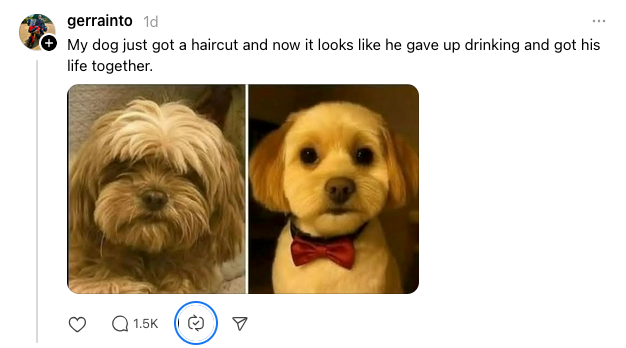
📷 This morning while walking the dog, we saw this shih tzu wearing shoes.
Love a dog wearing shoes.
Automattic is moving Tumblr to a WordPress back end — Interesting! There’s currently no mass-market platform for personal blogging. WordPress used to be that, but now it’s a hairy, often difficult-to-use publishing platform. Tumblr has the potential to fill that gap.
Moving to WordPress would be an opportunity to add ActivityPub support, which Automattic talked about doing years ago but hasn’t followed through on. I’d also like it if they fixed Tumblr’s broken RSS feeds.
Writing prompt: “A loving, married couple wake up one day to find that they have returned to their high school days, when they were the most popular student and the class geek." Enjoyable flash fiction.
Every time I pop open the self-view when I start a video meeting, I look like I just came off a Sterno and methamphetamine bender.
Charles Stross: "They don't make readers like they used to"
Meaty, thought-provoking post on how the act of reading genre fiction has fundamentally changed since he and I were young.
… the public understanding of fiction itself is changing, and with it, the types of fiction which are commercially (or even socially) viable going forward.
Three fictive seeds germinated during the 1970s, and we’re now living in the fifty year old forest they gave rise to. Forests coevolve with ecosystems, and now we’re seeing the consequences.
Those seeds were: Dungeons and Dragons (which sparked the whole field of Role Playing Games, which constitute a wholly new mode of fiction in which the story emerges through a collaboration between the GM and the players–the GM provides guidelines and mediates between the player characters and their environment, but doesn’t dictate their lines): computer games (which are similarly interactive, but the map or procedural generative content is established before the players arrive): and the first of the big superhero movie franchises (notably the original Christopher Reeve Superman movies, which, starting from 1979, dragged Superman–and then the rest of the DC universe, with Marvel in its wake, out of the comic books and onto cinema and TV screens).
I was an English major in college in the early 1980s, and then it was breathtaking, revolutionary and controversial to suppose that the author was not the ultimate authority on their own work — that readers and authors were coequal creators. Only the greatest minds of literary analysis were capable of comprehending that rarified thought, and many considered it blasphemy.
Now, the idea is commonplace, and every 14-year-old fan is just as great an authority on the Marvel Cinematic Universe as Kevin Feige.
The transitions in the art of genre reading might go a long way to explaining why 99% of the sci-fi and fantasy being published today just bounces off me. Even the award-winning stories. Maybe even especially those. I fail to connect with them. And yet, when I was a teen, I consumed science fiction voraciously.
(Does anybody under 60 even remember Theodore Sturgeon anymore? Poul Anderson?)
The Harris-Walz tech policy platform is still bad
Mike Masnick at Techdirt:
It’s not batshit crazy, like the GOP plan, but it’s still generally bad. It’s the kind of thing that is going to lead to a lot of wasted time and effort as moral panic know-nothing “we must do something” types push out bad idea after bad idea, while people who actually understand how this stuff works have to do our best to educate against the nonsense.
The Arkansas Supreme Court upholds rejection of abortion rights petitions. Just keep digging, Republicans.
To infinity — and beyond! Nokia to extend 4G wireless to the Moon. My colleague Dan Jones reports.
After deciding he is the arbiter on who is truly Black, Trump now gets to decide who’s truly Jewish.
… history does not offer positive stories about political leaders who decide that they can evaluate the legitimacy of Jewish people and their families, suggesting that those who fail the evaluation should be cast out.
Trump is hosting a fundraiser for domestic terrorists who assaulted cops on Jan. 6
Michael Fanone, a former Washington, D.C., police officer who suffered a heart attack after being repeatedly tasered by one of Trump’s followers on Jan. 6, said Americans cannot afford to forget what happened that day. “Wake the fuck up, America,” he told HuffPost. “This is who Donald Trump is, a sick motherfucker who fetishizes violence committed on his behalf.”
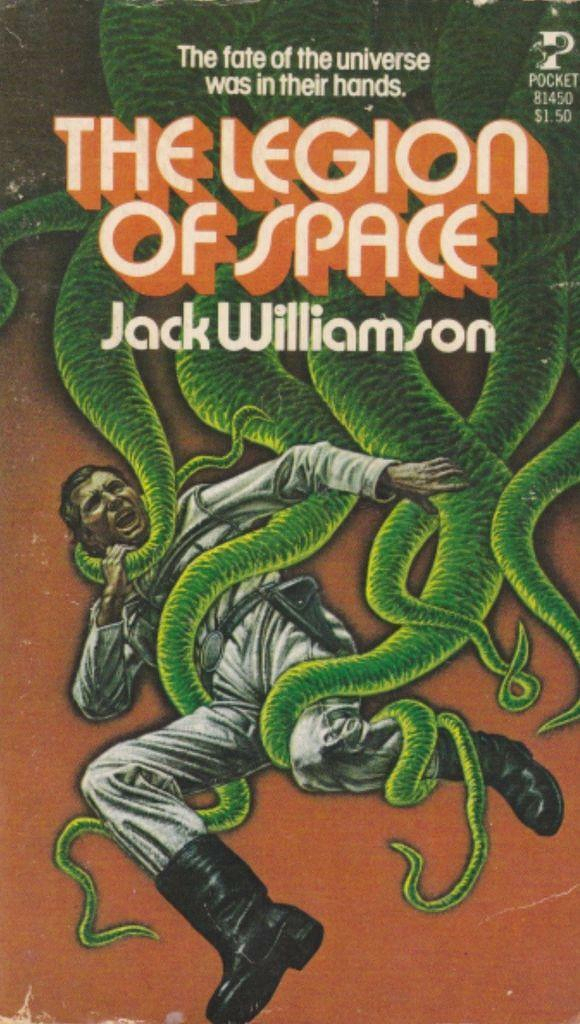
I’d like to read Robert E. Howard. I sneered at those books and their fans during my prime teen science fiction and fantasy reading years. But I was so much older then — I’m younger than that now.
Also, today I learned that the Cimmerians were real.
… the business world has a well-worn playbook that they roll out whenever anything that might cause industry to behave even slightly less destructively is proposed. What’s more, we keep falling for it. Every time we try to have nice things, our bosses – and their well-paid Renfields – dust off their talking points from the last go-round, do a little madlibs-style search and replace, and bust it out again.
— Cory Doctorow @pluralistic@mamot.fr, Corporate Bullshit
Court to cop: Someone observing all the laws is not “probable cause” for a search.. By Tim Cushing at Techdirt.
Tim Cushing at Techdirt: Age verification laws are just a path towards a full-on ban on porn, a proponent admits.
Mask bans disenfranchise millions of Americans with disabilities. Medical exemptions are nothing more than Band-aids
I’ve been masking consistently in public since 2020, when the Covid-19 pandemic began, because I have a kidney transplant and will take immunosuppressant medication for the rest of my life. Unfortunately, my lifesaving medication also makes me more susceptible to infectious diseases like measles, the flu, and Covid-19. Even when people like me are vaccinated against the virus, we are at higher risk of being infected and are more likely to experience adverse health outcomes, including hospitalization and death.
The legislation in Nassau County and elsewhere primarily targets people who wear masks to hide their identity while committing crimes or during public protests, specifically against the ongoing genocide in Palestine. Masks are defined as any facial covering that disguises the face, and facial coverings worn for religious or health reasons are exempt. But people like me, who wear masks for health reasons, are disproportionally affected by these bans even when they include medical exemptions.
That’s because although the Nassau mask ban contains provisions for people who mask for medical reasons, it is up to the police to determine whether someone has a medical reason for masking if they are out in public. This means that enforcing the ban is subjective and will disproportionally impact Black people and people of color, who are more likely to be stopped by police and are also more likely to wear masks to prevent Covid. This is in part because Black and Latinx Americans are more cautious in their approach to the pandemic, reflecting the higher hospitalization and death rates in these communities. The Nassau mask ban as it is written is reminiscent of a “Stop and Frisk” law, which allows police to temporarily detain, question, and search people without a warrant.
This isn’t just localized to Nassau County; mask bans have been proposed or passed in multiple states, including North Carolina, Ohio, and California.
Mike Masnick at Techdirt: Ad revenue at Twitter is still in free fall two years into Musk’s reign.
Karl Bode at Techdirt: Now that streaming subscriber growth has slowed, streamers are “falling into all of the bad habits that ultimately doomed traditional cable TV.”
Disney’s CFO says the company has “earned” the right to relentless price hikes.
Do you want piracy? Because that’s how you get piracy.
I just saw the GOP referred to as “period-tracking panty-sniffing ghouls” and that is perfect. No notes.
Where are you watching the Democratic National Convention? I’m looking for a TV station or streaming channel where the pundits don’t talk over the speakers.
“Disenshittify or die! How hackers can seize the means of computation and build a new, good internet that is hardened against our asshole bosses’ insatiable horniness for enshittification.” — Cory Doctorow at Pluralistic
What Happened to Getting a Doctor’s Finger in Your Butt?
It’s a rite of passage for men. You’re in your 40s, you’re at your annual checkup, and suddenly you hear the snap of a rubber glove.
Why doctors are no longer doing the digital rectal exam (DRE).
You’ve got to hide your myopia away: John Lennon’s contact lenses
John Lennon’s eyeglasses became iconic, but before 1966 he was seldom seen in public wearing glasses. Instead, he wore rigid contact lenses that frequently fell out.
This is a wild article from the professional/scientific “Journal of the College of Optometrists.” It goes deep on medical terminology, attempting to diagnose Lennon’s prescription and explaining why he had such problems wearing contacts.
Nigel Walley, John’s childhood friend and manager of John’s first band ‘The Quarrymen’ (which evolved into The Beatles) recalled: ‘The thing with John though was that he was as blind as a bat—he had glasses but he would never wear them. He was very vain about that’ ‘He didn’t want to be seen out in them, and kept them in an inside pocket along with his mouth organ. He might slip them on to see something, but he’d whip them off again very quickly’.
In 1980, John himself explained that ‘I was just a suburban kid, imitating the rockers. But it was a big part of one’s life to look tough. I spent the whole of my childhood with shoulders up around the top of me head and me glasses off because glasses were sissy…’.
Paul McCartney recounted a story of John’s spectacle wearing habits from their teenage years in Liverpool. ‘He was pretty short-sighted, and it led to some funny occasions… Normally if there were girls around, he’d whip them off. He was a little bit shy with them, so if he was out and about, he’d just take them off… But he came down to my house, he lived about a mile or so away… We were writing some stuff and we got finished about midnight.
And so… he took off his glasses and walked home. The next day he said “…do you know those people on the corner of Booker Avenue?” I said ‘Yeah’. He said, ‘They’re crazy… at midnight when I left you, they were out on the porch of their house playing cards’. I said, ‘You’re kidding me’. So, I had to investigate. I went around and had a look… it was a nativity scene’.”
Chicago officials have been terrified that Texas Gov. Greg Abbott would inundate the DNC with migrant buses. But the people of Chicago may have already called Abbott’s bluff.
This is not the optimistic article suggested by the headline and description. Today’s broken immigration policies are creating a crisis and misery that will roll on for many, many years.
Quixotic attempts to seal the border, combined with prison camps to hold tens of millions of people, won’t solve the problem. They’ll just accelerate the crisis and make it a million times worse.
“I killed him for money – and for a woman. I didn’t get the money. And I didn’t get the woman.” Roger Ebert reviews “Double Indemnity.”