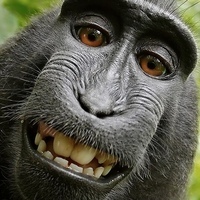
When I turned 50, I decided to get a tattoo, but I did not follow through because it seemed like too much of a commitment.
When I get dressed in the morning, I don’t like putting on T-shirts with messages on them because I may not agree with the message in the afternoon.
I used “harrumph” in a work chat this morning. I’m at an age now where I can “harrumph,” and I plan to take full advantage of this privilege.
Apple reviews
The Best Apples to Eat Right Now, According to an Apple Reviewer
I love apples. I literally eat an apple a day. My go-to apple is now Cosmic Crisp.
For a few years, I loved Honeycrisps, but I now find them barely edible. I think Honeycrisps are different now.
Reviewer Brian Frange ranks SweeTango as number one. I’ve never had one but I’ll watch for it.
❤️👍
I work on a core team of eight people, five of them women, including the manager. We use ❤️ to acknowledge messages on Teams. But lately, I have been uncomfortable with the ❤️ and I am using a 👍 instead. On the other hand, I don’t want to send a message to my colleagues that I don’t like them — I’m just not comfortable with the ❤️.
Unrelated: I’ve been told I overthink things.
Which social media platforms do you get the most value from?
For me, the answers are:
- Facebook. Sigh.
- Reddit, but 90% of my activity is reading and the occasional comment
- Tumblr
- Mastodon
- Bluesky is a distant fifth
I don’t like Discord, so I decided to drop all the Discords I participate in. If those communities go to a proper community platform, I’ll gladly rejoin.
I do LinkedIn for professional reasons.
I don’t do Instagram and Threads now, but I might go back.
C Spire overcomes AI ‘stigma’ — C Spire accelerated trustworthy AI adoption via a CEO-backed Center of Excellence, a customer-first strategy, and early tooling wins that saved time and blocked threats. My latest on Fierce Network.
Pushing back against enshittification
Congratulations to Cory Doctorow on the publication of his new book, “Enshittification: Why everything suddenly got worse and what to do about it,” and his blockbuster profile in The New York Times.
Times writer Joseph Bernstein met with Cory over “an avocado malted and poached eggs at a Lower Manhattan diner:”
Doctorow had arrived to the diner with custom-printed poop emoji stickers, a design that appears on the cover of the new book. He’d won favor with the owners on an earlier visit by explaining that their seltzer maker could be modified to fit a large carbon dioxide tank, rather than frequently replacing smaller, proprietary canisters.
Across Doctorow’s fiction and nonfiction is a central theme: That technology can be used either as a tool of human empowerment and creativity, or repression and control by the state or big corporations. In this vision, tinkering, customization, and individuality are good. Conformity, consolidation, and passive consumption are bad – even if it’s about something as seemingly small as seltzer.
“I am simultaneously extremely excited and hopeful and energized about the possibilities of what technology can do for us as people trying to thrive,” Doctorow said, “and terrified of how bad technology will be for that project if we get it wrong.”
Cory’s theory of enshittification in a nutshell:
First, a platform is good to its users. That may look like Facebook connecting you to all of your friends, or Amazon providing a giant, reliable marketplace for goods.
Then, when enough people have joined a platform that there aren’t any alternatives, the platforms start exploiting their own users to entice businesses. That may look like Facebook providing personal data about its customers to advertisers, or Google prioritizing paid ads over organic search.
Then, when those business customers are also stuck on one dominant platform, the platform puts the screws to them, too: Ad rates skyrocketing on Facebook amid reports of ad fraud, or Amazon sellers having to pay Amazon to be featured on Prime, just to appear high up in search results.
In the end, according to Doctorow, no one is happy except the shareholders of the big platforms.
“All our tech businesses are turning awful,” Doctorow writes in the book. “And they’re not dying. We remain trapped in their carcasses, unable to escape.”