
Greatest Hits
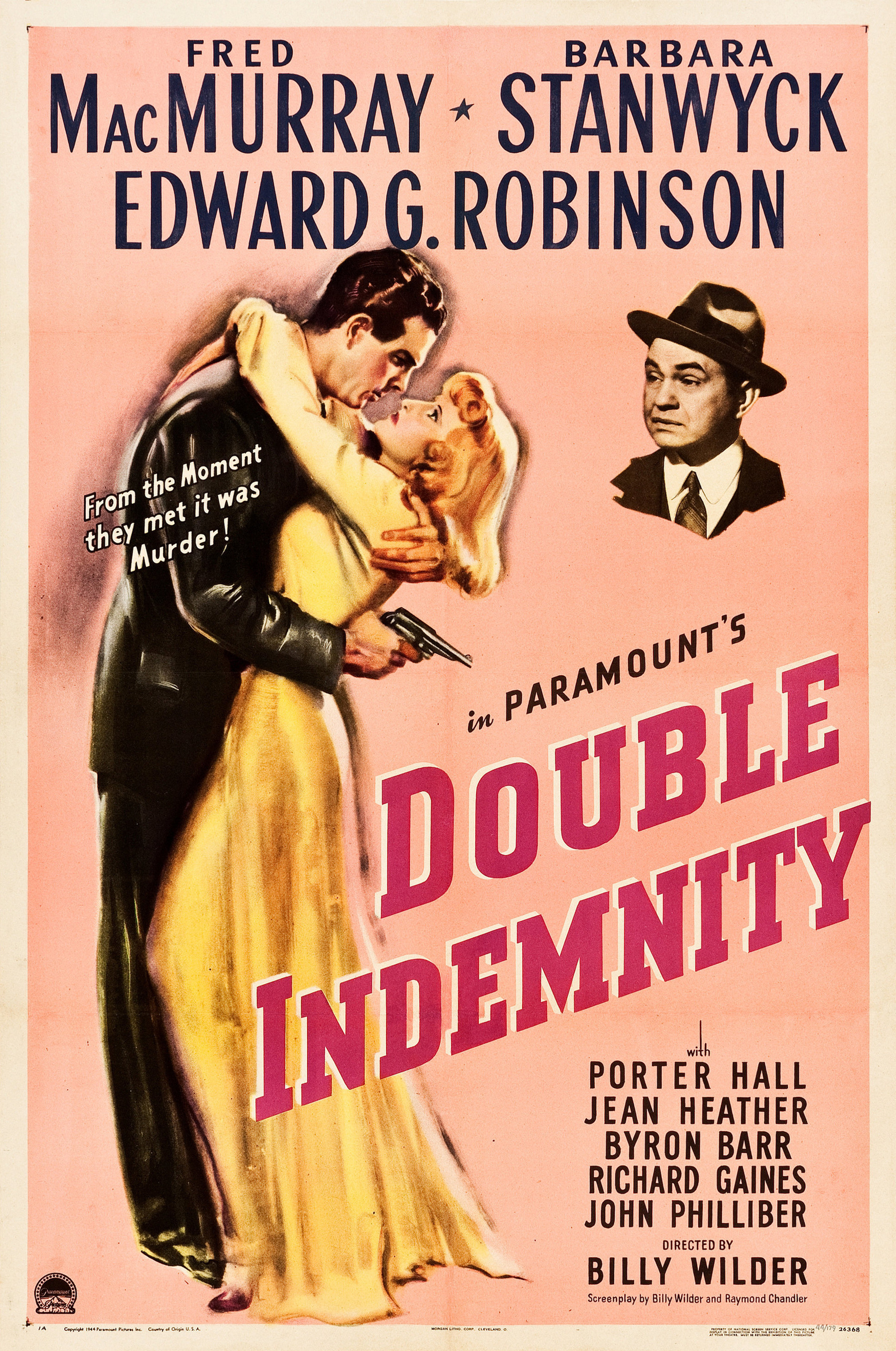
We have seen “Double Indemnity” and I have thoughts
I have avoided nearly all noir movies until now because I like stories to have good guys, and my preconception about noir is that these films entirely feature variations on bad people along with the occasional victim.
I have seen “Double Indemnity” now and I see I was wrong. Not about the bad people—although there are one or two good people in this movie, they are not the main characters. However, “Double Indemnity” is not the least bit off-putting. It was compelling.
Fred MacMurray as the main character, Walter Neff (“two Fs, like in Philadelphia”) is a surprise. I knew him from the 1960s as the father in a TV show called “My Three Sons.” It was a wholesome family sitcom, and MacMurray played a wholesome sitcom Dad, which means he was an amiable eunuch. I knew he’d played other, darker roles when he was younger, and had seen a couple of them, but he blows the doors off Walter Neff. In one of the first scenes of the movie, where he first encounters Barbara Stanwyck as Phyllis Dietrichson, I’m thinking, “Wait, Fred MacMurray is …. sexy? … in this movie?”
And so he is. He is handsome, with a mellifluous baritone voice. He wears tailored suits. He leans nonchalantly against a doorjamb. He moves confidently. He talks in rapid-fire witty banter. He wants Phyllis and he takes her.
And yet it’s also apparent from the beginning that it’s all on the surface. He’s not as sexy, smart, or confident as he thinks he is. And Phyllis, not him, is the one in control of that relationship.
Lots of smoking in this movie. It’s not just that all the characters smoke. Smoking is a big deal. It’s like cigarettes and matches are one of the main characters.
Ebert loved the movie and he said Walter and Phyllis’s motivation was the central mystery. Walter doesn’t seem to really care all that much about the money or her, and vice-versa. I’m not sure I agree with Ebert here—but he has a point. As the movie got started, I was thinking, “Wait, he just met her and now he’s in love with her? Not just in love—obsessed?” And, later, “He’s been with her twice and now he’s willing to murder for her?”
And I wondered why Drake, the character played by Edward G. Robinson, was so motivated to root out fraud. It’s not his money—why does he care so much?
Thinking about it, it seems to me that all these characters are playing a game. People become obsessed with games, particularly when the games involve sex, money and death.
Also, Walter Neff seems like he’s alone. He has no family, no friends, not even a cohort of fellow salesbros. He loves his co-worker, Drake, like a brother, and that is the extent of his human connection. So, yeah, maybe attention from Phyllis Dietrichson was like a sip of water to a man dying of thirst, and he was immediately willing to do anything to get more.
“Double Indemnity” is possibly the least dated old movie I’ve ever seen. All the characters and their situations and motivations seem completely up-to-date. This is a movie that could easily be remade in 2023. But I hope it isn’t. It’s perfect as it is.
The only dated bits are the smoking. And the Dictafone. Walter Neff dictating his confession is part of what makes the movie still fresh, but the Dictafone itself is a weird gadget.
What does Lola see in her boyfriend? He seems to have no redeeming qualities whatsoever.
Now I want to see ”The Apartment” again. “Shut up and deal.” And also “The Postman1 Always Rings Twice,” which I guess along with “Double Indemnity” are the two pinnacles of noir movies.
-
When I initially published this post, I wrote the title as “The Milkman Always Rings Twice.” I don’t know whether that movie exists, but I would like to see it. It would be a steamy romance about an amorous milkman and a femme fatale who’s lactose intolerant. ↩︎
Idea for the beginning of a horror story: A friend mentioned recently that he works in a six-story building. His job takes him up and down from floor to floor all day. He likes to use the stairs instead of the elevator. To clear his mind, he counts the stairs as he goes.
Here’s the story idea: One day, the count changes.
Stephen King, if you’re reading this—no charge.
📺 We watched the final two episodes of "Succession." I have thoughts. SPOILERS
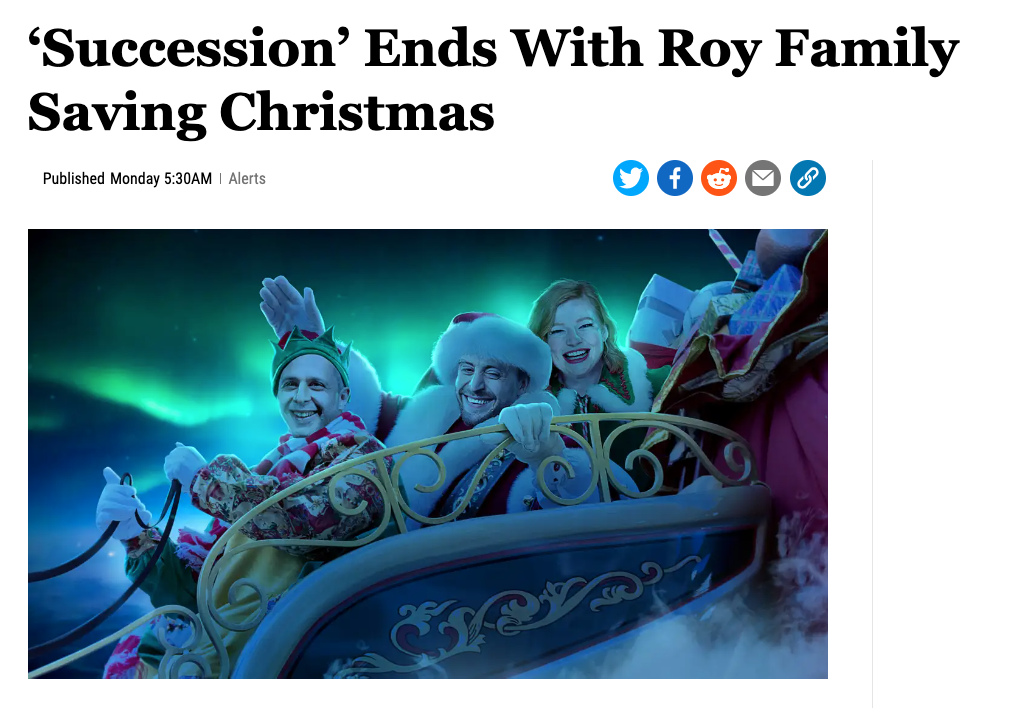
I’m seeing some talk that Tom isn’t the winner because he’s just Matsson’s puppet. But Tom is definitely the winner. All he ever cared about was the money, buying luxuries, and the appearance of power and he got all those things. He doesn’t care about the reality of power.
Tom will remain perfectly loyal to Matsson—until the moment Tom sees it as advantageous to throw his loyalty to someone else. Probably Matsson knows this, and sees Tom as a useful tool.
The same person who said Tom isn’t the winner also compared Tom dismissively to Gerri. That’s nuts. Gerri is one of the winners of “Succession.” She was Logan’s loyal consigliere and assassin for 30 years, and she cashed out big and walked away.
Justine Lupe, who played the high-end-callgirl-turned-wife Willa, also played Astrid Weissman, Midge’s sister-in-law on “The Marvelous Mrs. Maisel.” Her role on “Maisel” is extremely different from Willa. On “Maisel,” she’s a the perfect midcentury upper-middle-class American housewife and mother, a shikse who converted to Judaism to marry a Jewish man and is now more Jewish than her Jewish family.
I love the video playing in Conner‘s apartment, and the kids’ faces as they watched it. We saw another side of Logan there, away from the kids and relaxed, affectionate and warm. Frank, Gerri, Karl and Jess were Logan’s real family, the people he loved and who loved him. Kendall, Roman and Shiv were not part of that family, and they knew it. Connor, on the other hand, was part of that family.
The entire four-year “Succession” story could have been told from Frank and Karl’s perspective, and it would be a very different story.
Why did Shiv vote the way she did? I don’t think we ever get a definitive answer in the show, but I think it was because in the end she just couldn’t stand to see Kendall win. According to discussion on Reddit, there’s a scene just before the vote when Kendall puts his feet up on Logan’s desk, and you see a look of disgust cross Shiv’s face. Neither Julie nor I saw that.
As the CEO’s wife, Shiv is in a better position as Kendall’s sister. But I don’t think she was calculating it through that far until after Tom was named CEO.
Of course, Tom isn’t the real successor. Matsson is the successor.
Roman is finally out, and he is relieved. He never wanted the responsibility. He just wanted to pretend to be a playboy and now he’s back to that.
A theme that emerged throughout “Succession” is that the people who appear to be in power—Tom, the President of the United States—are not the people in power. The real people in power are the people who pay those other people: the Logans and Matssons. In “Succession” we spend a lot of two seasons focused on a Presidential election in which one of the candidates is a neo-Nazi, and it turns out to be a minor plot point, not worth resolving in the finale. Because that election just didn’t matter in the universe of “Succession.”
Shiv is the sort of woman misogynist who sees herself as the exception. She is not the exception. She has become her mother, and is married to a man who literally sits in her father’s chair.
I love the rare sweet moment at the end of the show where Logan’s wives and mistresses all came together as this little supportive sorority. Marcia even takes Kerry’s hand. They were all the women that Logan betrayed, and in the end they stood by each other. Although maybe not—in the universe of “Succession,” you never can assume love and decency is real.
Does Willa care about Connor after all? Or is she just in it for the money? Yes.
In the scene at the bar at the end, Roman orders Gerri’s favorite drink.
I don’t know if we actually enjoyed the final season of “Succession.” Watching it had become compulsive.
I kept expecting Roman’s dick pics to go viral on social media. They were Checkov’s dick pics, and they never were fired.
“Succession” creator Jesse Armstrong shares his view on where the characters go after the season finale: Tom isn’t just going to be an empty suit. He’s got a lot of hard work ahead of him. But he will never be anything other than Matsson’s dog.
Armstrong says Roman is back where he started; the whole multi-year arc was just a detour for him.
Armstrong: “Shiv is still in play … in a rather terrifying, frozen emotionally barren place.”
Also Armstrong: “For Kendall, this will never stop being the central event of his life, the central days of his life, central couple of years of his life… Maybe he could go on and start a company, or do a thing. But the chances of him achieving the sort of corporate status that his dad achieved are very low. And I think that will mark his whole life.”
Why does “Succession” get so much more journalism and social media love than “Yellowstone,” which has similar premises and themes and is far more popular among the viewing public? I think it’s because “Succession” centers on the media business and New York, and therefore has more appeal to journalists and the professional-managerial classes that dominate journalism and social media.
I’ve read that “Succession” is a blue show and “Yellowstone” is a red show, and there’s a lot of truth to that. But “Yellowstone” is more nuanced and ethically diverse and more broadly focused across class lines. Go figure.
In our house, we watch both “Succession” and “Yellowstone.”
The threat of human extinction by AI is only scary for billionaires and centimillionaires
I see now that tech executives are once again warning about risk of human extinction caused by AI.
I think it’s adorable when the plutes worry about that kind of thing, while the rest of us worry about paying for healthcare, food, and housing.
More than 30 million Americans are living below the poverty line. And 40% of Americans were having difficulty paying for normal household expenses.. That’s scary.
AI is only scary to the extent that it will be an excuse to put more people out of work.
What novel should I read next? 📚
I woke up this morning and decided to break up with the novel I’m currently reading. This is a new thing for me; I recently decided to start more books and quit reading more books when they’re not working for me.
I’m not finding that resolution easy. A part of me feels compelled to finish a book once I start, as if failure to complete was wasteful, like not eating all the food on my plate. But of course, that’s ridiculous, and quitting reading a book that isn’t working opens up time to read something I might enjoy more.
The book I’m quitting is “Cetaganda,” by Lois McMaster Bujold. It’s part of her Vorkosigan series of novels. These are far-future science fiction about a hero named Miles Vorkosigan. Miles is the son of one of the most powerful men on the planet Barrayar, scion of a warrior caste. Miles’s father was one of the greatest warriors and statesmen of Barrayan history, who saved the planet after a revolution and coup against the rightful Emperor, and then ruled as regent.
But Miles is not his father; he’s disabled, short and frail, with a rare medical condition that makes his bones fragile and easily breakable. He’s also brilliant, hyperactive, a wise-ass, and prone to getting himself into trouble and thinking himself out of it. The books have an enthusiastic fandom and won a lot of awards.
But I always find myself having to push through the middle of the Vorkosigan books, and in the case of “Cetaganda,” it’s too much pushing.
The Vorkosigan stories are mysteries of one kind or another: murders to be solved, spy plots to be uncovered, military capers to be executed. The plots are intricate. I think the books are meant to be read quickly, over two or three days at most. I read books slowly, over weeks or months, and I get confused about what’s going on in the Vorkosigan novels and who’s who.
The books were written in the 90s, and they already seem a little dated.
Julie went to school with Bujold, though they were not close. And here’s an interesting Wikipedia bit: Bujold’s inspirations for Miles include T.E. Lawrence, a young Winston Churchill, a disabled hospital pharmacist she once worked with, “and even herself (the ‘great man’s son syndrome’).” I’ll have to ask Julie what, if anything, she knows about Bujold’s father.
I may come back to Miles Vorkosigan. But not today.
So what should I read next? I think I’m going to stick with series novels. I like series. Once you find a series you like, they’re reliable, familiar, and comfortable. Here’s what I’m thinking:
Blood Work, Michael Connelly’s seventh novel. Connelly primarily writes about Harry Bosch, an LAPD detective, but he also writes novels about other characters, and this character is new to me, Terry McCaleb, an ex-FBI agent retired on medical disability.
Robert B. Parker’s Little White Lies is not, despite the title, by Parker, but instead by Ace Atkins. It’s a novel about Boston private detective Spenser (first name never revealed), who Parker invented and wrote about in dozens of books until Parker died in 2010. Then Atkins was hired by Parker’s estate to continue the series.
The Parker novels meant a lot to me. I read them in my 20s, and they were the last books I read in a period of my life where I drew role models from fiction, which started in childhood. I looked to fictional characters as I tried to figure out how to live life, and Spenser was the last of those for me.
Also, I fell in love with Boston by reading the Spenser books and taking frequent business trips to that city. I moved there in 1992 and decided I wouldn’t say I liked it after all, but I met Julie there, and we moved together to California and got married.
So the Spenser books are a big deal for me.
Ace Atkins has done a surprisingly good job continuing the Spenser series. His first four books are good but could be better, but he gets going with the fifth, Slow Burn. I’ve read other series where a living author tried to pick things up from an original author who died, and they don’t quite work out; Atkins shows that it can succeed.
Slow Burn isn’t Parker’s Spenser; it’s a collaboration between the two writers (one of whom happens to be not living anymore).
Those are the leading contenders for what I’ll read next. Others on the candidate list:
- A Sandman Slim novel by Richard Kadrey. I quit that series several books in, but maybe I just needed a break.
- Something by Stephen King. I’ve been re-reading some old favorites and picking up newer books I haven’t yet read.
- A Harry Dresden novel. Like the Vorkosigan books, they have an enthusiastic fandom. I read the first one, and it didn’t grab me. A fan told me this weekend that they get better after the first few. Maybe I’ll start again in the middle with those. I did that with the Spenser books, and it worked well.
- After seeing the Jon Hamm Fletch movie, I re-read the first book in that series, by Gregory Mcdonald, and liked it so much I might keep going.
- The next Stainless Steel Rat book, by Harry Harrison, about a master thief turned elite secret agent in the distant future. I loved those books when I was a kid, and I re-read two last year and thought they held up great.
- John Scalzi has a book coming up. I could check to see if it’s out already or if I can winkle an advance copy.
- The second Travis McGee novel. I read the first one last year, and I can definitely see the appeal.
- Something by Elizabeth Gilbert. This entry doesn’t fit on the list; the rest of the books on this list are sf or fantasy or detective novels, but that’s not Gilbert. She’s an author I’d previously dismissed and compartmentalized, but I heard an interview with her in 2020 about her then-new novel, “City of Girls,” I read the book, and by God, it’s brilliant. And I now seek out interviews with Gilbert because she’s brilliant. So maybe I should read more by her?
I’ll probably go with the Connelly, but it’ll be hours and hours and hours until I decide, and who knows where the world will take me in that distant future of later today?
What great books have you read recently?
Jealous of other people's excellent videoconferencing backgrounds
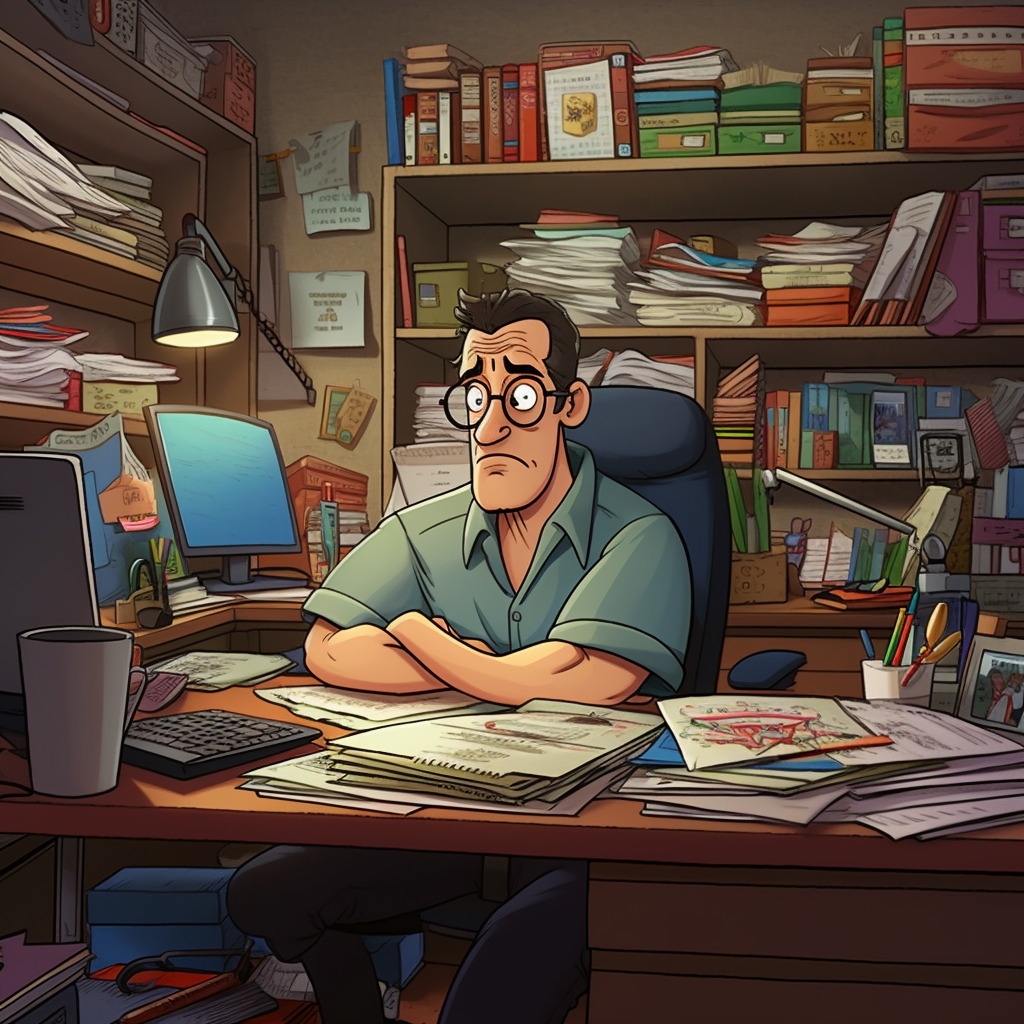
I have an expanse of blank white wall behind my desk, which always bugs me when I see myself on Zoom calls. This has been a stone in my shoe for three years since videoconferencing became commonplace. I’m jealous when I see other people have excellent backgrounds for their Zoom calls.
A friend suggested I just get a couple of guitars and put them behind me. “But I don’t play guitar,” I said. “Doesn’t matter,” my friend said. “Anybody asks, you just make a sad face and say, ‘Oh, I just don’t have time to play anymore.’”
I found a local shop that sells movie posters, with a focus on midcentury grindhouse horror movies. Having a poster for “The Texas Chainsaw Massacre” hanging behind me for business meetings would definitely send a message.
Mimestream is a Mac Gmail client that’s worth paying for
 Mimestream is a native Mac app for accessing Gmail. It gives you Gmail’s advanced capabilities, including Priority Inbox, categories, and labels, in an app that looks and works like a native Mac app.
The alternatives to Mimestream are Gmail’s web interface, which I find cluttered, or native Mac mail apps, which look and work like Mac apps should but don’t give you all of Gmail’s capabilities.
Mimestream has been in beta and free to use for years. I’ve been using Mimestream for most of that time. Now, Mimestream exits beta and gets a few juicy new features for organizing multiple accounts, muting some accounts at scheduled times (for example, if you’d like to mute your work account during personal time), configuring filters and more. Templates with variables will be useful for people who repeatedly send versions of the same email, such as customer support. And a menu bar extra lets you check to see what’s new without opening the app.
Other features of Mimestream: Support for Markdown formatting, Google calendar responses, Google Contacts integration, mentioning colleagues to bring them into the conversation, and syncing with Gmail signatures. More here.
Mimestream is a fast app. With it, I can fly through my email quickly, with minimal hassle. I’ve been using Gmail for more than 15 years, and there are still aspects of that interface I find confusing. That’s not a problem with Mimestream.
I’ve liked using Mimestream and will gladly pay for it. Pricing is US$49.99/year or $4.99/mo. Beta users, like me get 50% off for the first year. $25 is a reasonable price for a year of an app I use all day, every workday.
People who are only occasional Gmail users looking for an alternative to the Gmail Web interface might be happy just sticking with built-in Apple Mail, which is free with your (expensive) Mac. In the past, Apple Mail was unreliable with Gmail, but that doesn’t seem to be a problem lately.
Mimestream was founded by Neil Jhaveri, a software engineer who worked at Apple 7½ years, leading and managing engineering teams working on Mail and Notes. According to the product roadmap, the company is working on expanding Mimestream beyond Gmail to support other mail services, including Microsoft Outlook. They're also working on iPad and iPhone versions of Mimestream.
I used ChatGPT to do background research for an article
I’ve got an interview with a VP at a major vendor that I followed closely while at Light Reading but haven’t paid much attention to since. It’s for an article I’m doing on that company’s overall strategy.
I’m diving into some background to prepare for the interview, and I decided to start my research with ChatGPT. I asked: “What are some questions I can ask COMPANY-NAME about its overall strategy.” (I used the company name, which I’m redacting here.) ChatGPT had the following suggestions:
Can you tell me more about COMPANY’s current strategic priorities?
Who do you see as your competitors?
How does COMPANY differentiate itself from competitors in the industry?
Can you speak to any recent acquisitions or partnerships COMPANY has made, and how they fit into the company’s overall strategy?
How does COMPANY approach innovation and staying ahead of emerging technologies?
Can you discuss any challenges or opportunities you see on the horizon for COMPANY?
How does COMPANY prioritize and approach sustainability and corporate social responsibility?
Can you speak to COMPANY’s approach to diversity, equity, and inclusion within the company and in the broader industry?
How does COMPANY work with customers to understand and meet their needs?
Can you discuss any recent or upcoming product releases that you’re particularly excited about?
How does COMPANY approach talent acquisition and development, and what opportunities are there for employees to grow and advance within the company?
These are damn good questions. They’re generic—not specific to the company or even the tech industry—but helpful. This is a list of questions to get me started, and I’ll continue to work on them and polish them before the interview begins. A few questions are missing, but there are also a few I would not have thought to ask.
I’ve been using chat AI for a week now, and this is what I’m finding: It doesn’t do creative work, but it’s great as an assistant. Kevin Kelly said it’s like having an intelligent intern helping you out, and I think that’s a good metaphor.
Everything ChatGPT says is unreliable. Everything. It will all need to be verified.
I treat it like a source that’s plugged in to gossip. I’m used to dealing with those. They’re great, but you have to use the information right.
I ran this post through Grammarly after writing it, and Grammarly suggested corrections to phrasing in ChatGPT’s questions. One AI is now correcting another AI!
I wonder whether the 12.9” iPad has a future.
Seems like almost anybody thinking about buying one of the big iPads would be better off with a MacBook Air.
For most people, the 12.9” iPad is an ungainly platypus, neither mammal nor bird.
The only people who seem like they’d want the 12.9” iPad would be graphic artists and other people who really, really need that big display and touchscreen and Pencil support.
The 12.9” iPad is too big and heavy to be as portable as the smaller iPads. You can’t hold that 12.9” iPad in your hands for long, unless you’re Andre the Giant. And iPad OS isn’t as versatile as MacOS.
I have an 11-inch iPad Air with a Folio keyboard that I use as a mini-laptop when I want something like that, and I have an iPad mini that I use every day for reading and social media.
Honestly, I’d probably be happier with a MacBook Air than with the iPad Air, but I can’t justify the expense of buying a new MacBook right now.
Truthfully, the iPad mini was a foolish purchase, as I already had the iPad Air. But, still, I’m glad I bought the mini, because it’s my primary iPad now.
Ever since I was a little kid, I have thought men’s suits from the 1930s-50s looked great.
When I was a little kid, I watched old black-and-white reruns of Superman, Abbott & Costello, and particularly John Astin in The Addams Family, and thought to myself, damn, those guys looked sharp. Particularly the double-breasted suits.
Well, Lou Costello didn’t look sharp. But Bud Abbot? Sure. A good suit made even Abbott look good.
That feeling continues to this day.
We’ve been watching a few 1930s-50s movies, including the first couple of Thin Man movies (1930s), “My Man Godfrey” (1936), and just this weekend, “Executive Suite” (1954). And I think: Why don’t men dress like that anymore?
Why do we all go around dressed like hobos and toddlers?
And then a couple of days ago, I thought, you know, I could just buy a vintage suit.
I don’t know where I would wear it.