

"Clue" review: Sitthroughable
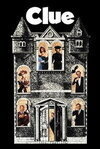
We watched Clue, a 1985 mystery-comedy based on a board game in which a half-dozen people are summoned to a creepy Gothic mansion. Murder happens. More than one. The movie has three endings — the idea when it was released was that people would go to theaters three times to see each of the three endings. The movie bombed at the box office but it became a cult classic at home where people could see all three endings back-to-back.
Tim Curry chews the scenery as only Tim Curry can; Lesley Ann Warren is gorgeous and sexy and tough; Madeline Kahn is wasted except for one brief monologue where she is allowed to be maximally weird; Martin Mull, Eileen Brennan, Howard Hesseman and Christopher Lloyd are themselves, which are fine things to be; Michael McKean is maybe homophobic idk; and Colleen Camp is a French maid in a dress that is a marvel of engineering.
People love this movie. I guess I liked it. It was sitthroughable (AFAIK that word was coined by Newsday’s movie reviewer in the 1970s.)
- Carrie Fisher was originally supposed to play Miss Scarlet, but she went to rehab for drug addiction four days before filming started. Fisher wanted to appear in the film anyway on work-release, but the movie’s production insurance company vetoed her and Lesley Ann Warren was cast as a last-minute replacement.
- Between takes, some of the actors played pool in the billiards-room set. But not Lesley Ann Warren, who was stuffed into a tight corset and used her break times to lean on things.
- The secret passages in the movie lead between the same rooms as in the board game.
- The singing telegram girl was played by Jane Wiedlin, rhythm guitarist for the Go-Gos.
- Lee Ving, who played Mr. Boddy, is (or was) frontman for the punk band Fear.
Meanwhile, on Letterboxd
“My dad got in so much trouble for showing me this as a kid because I started saying ‘I’m gonna go home and sleep with my wife’ at school.”
“colleen camp doing that french accent is me after one duolingo lesson” 🍿
A pianist plays Debussy’s Clair de Lune for an 80-year-old elephant. youtu.be/i1qQOGCyR…

Lucy, Little Lucie, and Desi Jr www.tumblr.com/retropopc…

Heather Cox Richardson. ”Congress left for the holiday weekend a day early today after a number of Republican members of Congress appear to have mutinied against President Donald J. Trump and his loyalists.” Mitch McConnell: “So the nation’s top law enforcement official is asking for a slush fund to pay people who assault cops? Utterly stupid, morally wrong—Take your pick.”
The Iran war draws to a close with the US weakened, Iran much stronger, and Israel screwed. Iran, rather than the US, will be the leading power in the region and a bi-partisan anti-Israel consensus is growing and hardening in the US, among both Republicans and Democrats.
Gentleman unintentionally crashes a beach fashion show and usurps the spot of lead model. “I wouldn’t have had double dessert the night before — or the lunch before that — if I was going to be baring my belly to the world,” he said.
The lead photo on this article isn’t the show-crasher — it’s a model. Bad choice, NYTimes.
Women won’t date men with cats. It’s science!