The Last Archive: The Word for Man is Ishi: The amazing story of Ishi, only member of his Native American community to survive genocide, who was discovered in a small town in northern California in 1911.

Celebrated during his life as “the last wild Indian,” Ishi moved in to the new Anthropology Department at the University of California, Berkeley, where he became a living exhibit. But he also took control of his own life, moving around the community, attending vaudeville shows, and giving newspaper interviews.

Ishi’s life is a microcosm of American imperialism, and how white America celebrated, romanticized, and mourned Native American culture, after first subjugating that culture, committing genocide against it, and sidelining actual, living Native Americans who were—and are—still here.

Anthropologist Alfred Kroeber worked with Ishi and became Ishi’s friend, though Kroeber eventually betrayed Ishi. Ishi died in 1916.

Thirteen years later, Kroeber had a child, who grew up to become one of the most famous and well-respected science fiction writers of the century, writing again and again about imperialism and its victims.


Ishi - Wikipedia

Google bungled by killing Google Reader to build Google+, and then bungled again killing Google+ The company is like the proverbial donkey placed between a pile of hay and a bucket of water that ends up dying of hunger and thirst because it can’t decide between them.

How Google Reader died — and why the web misses it more than ever. By David Pierce at The Verge

Ten years after its untimely death, the team that built the much-beloved feed reader reflects on what went wrong and what could have been.

Google Reader was more than just an RSS reader. It was a general-purpose information hub and sharing platform. It achieved 30 million loyal users—a great success by real-world measures, but not Google scale.

Google’s bad reputation for killing and abandoning products started with Reader and has only gotten worse over time. But the real tragedy of Reader was that it had all the signs of being something big, and Google just couldn’t see it. Desperate to play catch-up to Facebook and Twitter, the company shut down one of its most prescient projects; you can see in Reader shades of everything from Twitter to the newsletter boom to the rising social web. To executives, Google Reader may have seemed like a humble feed aggregator built on boring technology. But for users, it was a way of organizing the internet, for making sense of the web, for collecting all the things you care about no matter its location or type, and helping you make the most of it.

Instead of building on Google Reader, Google wanted to build Google+, and look how that turned out.

I used Reader daily, but never got into the social features. I was barely aware they existed. I thought Google+ was great.

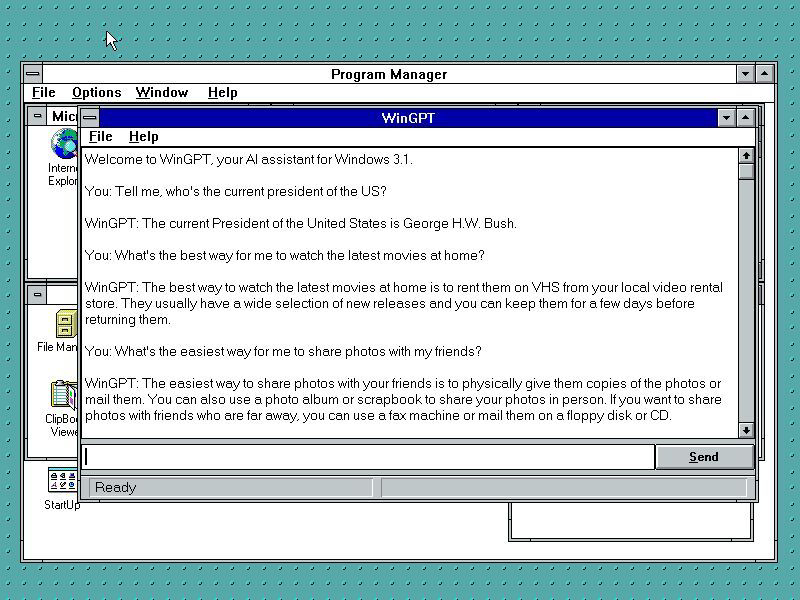
I also talked with ChatGPT. I asked it whether AI is a threat to people’s jobs, and how people can maximize their success in their careers as AI becomes more prevalent. I didn’t include ChatGPT’s responses in the article. Read them here.

My latest: Surviving the AI job apocalypse. AI won’t kill the human race or take everybody’s job. But the workplace will be transformed, and some jobs are at risk. Workers are already starting to adapt.

I recently came across the IndieWeb concept of POSSE. Not the first time I’ve seen it, but this time I read it more closely and said, “Holy cow, there’s a name for the way I’ve always preferred to use social media?”

It should be called “POSCE”—“Publish on your Own Site, Copy Elsewhere.” It’s a more understandable explanation of the concept. Though understandability isn’t a great strength for the IndieWeb movement.