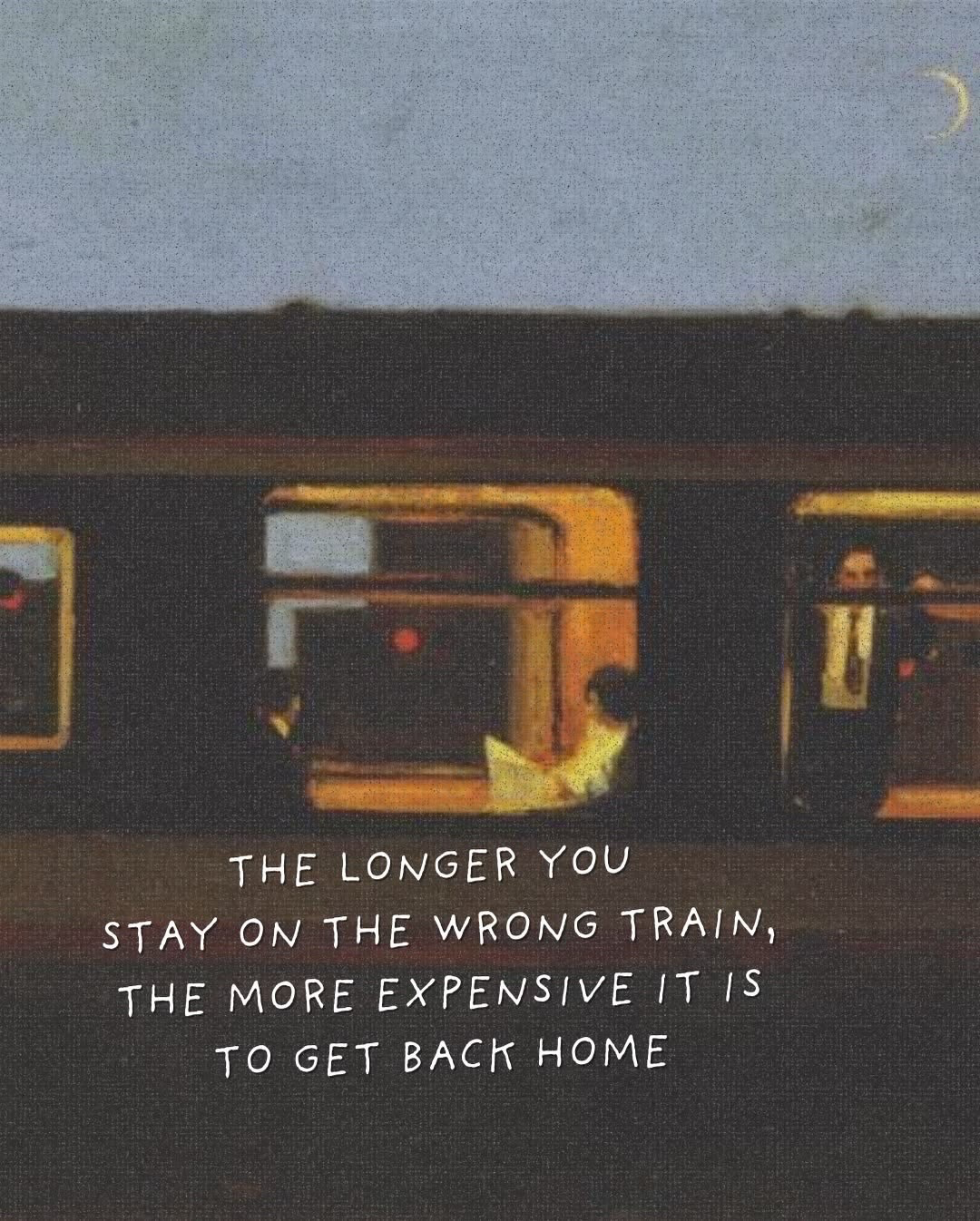




… while we think of the role of the finance sector as “capital allocation” – that is, using investors' money to fund new businesses and expansions for existing business – that hasn’t been important to finance for quite some time. Today, only 3% of bank activity consists of “lending to firms and individuals engaged in the production of goods and services.” The other 97% of finance is gambling."

— Cory Doctorow, A perfect distillation of the social uselessness of finance

We're all just content for ICE

Ryan Broderick at Garbage Day:

During my four days in the Twin Cities, I watched the fabric of American society start to break down. ICE agents armed with assault weapons, tear gas, stun grenades, and pepper spray balls drive cars off the road and break down people’s doors with abandon. The institutions that are meant to protect us — local law enforcement, local politicians, the basic machinery of democracy and accountability — have all but thrown their hands up. “They have bigger guns than we do,” Minneapolis Mayor Jacob Frey said during an interview over the weekend.

ICE agents are, simply put, fucking clowns. According to The Atlantic, they receive 47 days of training — in honor of Trump, the 47th president, naturally. Many of them, also, can barely read or write, apparently. The ones I spent the weekend following around didn’t even have proper uniforms, with some wearing sneakers. In Minnesota. In January. These dipshits are also wearing camo in the snow. They clearly do not have any training when it comes to their own weapons either. Multiple times over the last few days, I watched officers fire pepper spray balls at the feet of protestors barely a few inches away from them. These weapons are basically paintball guns full of concentrated pepper spray. So when they hit a target, they explode into the air. Which meant ICE agents regularly ended up poisoning themselves with their own weapons. I also watched two agents ask each other if a canister they were about to fire at the crowd was tear gas or a stun grenade. (It ended up being a stun grenade that then ignited the tear gas they had already shot at us, which started a fire in the street that a protestor had to help them put out.)

The lesson here is clear: We’re on our own now. They have guns and drones and they can hack our phones and smear our names online and arrest us without a warrant and charge us with terrorism. And all we have are whistles and protests and TikTok and group chats and maybe some journalism. Our local leaders are admitting they can’t help us. So we’re left with nothing but hope that all of that will be enough. But it’s impossible to shake the profoundly unsettling feeling that we have clearly stepped across the threshold into a very different political reality. And it’s not a matter of if it arrives in your town, but when.

Nostalgia ain't what it used to be

I think I will reread “Funny Papers,” by Tom De Haven, first of a trilogy of novels that I loved, about the writers and artists behind a fictitious newspaper comic strip featuring a boy named Derby Dugan. The novels span New York in the 1890s-1970s, exploring the worlds of the newspaper industry, pop culture and life in those eras. The books are beautiful and sad; the comic strip brings joy to millions of people but not to its creators, who are miserable sods. That doesn’t sound like a fun read, but it is. I am highly romantic about midcentury New York, a place and time that I missed by a few years.

I wrote a review of “Derby Dugan’s Depression Funnies,” the second book in the series: A talking dog and puckered shoes: Derby Dugan’s Depression Funnies

When I first read that novel, I had no idea it was part of a trilogy; I was surprised and delighted to find the first novel, “Funny Papers,” years later, and then surprised and delighted again a few years later to find the third novel, “Dugan Underground.” The first novel, “Funny Papers,” covers the golden age of tabloid yellow journalism in the 1890s, “Depression Funnies” is about the peak of newspaper comic strips in the 1930s, when newspaper cartoonists were millionaire pop stars, and the final novel is about the hippie counterculture underground comic scene in the 1960s and 70s.

I’m gratified to see that De Haven is still alive and working, according to Wikipedia, though I’m disappointed to see that he apparently hasn’t produced a novel in 20 years. On the other hand, there are a few novels of his that I have not yet read, so new De Haven is on the horizon for me!

De Haven’s most recent novel, “It’s Superman!” is a kind of Superman reboot, inspired by the strips of the 1930s-1950s, “in which the hero is less concerned with super-villains and Lex Luthor and more with clearing slums … and exposing corrupt politicians.” It’s very good.

From Wikipedia:

The author noted in an interview that he agreed with Robert Crumb’s observation that the Thirties was the pinnacle of American culture. He also notes in the same interview that he finds truth to Art Spiegelman’s statement “that we are, for whatever reason, most nostalgic for the decade before the one we were born in”, as he was born in the Forties

The 1930s were certainly a great period in American culture, though I don’t know if they were the pinnacle.

As for being most nostalgic for the decade before the one we were born in — I say baloney. That would make me most nostalgic for the 1950s, which is a decade I have little interest in. If I had to pick favorite American decades that I did not live through, I’d pick the 1930s, 1940s and maybe I’d throw in the 1960s and 1970s, which I was too young to fully appreciate.

Other than the rise of the tech sector, the 1980s and 1990s were not very interesting for American culture — although they were very interesting, both personally and professionally, for me individually.

Arguably the 1990s were the peak of American prosperity and influence. There’s a funny post about that:

The Matrix described 1999 as the peak of human civilization and I laughed because that would obviously not age well but then the next 23 years happened and now I’m like yeah okay maybe the machines had a point

That was posted in 2022; four years later, 1999 is looking better and better.

And another:

it is may 5th, 2000. you are in the crowd at 30 rockefeller plaza watching steely dan perform “peg” on the today show. al gore is up in the polls. a few miles south, the twin towers stand tall, a potent symbol of the might of american capital. everything is going great 👍

If you’re a Steely Dan fan, do watch the video at the preceding link and cry for a lost, under-appreciated golden age.

Mel Brooks is still raising hell at 99

Hadley Freeman at Jewish News:

“Some days I’m not feeling as great as I want to. But other days I don’t even notice that I’m not 37 anymore.” He keeps ‘showbiz hours’, staying up late, sleeping late, starting his day in the afternoon with a breakfast omelette. “Then I take a walk in front of the house, up and down the steps to stay limber. I talk on the phone and I write – every day. Always writing, always correcting, always questioning.”

Brooks on his World War II experience:

Enlisting at 18, he fought in France and Germany as a combat engineer. What does he remember about it? “I remember thinking there’s nothing better than a ham and cheese baguette on the Champs-Élysées. Delicious, but very treif.”