
I’ve passed this roadside shrine dozens of times over the years. I don’t think I’ve read the plaque before.

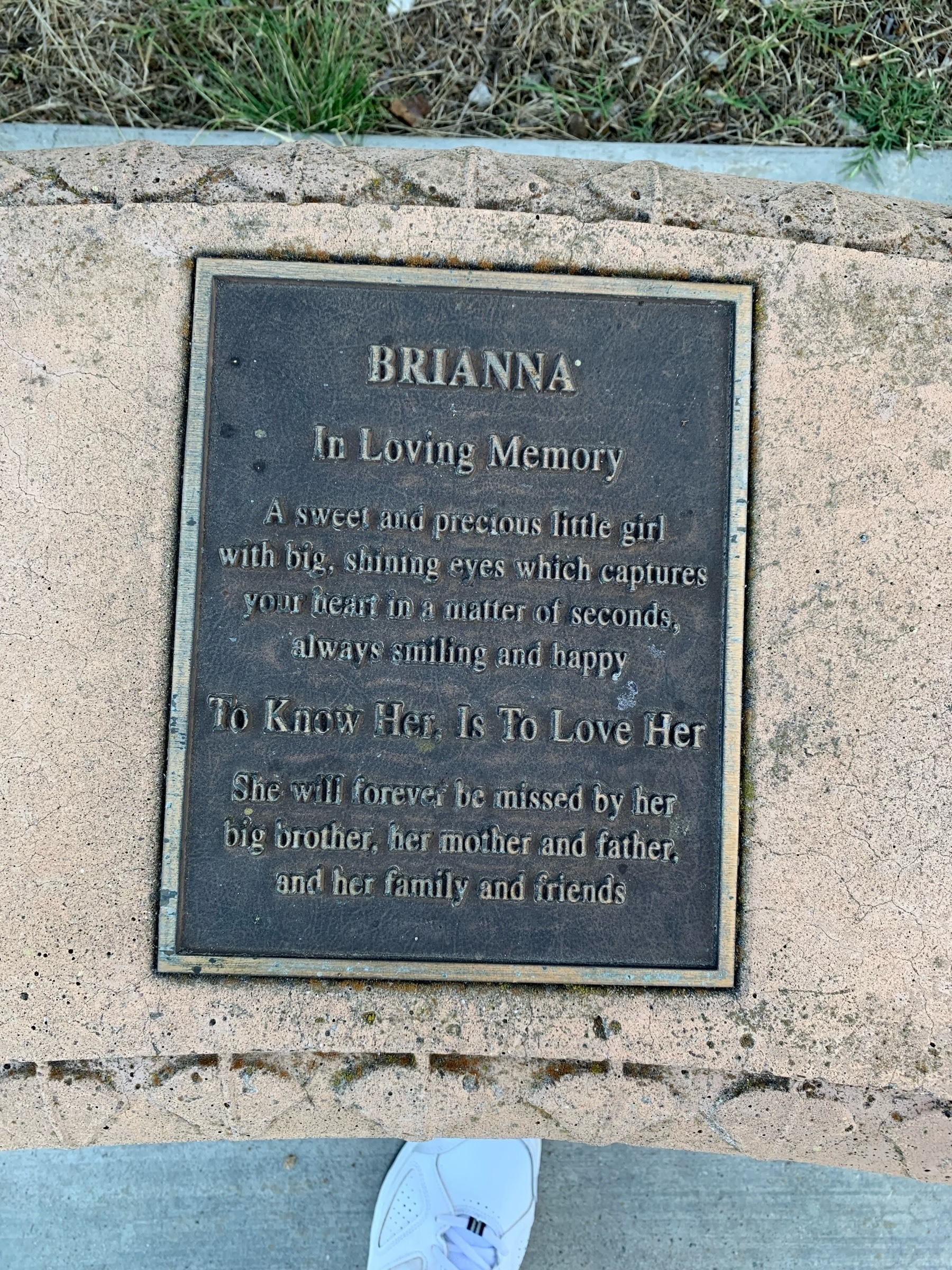
I’ve passed this roadside shrine dozens of times over the years. I don’t think I’ve read the plaque before.
I’ve started reading Doonesbury from the very beginning, and I plann to keep going until I catch up to the present day. Here’s the very first strip, from October, 1970.
So far I’m up to December 1970. Over that time, you can see Garry Trudeau quickly improving as a writer and slowly improving as an artist. Within three or four years he’d be doing detailed drawings and sharp satire about Watergate.
The strip was initially published in the Yale student newspaper, when Trudeau was himself an undergrad there, and it’s about as sexist as you’d expect from an Ivy League college boy of the Animal House era. Trudeau evolved quickly on that front too.
I read the strip religiously in high school, then got out of the habit, though I picked it up intermittently over the subsequent decades. I haven’t seen it in years, and I’m keeping away from he current strips for now. I want to catch up with them.
Ask a Manager: Should you list hobbies on your resume?
A long thread of stories about people bombing job interviews, on Ask a Manager:
When asked a (completely stupid question) about how I would react if I woke up suddenly in a cage with a tiger, I asked if the tiger was alive.
This wasn’t the right line of questioning as per the interviewer’s surprised expression.
When asked to elaborate, I said “If it’s dead, cry but no real panic. It’s alive, cry and panic and die.”
Response:
I started thinking of further clarifying questions I would ask in this interview scenario and realized I was just Dungeons-and-Dragonsing my way through it:
“What is the condition of the tiger? Has the tiger noticed me yet? What can I perceive outside of the cage? Can I see the door to the cage from where I’m sitting? Can I hear or see the presence of anyone else outside the cage? Does the cage appear to be locked or only shut? Is the tiger between me and the door to the cage? Okay, given that knowledge and my Strength and Dexterity (not good), I…”
The myth of rural America: “ … the rural United States is, in fact, highly artificial. Its inhabitants are as much creatures of state power and industrial capitalism as their city-dwelling counterparts. But we rarely acknowledge this … because many of us – urban and rural, on the left and the right – ‘don’t quite want it to be true.’”
While walking the dog this morning, I saw this house. These guys own Halloween



Overheard: I don’t want to brag but I walked into a room and remembered why I walked in.
Can I list “speed grocery shopping” as a skill on my LinkedIn profile? Because I slay at that.
Last night we watched the first episode of “Lessons in Chemistry,” about Elizabeth Zott, a chemist in 1951 who is forced to take a humiliating job as a lab tech because of sexism and who ends up hosting a highly successful cooking show on TV. The show stars Brie Larson (who is not, I subsequently learned, the same person as Alison Brie).
Elizabeth is determined and humorless and takes up with Calvin Evans, a male chemist, who is also determined and humorless and is the only person who sees her for who she is. Both characters are endearing.
The costumes and period designs are beautifully done. Perhaps too perfect, but that’s typical of period shows. All the cars are clean and in mint condition; clothes are neat, clean, pressed, and tucked in. In real life, in 1951, you’d see a lot of wrinkles and untucked shirts and the occasional stain, just like today. Some cars would be nice; some would be beaters. But not in the world of “Lessons of Chemistry.” That’s fine.
I liked the show but did not love it. I was not hooked, but I’ll give it another episode, and I expect to enjoy it more over time. Julie loved it from the beginning—she just read the novel it’s based on and loved that.
One unbelievable note jumped out: Calvin is presented as having moderate-to-severe allergies. He becomes dramatically ill, simply smelling a woman’s perfume. He lives on saltine crackers and vending machine peanuts. (The vending machine, by the way, is a beautiful midcentury design.) He joins Elizabeth for lunch, and she insists he try the lasagna she made for herself. He plunges in a forkful and pronounces it delicious. As a person with allergies myself, I know that nobody with allergies will try a strange food off someone else’s plate without first inquiring about the ingredients.
“Lessons in Chemistry” has echoes of another recent series, last year’s “Julia,” about the origin story of Julia Child. Also a smart show set in post-WWII America with beautiful period costumes and designs about a strong, smart woman battling sexism to host a successful cooking show.
Today I learned Alison Brie and Brie Larson are two separate people.