
A little bird tells me that Tumblr is going to put some effort into fixing its RSS feeds. O frabjous day!
Reading about our new Speaker of the House and seeing absolutely nothing good. He’s an insurrectionist who wants to impose Sharia law on the United States.


I had to cold-call a relative stranger for social reasons just now. I knew it was coming and I was nervous about it for days. I have become a millennial.
Until yesterday, I had never seen “Moonlighting.” Now I have.
The first episode at least.
Much comedy. Much fast witty dialogue. Some action-adventure. The clothes are fantastic and very very 80s. Cybill Shepherd is gorgeous. Bruce Willis is handsome, and his suit is sharp. I have always liked double-breasted suits.
I liked “Moonlighting,” but I had trouble getting out of my head to just sit and enjoy it. I kept thinking, “Is Bruce Willis supposed to be charming here? He kind of seems like an asshole. How would the 1985 audience perceive him?”
This morning, I concluded that the 1985 audience would have perceived him exactly as I did, and they too would have wondered whether he was really as big an asshole as he sometimes acted.
This was Willis’s first role of any stature, about two years before “Die Hard.” He was truly an overnight success. Until “Moonlighting” hit he was a bartender and sometime stage actor who had previously done one guest role on (I think) “Miami Vice.” He’s in his 20s here, already starting to lose his hair but still in possession of most of it. And such a babyface. It was a little painful to watch him here, so young, intelligent and fast-talking, knowing that real-life 2023 Bruce Willis is far along in dementia.
The other star, Shepherd, was considered old by 1985 standards. She was 35 then! Heavens! The people of 1985 were idiots; Cybill Shepherd was stunning. Also, she’s great at the witty banter, and—like Lucille Ball—she’s a beautiful actor with no compunction about doing physical comedy that makes her look ridiculous.
On the downside: The show could’ve been better if the villains had any kind of backstory. They are stock 1980s villains. A boss wears a bespoke suit (with a collar pin—nice 80s touch there) and speaks in an educated manner. He has a giant, nonspeaking henchman. Another villain is a punk rocker with bad skin.
The stunts were phony.
The show suffers from having been shot for smaller, lower-resolution TVs of the 1980s. Much of the time I could see Bruce Willis’s makeup slathered on. One of the villains seemed to be a 35-year-old man wearing old-age makeup.
But overall, thumbs up. I’ll keep watching. I think I’ll enjoy it more over time.
I think Julie enjoyed it without reservation. She watched the series when it first aired, but said she’d never seen the first episode.
“Moonlighting” and “Miami Vice” were the two iconic TV series of the 80s. I didn’t watch any primetime TV in that decade; I was a college student in the first part, and then a daily newspaper reporter, and spent my evenings doing other things. 1985, the year “Moonlighting” debuted, was a particularly big year in my life.
I’d never seen “Miami Vice” until relatively recently either. I thought that was fine. Watched one or a couple of episodes, but did not feel compelled to continue.

Finished reading: Pax by Tom Holland 📚A history of Rome’s golden age.
For a long time, I defined myself by my work
That was fine when I was in my 20s, but it became less and less useful. I stayed with it anyway, well past the point of uselessness.
I also defined myself more broadly as a writer. But that doesn’t work for me either. I still write—look, I’m writing right now!—but it’s not who I am.
I’m an American, Californian, Jewish, white, male, cis-gendered, heterosexual and Julie’s husband. Those things are characteristics. They’re not who I am.
Maybe we don’t need to define ourselves. Maybe it’s enough to just be and do.
Today I learned about the three types of fun, as categorized by outdoorsy folks:
- Type 1 fun is just regular fun—fun while it’s happening.
- Type 2 fun is miserable while it’s happening, but fun in retrospect, after you’ve forgotten that you nearly lost fingers to frostbite or gotten mauled by a bear.
- Type 3 fun is just plain not fun, not now and not ever.
From comments on Reddit:
There should really be a type 4 fun. Things that are fun at the time but you regret later, like being mean on the internet
…
Type 3 fun is actually enjoyable for others when you share those stories.
…
As a Vet I can say that the army is an expert in providing Type 2 and Type 3 fun while advertising Type 1 fun.





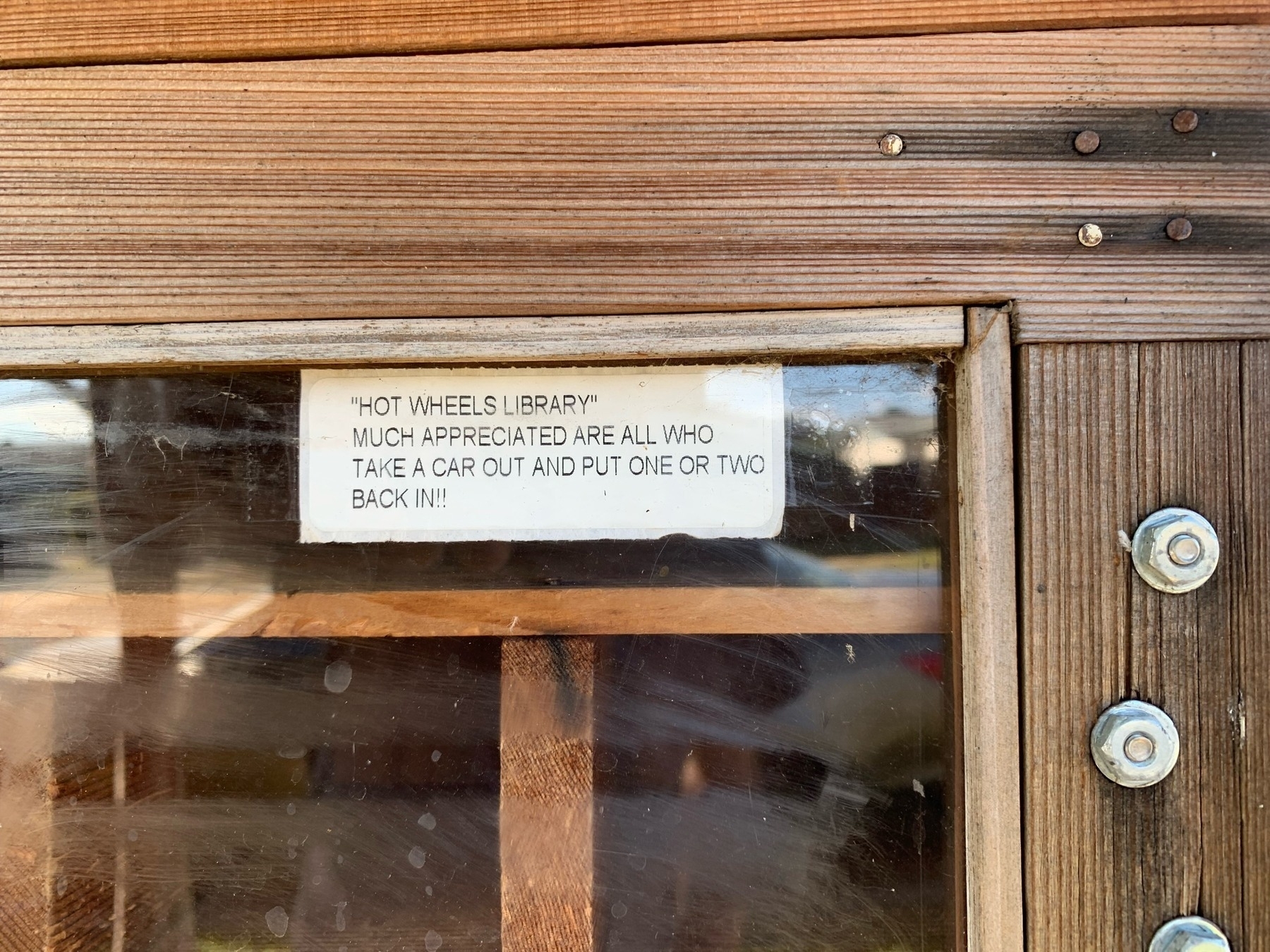



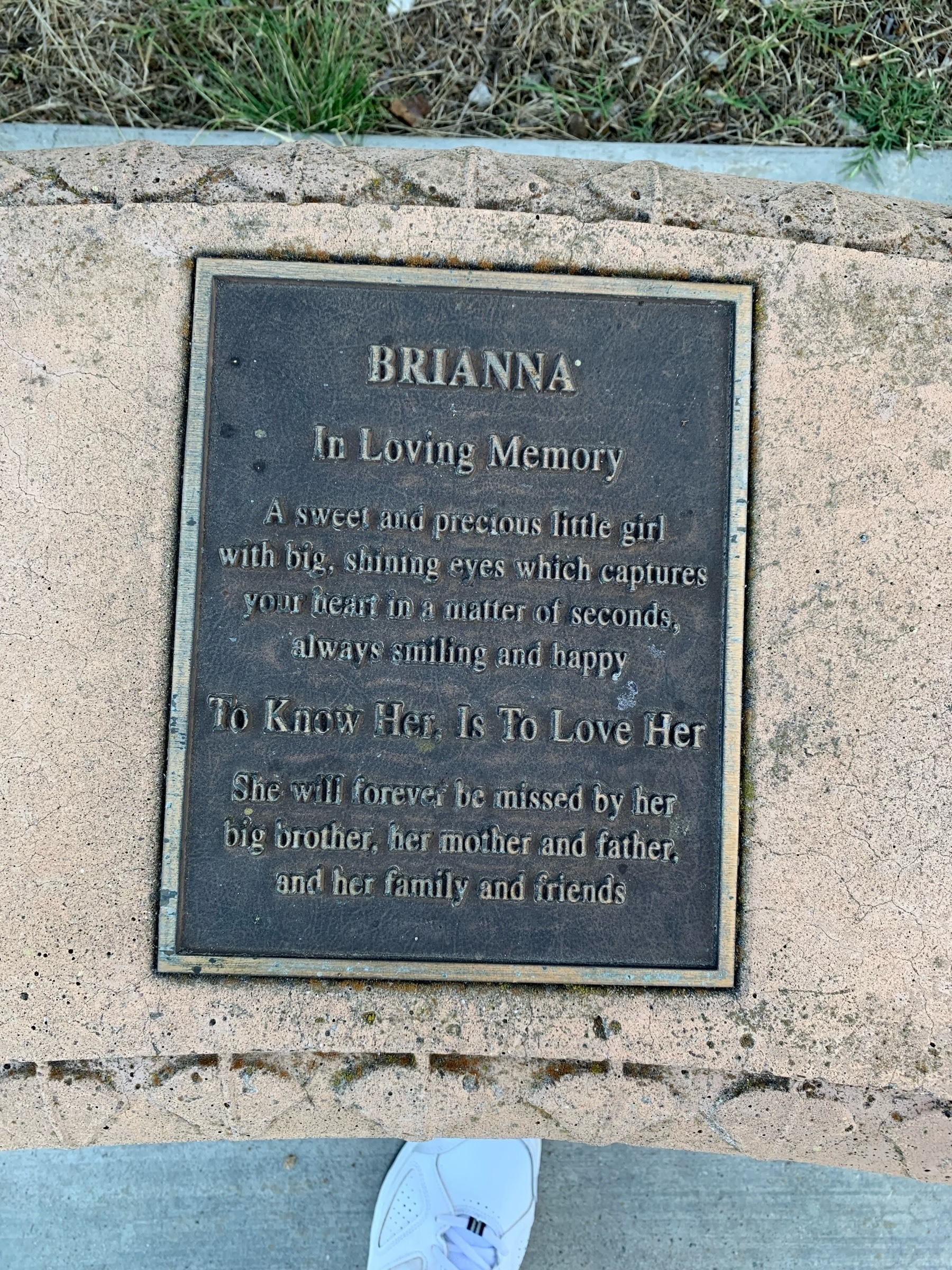
I’ve passed this roadside shrine dozens of times over the years. I don’t think I’ve read the plaque before.

I’ve started reading Doonesbury from the very beginning, and I plann to keep going until I catch up to the present day. Here’s the very first strip, from October, 1970.
So far I’m up to December 1970. Over that time, you can see Garry Trudeau quickly improving as a writer and slowly improving as an artist. Within three or four years he’d be doing detailed drawings and sharp satire about Watergate.
The strip was initially published in the Yale student newspaper, when Trudeau was himself an undergrad there, and it’s about as sexist as you’d expect from an Ivy League college boy of the Animal House era. Trudeau evolved quickly on that front too.
I read the strip religiously in high school, then got out of the habit, though I picked it up intermittently over the subsequent decades. I haven’t seen it in years, and I’m keeping away from he current strips for now. I want to catch up with them.
Ask a Manager: Should you list hobbies on your resume?
A long thread of stories about people bombing job interviews, on Ask a Manager:
When asked a (completely stupid question) about how I would react if I woke up suddenly in a cage with a tiger, I asked if the tiger was alive.
This wasn’t the right line of questioning as per the interviewer’s surprised expression.
When asked to elaborate, I said “If it’s dead, cry but no real panic. It’s alive, cry and panic and die.”
Response:
I started thinking of further clarifying questions I would ask in this interview scenario and realized I was just Dungeons-and-Dragonsing my way through it:
“What is the condition of the tiger? Has the tiger noticed me yet? What can I perceive outside of the cage? Can I see the door to the cage from where I’m sitting? Can I hear or see the presence of anyone else outside the cage? Does the cage appear to be locked or only shut? Is the tiger between me and the door to the cage? Okay, given that knowledge and my Strength and Dexterity (not good), I…”
The myth of rural America: “ … the rural United States is, in fact, highly artificial. Its inhabitants are as much creatures of state power and industrial capitalism as their city-dwelling counterparts. But we rarely acknowledge this … because many of us – urban and rural, on the left and the right – ‘don’t quite want it to be true.’”



Last night we watched the first episode of “Lessons in Chemistry,” about Elizabeth Zott, a chemist in 1951 who is forced to take a humiliating job as a lab tech because of sexism and who ends up hosting a highly successful cooking show on TV. The show stars Brie Larson (who is not, I subsequently learned, the same person as Alison Brie).
Elizabeth is determined and humorless and takes up with Calvin Evans, a male chemist, who is also determined and humorless and is the only person who sees her for who she is. Both characters are endearing.
The costumes and period designs are beautifully done. Perhaps too perfect, but that’s typical of period shows. All the cars are clean and in mint condition; clothes are neat, clean, pressed, and tucked in. In real life, in 1951, you’d see a lot of wrinkles and untucked shirts and the occasional stain, just like today. Some cars would be nice; some would be beaters. But not in the world of “Lessons of Chemistry.” That’s fine.
I liked the show but did not love it. I was not hooked, but I’ll give it another episode, and I expect to enjoy it more over time. Julie loved it from the beginning—she just read the novel it’s based on and loved that.
One unbelievable note jumped out: Calvin is presented as having moderate-to-severe allergies. He becomes dramatically ill, simply smelling a woman’s perfume. He lives on saltine crackers and vending machine peanuts. (The vending machine, by the way, is a beautiful midcentury design.) He joins Elizabeth for lunch, and she insists he try the lasagna she made for herself. He plunges in a forkful and pronounces it delicious. As a person with allergies myself, I know that nobody with allergies will try a strange food off someone else’s plate without first inquiring about the ingredients.
“Lessons in Chemistry” has echoes of another recent series, last year’s “Julia,” about the origin story of Julia Child. Also a smart show set in post-WWII America with beautiful period costumes and designs about a strong, smart woman battling sexism to host a successful cooking show.