
Outstanding interview with Walter Mosley, a brilliant Black American writer who is also Jewish
The Curious Case of Walter Mosley
Mosley is the author of dozens of mystery and science fiction novels featuring Black heroes. His most famous novel is “Devil in a Blue Dress,” which features the hard-boiled, tough-as-nails private eye Easy Rawlins, portrayed by Denzel Washington in a terrific 1995 movie based on the novel.
I was astonished when this 2010 interview appeared in Moment, a Jewish magazine, and I learned that Mosley is also Jewish. He’s the son of a Jewish mother whose family fled Eastern Europe to the U.S. and a Black father who migrated from Louisiana to Los Angeles after World War II. Mosley identifies as both Jewish and Black.
Johanna Neuman:
I ask Mosley if he feels Jewish. “Sure,” he says. I ask him what it means to him to be Jewish. “In a way, to be a Jew is to be a part of a tribe,” he says. “Being a part of a tribe, you can never really escape your identity. You can be anything inside, but in the end you’re always answerable to your blood.” I ask if it’s harder to be black or Jewish in America and he pauses, eyes twinkling as he ponders the question, though he has no doubt heard it often before.
“People say to me, ‘Well, Walter, you’re both black and white.’ And I go, ‘No, I’m black, and I’m Jewish. Jews are not white people.’
I don’t know whether I agreed with this assessment of Jewishness when I first read this interview in 2010, but I agree with it now.
I am Jewish. I’m not observant. I don’t keep kosher. I haven’t set foot in a synagogue in decades. I have celebrated a lot of Christmases. I don’t look or act Jewish. I expect nearly everyone I encounter in life assumes I am not Jewish. And I’m an upper-middle-class American in the professional-managerial class. All of that makes me privileged.
And yet I am not white. I am something else. I am Jewish. I am heir to 5,000 years of history, much of which — the most recent couple of millennia — is not shared by the mainstream, Christian, Western European culture. It’s a history rich in poetry, creativity, intellectual achievements, loyalty, culture, and sheer tenacity at survival. In America, we have been made welcome as we have at no other place and time anywhere in the history of the world.
And yet to be Jewish means that all of your privileges can be taken from you in a moment. There are a lot of people in the world who hate you for your Jewishness. In America, there are a lot of people who believe Jews aren’t Americans. They think we are here on their forbearance. The current occupant of the White House and his Republican enablers are among those people, for all that they give lip service to opposing anti-Semitism.
It is Mosley’s conviction that like blacks, Jews are a race. He has called Jews “the Negroes of Europe,” noting that even in America, Jews have long been shut out of some country clubs, professions and universities, not because their religion is different but because they are. Having adapted to their surroundings, he believes, Jews may seem white, because white is the color of privilege. “One of the survival techniques of Jewish culture is to blend in to the society that you live in,” he says. “If you can speak the language and do the business and wear the clothes and join the clubs, it’s easier.” I ask if Judaism is not more of a religion than a race. “Some people can be incredibly religious and that will trump the notion of race.” But he adds with a knowing laugh, “there are very few Jews who are religious.”
Yup. Blending in. I spent a lot of energy as a boy and young man learning to do that. After that it became my nature.
Also:
I ask Mosley if he would ever write a novel with a central Jewish character. “Not if he wasn’t black,” he replies. I lift an eyebrow. “Hardly anybody in America has written about black male heroes,” he explains. “There are black male protagonists and black male supporting characters, but nobody else writes about black male heroes.” Mosley’s self-appointed job is to show these black heroes righting wrongs and protecting people, all in the name of justice, just like their white predecessors and contemporaries.
And:
In recent months, there has been a resurgence of interest in Mosley as a Jewish writer, sparked largely by Harold Heft, a former literature professor who contributed to a 1997 compendium on contemporary Jewish American novelists and noticed that Mosley had been excluded. In “Easy Call,” an article for the Jewish online magazine_ Tablet_ published in April, Heft made the case for Mosley’s inclusion in the Jewish-American literary canon, arguing that there is “a profoundly Jewish dimension” in his work. “What is a Jewish writer, and what is a Jewish theme?” Heft asked. “If a writer is unambiguously Jewish, doesn’t it follow that any story he or she commits to paper contains, by definition, Jewish themes, whether that story involves bubbe telling shtetl folktales over a steaming pot of chicken soup, or a black detective in Los Angeles living in the 1950s?”
…
To Mosley, the debate over whether he is or is not a Jewish author comes as no surprise. “It doesn’t bother me because I understand,” he told Heft last year. “You have Jewish thinkers who wouldn’t include me, because they see Jews in America as white people.”
Fifteen years ago, during Obama’s first term, when this interview was published, there was a great deal of discussion whether we’d entered into a “post-racial society.” Mosley then rejected that belief, and in retrospect he was dead right.
…he bristles at the suggestion that American society has entered into a post-racial period and has matured beyond the evil legacies of slavery and segregation. “He is distrustful of the idea that we’ve moved on,” says Derek Maus. “He understands the raisin in the batter metaphor. No matter how much you stir, you cannot assimilate the raisin into the batter.” Mosley clings proudly to the role of outsider, a view that derives as much from class as color. “I doubt he will ever write about somebody of privilege as a hero figure,” says Maus. Rarely are Mosley’s Jewish characters assimilated or wealthy. “He identifies with European Jews, with camp survivors. There is this linkage to old European Jewishness.”
Mosley has a sensible answer to the question of who has been discriminated against more, Blacks or Jews. Which was worse: Slavery or the Holocaust?
“Comparing holocausts doesn’t seem a plausible thing to me,” he says. “You look at women in the Congo today and you say, ‘I don’t know what’s harder, being black or being Jewish, but I’ll take either one as long as I don’t have to be a woman in the Congo.’”
The Techno-Utopian Seasteaders Who Want to Colonize the Ocean. By Mark Yarm at the New York Times.
AI assisted search-based research actually works now. Simon Willison:
I’ve been throwing all kinds of questions at ChatGPT (in o3 or o4-mini mode) and getting back genuinely useful answers grounded in search results. I haven’t spotted a hallucination yet, and unlike prior systems I rarely find myself shouting “no, don’t search for that!” at the screen when I see what they’re doing.
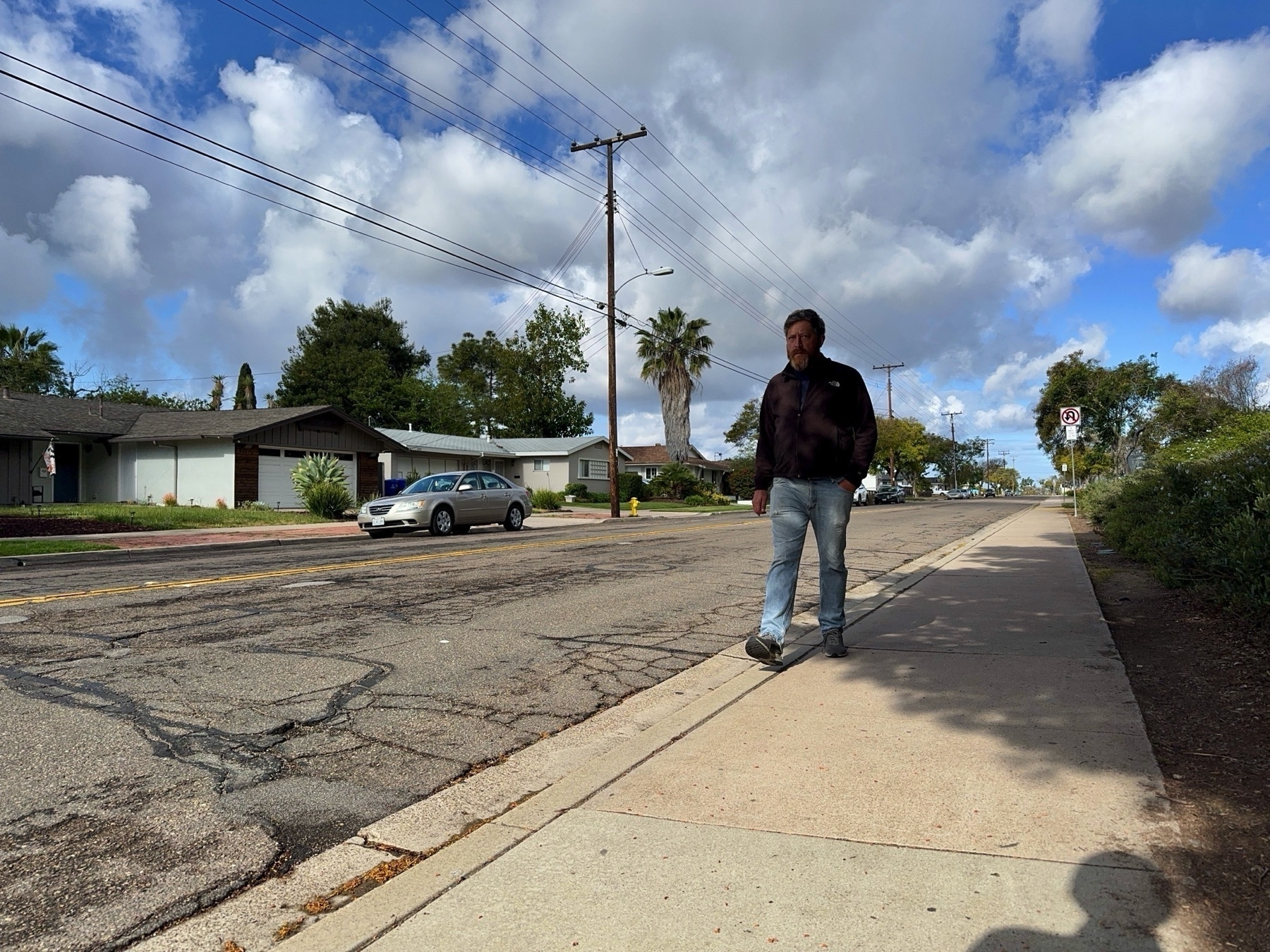
Here's someone I saw while walking the dog
I’m trying out a new stealth photography trick, where I just hold my phone at my hip with the camera open and shoot a lot of images in burst mode, without bothering to aim precisely. Then I review the photos to see if any are good.
I like the way this one came out.
I’m not sure I feel right about posting a photo of a stranger publicly without their permission, but I’m doing it today.
Trump DOJ goon threatens Wikipedia — Latest in a trend of the right going after Wikipedia. Targeting Wikipedia is one of Project 2025’s explicit goals.
Trump pardons Nevada politician who paid for cosmetic surgery with funds to honor a slain officer
Trump pardoned Michele Fiore, a Nevada Republican who raised money to build a statue to honor a police officer killed in the line of duty, and used some of that money to pay personal costs, including plastic surgery.
Trump also pardoned Jan. 6 rioters who tried to murder police.
I hope the police remember these incidents when deciding whether to continue to support Republicans.
The theory and history of time travel — I’ll remind myself tomorrow to read this yesterday.
Shot from the hip! A street level view of 1970s New York – in pictures — Inspires me to take a lot more random, sloppy street photos and sort them out later.