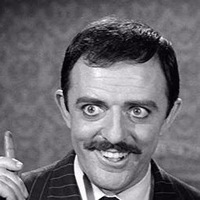
The cashier asked me how I was doing and I said I’m good how are you and he said I’m good how are you and I said I’m good how are you and that was almost a Groundhog Day type situation.
“Dungeons and Dragons: Honor Among Thieves” is “Guardians of the Galaxy” meets “The Princess Bride.” It stars Chris Pine, Michelle Rodriguez, and Hugh Grant. Fun.
Of all the great mysteries of the universe, I would like to know just one thing: When I’m walking the dog, how does she decide where the perfect spot to pee is?
It seems to be a rigorous selection process.
Thinking about a time I was sitting with a small group of people, and one of the women in that group invited us to a party at her house and said we would be free to use her backyard pool.
She added: “Swimsuits. Are. Not. Optional.”
And I thought, “But I do not want to go swimming.”
And that was when I realized that I had become a boring person.
My 15 minutes of badass literary scholarship
In another online community, somebody asked for the title and author of a story about humans encountering another race that seemes to live a simple agrarian life. When asked how they generate electricity, or other questions about advanced technology, the agrarian person responds that they don’t know.
Later, it becomes clear this other race is far advanced of humans, with great psychic powers. Asking them about electricity and such is like asking us about the best kind of wood to rub together to start a fire—something our distant ancestors knew but almost nobody today does.
Other people on the community had their guesses, even asking ChatGPT. But I said to myself, “That sounds like a story I read when I was a kid. The author was John Campbell.” And I did about 15 minutes of Googling and replied thus:
Sounds like “Forgetfulness” by John W. Campbell, writing as Don A. Stuart, in Astounding Stories, June 1937 https://archive.org/details/Astounding_v19n04_1937-06_-ibcbc_fiche-paper
I am feeling hugely badass about this successful act of Internet research.
The original questioner misremembered at least one key detail: The star travelers aren’t humans—they are aliens from a civilization in the distant future. They land on a planet called “Rhth” (get it?) and believe the simple agrarian folk to be the degenerate descendants of a once mighty high tech empire. They pity the simple agrarian folk, but then learn better.
The above link is worth following for the ads alone. The magazine has a gajillion small ads, and they are all like this:
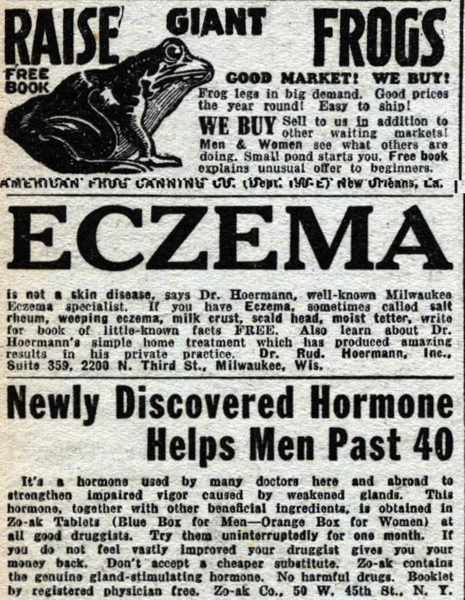
I remember when I finally laid my hands on a reproduction of a 1939 Astounding Stories magazine. I had read so many essays by Isaac Asimov and others that talked about how the 1939-45 era of Astounding was the Golden Age of science fiction. At last! I thought. I have found a precious document!
And I opened the magazine, and my eye fell on the face of a shocked-looking, open-mouthed boy with the headline, “Did you say JOCK ITCH?!”
Also: Ads for anthropological studies of Polynesian sexual rituals. I suspect those studies did not appear in proper peer-reviewed scientific journals.
Eddie Murphy is making a fourth Beverly Hills Cop movie, with Judge Reinhold and John Ashton. Looks good! Here’s the trailer.
On a private community, someone said they’ve just started watching “Babylon 5” on Season 2, and they want to know whether the show stays good.
I replied:
My memory of B5 is that the first season was wooden but there was something about it that made me stay with it. Seasons two through four were excellent.
As for the fifth season: As I recall, the series was initially supposed to go five seasons, but the showrunner, J. Michael Straczynski, got the word that the show would be canceled after four seasons. So he rushed Season 5 to an ending a half-season early.
Then JMS was told whoops, never mind, you get another half-season.
And that’s the way it looked to me onscreen—the first half of the first season was rushed and talky, as JMS was telling viewers information he would have shown if he had the proper amount of time.
Then the second half was just padding and bloviation. A main storyline involved a beautiful woman telepath falling in love with a male cult leader. He had Fabio hair. It just didn’t work for me.
For me, a lot of the fun of Babylon 5 was going on the Lurker’s Guide to Babylon 5 website the morning after each episode aired to see what little easter eggs and plot tricks were hidden in each episode. The website is still online, so somebody just watching the show can have the same fun.
We started a rewatch not long ago, but it didn’t work for either of us. Maybe if we’d started with the second season we would have liked it more?
A spinoff series, “Crusade,” had Gary Cole, which is a plus in any TV show or movie. He played a heroic starship captain. It would have been EVEN BETTER if he’d done the whole thing as Lundberg, his character from “Office Space,” with the contrasting-collar shirt, suspenders, coffee cup, glasses and “Yeah, I’m going to need you to go ahead and… “
I did not love the series but I liked the mix of epic fantasy and space opera. Which I guess is a common trope but not one I’ve encountered before or since.
I do remember one gag I quite liked from that series: a character is a member of the secret Thieves Guild, and this becomes important to the story. Gary Cole confronts her and demands to know why she never told him this. And she rolls her eyes and says, “What’s the point of being a member of secret society if you go around TELLING people about it?” As I recall, the character who was a member of the thieves guild wore a sexy catsuit but her manner was pure Gen X slacker, like Daria Morgendorffer in spaaaaaaace.
‘The Gilded Age’ Shows the Virtues of Inauthenticity: John McWhorter discusses how the characters in “The Gilded Age” would have really sounded and why it’s better that they talk like modern, 21st-century people.
Every so often I like to get inspired by reading about the writer Robert B. Parker
Parker died in 2010. Here’s what Sarah Weinman wrote about him at the LA Times:
Robert B. Parker, who died Monday in his Cambridge, Mass., home at age 77, spent his final moments doing exactly what he’d done for almost four decades: sitting at his desk, working on his next novel. He didn’t concern himself with looking back. Instead, he wrote, and in the process irrevocably altered American detective fiction, forging a link between classic depictions and more contemporary approaches to the form.
Parker taught me to appreciate scotch and soda, stand up to bullies and finish the extra set of sit-ups. He taught me how to make a fast meal and break into a window by chipping out the glazing. He taught me that solving a case has more to do with poking at a situation waiting for things to happen than finding clues. He made Boston appealing (even without a GPS). More than that, he made adulthood appealing, for three generations of my family – my brilliant, alcoholic father, my hesitant pre-adolescent son, and me. Someone once remarked that I was always in search of father figures. Maybe it’s true. I know I lost another one on Monday morning.
He died at his desk, writing. That’s the way any writer would want to go. The police said there was no sign of foul play. That was oddly disappointing, a brackish dousing of reality. A writer found dead at his desk in a Parker novel would spark another fascinating case for Spenser and Hawk. Susan would chime in with the psychiatric angle: an angry editor? A pathological fan? A jealous mystery writer? They would track it down, between runs along the Charles and workouts at Henry Cimoli’s regrettably gentrified gym. (It has potted plants now.)
“He died at his desk, writing. That’s the way any writer would want to go.” Respectfully, that’s romantic nonsense. Parker himself—who thought of writing primarily as a job—might roll his eyes at it. Still, Parker died doing something he loved, and that’s not a bad way to go. Too young, though. We should have had 20 more years of books from him.
Parker, who would publish up to three books a year, said he would write 10 pages a day, often not knowing “who did it” until near the end of the book. “I don’t rewrite, I don’t write a second draft,” he said in a 2005 interview. “When I am finished, I don’t reread it. Joan [his wife] reads it to make sure I haven’t committed a public disgrace, and, if I haven’t, I send it in. Then I begin the next book.”
Weinman again, writing about the final Spenser novels, which were not Parker’s best work.
… spending time in Parker’s company these last several years was akin to attending a concert by Frank Sinatra or Ella Fitzgerald late in their careers: There was just enough juice to revisit the standards, and it hardly mattered if the tone warbled into an echo of former melodious glory.
Politico: John Fetterman isn’t the politician you thought he’d be — and he doesn’t care. Fetterman gives a hell of an interview.
Demand for Abortion Increased Under Florida’s Ban. Anti-Abortion Activists Think Another Ban Will Fix This. Keep digging, Republicans.
After crime writer Robert B. Parker died in 2010, his estate hired several writers to continue the multiple series Parker wrote in his lifetime.
I’ve read six of the Spenser novels by Ace Atkins. They’re enjoyable but frustrating, like seeing a cover band of your favorite group. Beatlemania rather than the Beatles.
A good writer will occasionally surprise you—write something completely unlike them. But a writer hired to write like someone else will, if they do a good job, never surprise you. They always write just like the writer they’ve been hired to write like.
I don’t mean to be harsh on Atkins. He was hired to do a job and he did it well. And I’ve put one of his original books on my to-be-read list.
I’m going to set this as my virtual background for Zoom calls. It will create the right professional impression.
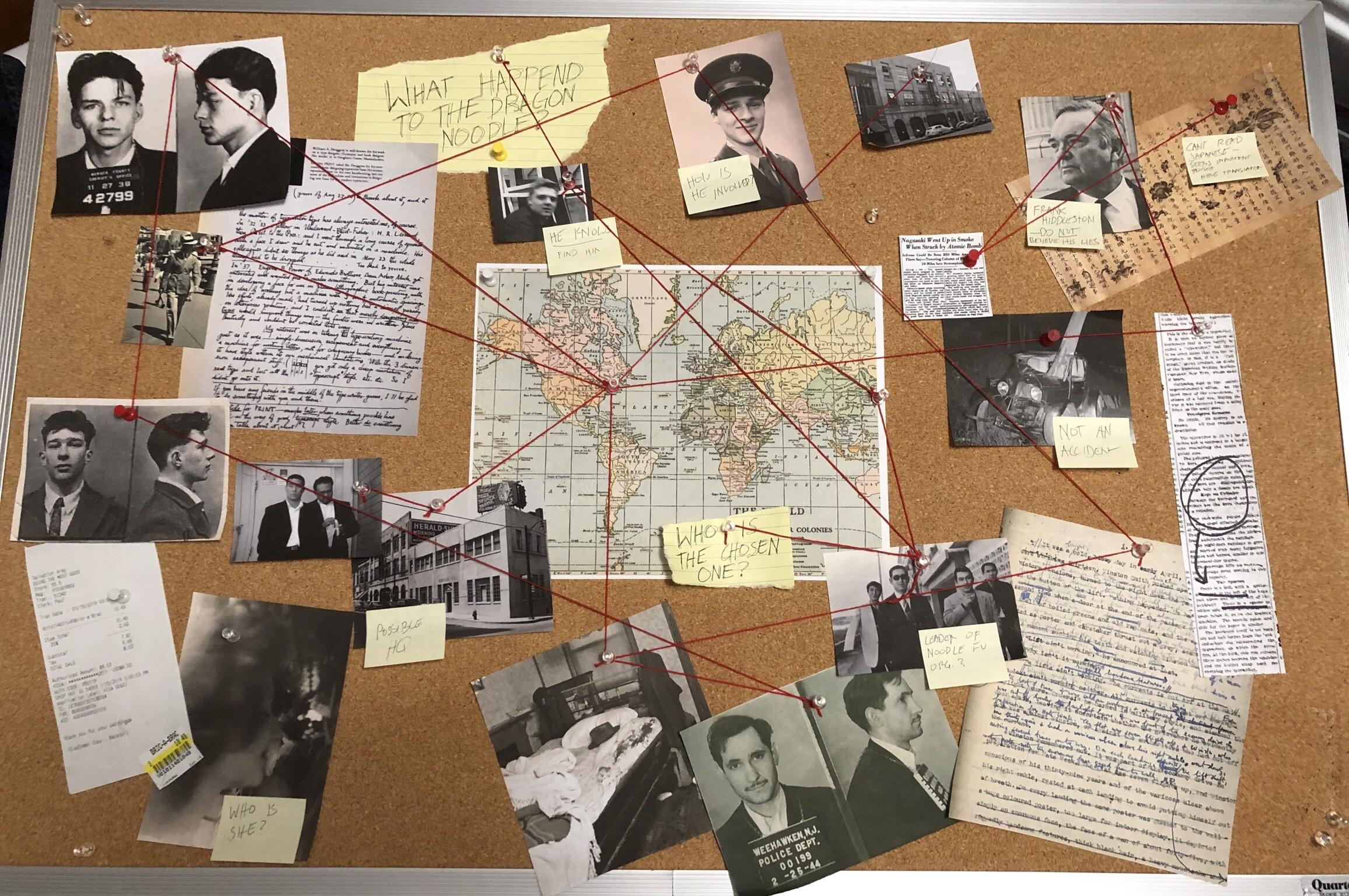
I went around and around the house looking for my phone, searching the usual places again and again, and finally got down on my hands and knees with a flashlight next to the bed and discovered the black phone had fallen off the nightstand and into a black shoe.
The Hyperloop was always a scam.
The tech industry’s move into transportation was not only a failure; it was an active campaign to deny the public access to better transit and trains because the billionaires of Silicon Valley don’t personally want to get around that way. The Hyperloop was one part of that, but so were the Boring Company, ride-hailing services, and self-driving cars. The Hyperloop’s failure provides a lesson we’re learning far too late: that Silicon Valley won’t deliver us a better world if they can’t find some way to profit off it.
It’s All Bullshit: Performing productivity at Google.
Journalist JS Tan, writing at The Baffler, argues that Google has become a cesspool of bullshit jobs—engineers rewarded for building projects that are never deployed, or deployed and quickly abandoned, and bloated middle management. The company is trying to change its culture.
I’m reminded of Cory Doctorow’s observation that Google only ever built 1-1/2 products—search and I forget what else. It bought its ad business, which was like Jed Clampett luckily striking oil in his backyard. Google also bought other businesses that have been successful for it: YouTube, Google Maps, and Waze. (Maybe Gmail is the half-business of which Cory speaks?—Google did develop that.)
Google’s spectacular failures with Google Glass, Google+ and Google Reader, to name just three examples, suggest a company whose innovative powers are far more hype than reality. On the other hand, it’s no mean feat for Google to build and maintain its vast, global infrastructure of data centers and subsea cables, and keep its businesses—acquired or otherwise—successful.