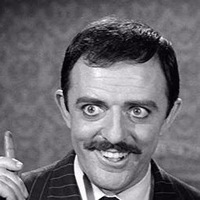
We watched “Mr. Holmes,” a 2015 movie featuring Ian McKellen as 93-year-old Sherlock Holmes.
It’s 1947, and Holmes is long retired to a country house, where he tends his bees and his failing memory. He’s struggling to remember a case 35 years earlier that set the course of the final decades of his life.
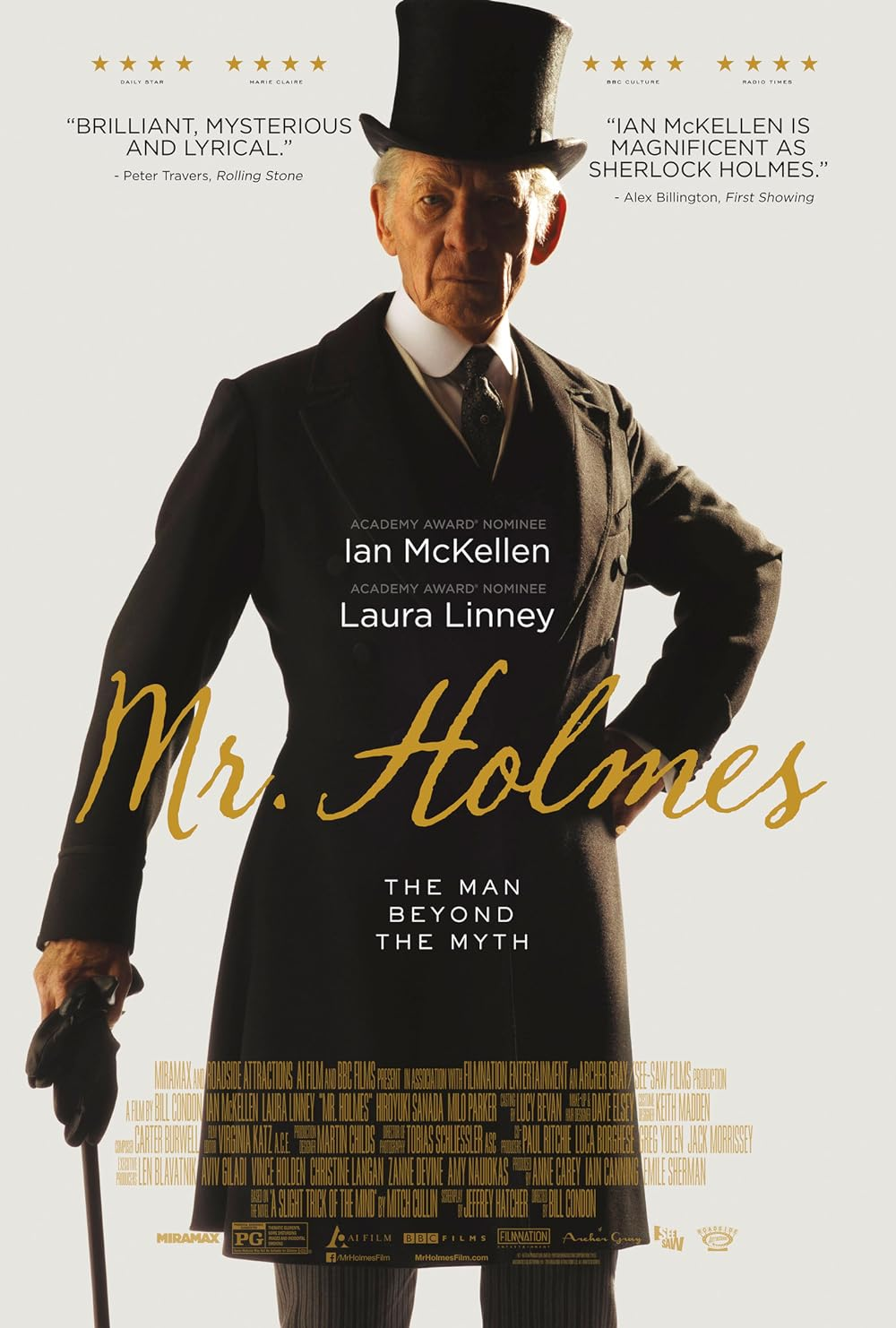
Laura Linney co-stars as Mrs. Munro, his put-upon housekeeper, grieving her husband who was killed in World War II. Mrs. Munro is barely keeping it together; Linney portrays her as a portrait in silent, dignified suffering. Linney’s English accent sounds pretty good to me, but what do I know? I’m a Californian.
Child actor Milo Parker plays Roger, the housekeeper’s son, who strikes up an unlikely friendship with Holmes and who treats his mother with disdain. Holmes treats her as a servant: not cruelly, but not kindly either.
The nonagenarian Holmes is slowly and dignifiedly falling to pieces. He’s still a genius and he’s now facing up to a new antagonist: his own disintegrating mind. McKellen also plays Holmes in flashback, in his late 50s, dignified and elegantly dressed in a suit and top hat, standing erect and moving and speaking with confidence.
Look for Roger Allam, who played Fred Thursday on “Endeavour,” as a doctor who examines Holmes.
Overall, a pretty good movie. Slow start, but good performances, visually appealing and good dialogue.
From Wikipedia: In the movie, Sherlock Holmes goes to see a Sherlock Holmes movie. The black-and-white scene from the movie-within-a-movie stars Nicholas Rowe as Holmes. Rowe starred in the 1985 movie “Young Sherlock Holmes,” playing the detective as a schoolboy.
From the IMDB: McKellen studied beekeeping to prepare for the movie and was not stung during the course of filming. (No mention whether the other actors were stung.)
The IMDB Goofs page makes many gratifyingly nitpicky points., including:
Holmes (perhaps forgivably for 1947) repeats the mistaken idea that “the queen runs the colony and the workers do the work” - in fact, a queen bee is no more than an enlarged egg-making machine at the service of a worker collective, which will slaughter her should she falter, while other worker bees create a replacement queen. Also when the colony grows too large, it is the workers who make the decision to swarm, by starving the queen which both lightens up her body and forces her to take flight.
Sad Clown Paradox: Why You Should Check In On Your Funny Friends
Humor has long been used as a tool against stress and uncertainty, perhaps best captured in The Wipers Times: a satirical newspaper that went to print in the decimated city of Ypres, Belgium, during World War I. So named because most of the soldiers reading it couldn’t pronounce Ypres (they said why-pers instead of ee-pruh), the trench newspaper included sporting notes in which gas attacks were reported as a horse race, regular serials (one of the earliest: a detective series “Herlock Shomes”) and a Things We Want To Know section, including “whether the pop’lar Poplar tree’s as pop’lar as it used to be?”
During the COVID-19 pandemic, humans across the globe took to their windows, bathrooms, and balconies to showcase a similarly resilient sense of humor in the face of life-threatening disease, all while grappling with the stress and isolation of lockdown. And later, amidst the devastation unfolding in Ukraine, hackers found the time to make Russian charging stations display the message: “Putin is a dickhead”.




How do you survive fame? Podcaster P.J. Vogt talks with his friend, the actor and writer Molly Ringwald, “formerly the most famous teenager in America.” She starred in movies including “The Breakfast Club” and “Pretty in Pink.”
Ringwald has a head on her shoulders and didn’t let fame get into it. And she got out of the country and moved to Paris, where she wasn’t famous.
She says the only thing she misses about being famous is getting tables at restaurants.
The Freakonomics podcast is doing a series of episodes on the physicist Richard Feynman. The first episode is terrific, and I’m looking forward to listening to the rest.
Feynman liked to figure things out from first principles. He didn’t accept received wisdom. This led him to extraordinary breakthroughs in physics and a rich and unusual life. He followed his own path, in science and in life.
But Feynman was a super-genius. You and I are not super-geniuses. If you and I try to apply this principle broadly, that leads to Qanon, anti-vax and other bad outcomes.
Sometimes you have to listen to what the experts say.
However, here in the 21st Century, with institutions breaking down and displaying incompetence, it’s difficult to figure out which self-proclaimed experts to listen to.
NYTimes: Could a Giant Parasol in Outer Space Help Solve the Climate Crisis?
Researchers are investigating whether a solar shield in space that blocks some sunlight could help mitigate climate change.
Are they really calling it a “space parasol?” It should be pink with yellow daisies all over, and tassels at the edges.
It has stopped raining and the sun is out at last, but it is so, so wet and chilly and unpleasant out there.
This is not why we are paying San Diego cost-of-living to live here. I demand to speak to a manager.





TV show idea: Just Chrisjen Avasarala from The Expanse and Susy from The Marvelous Mrs. Maisel swearing. I would watch 13 seasons of that.
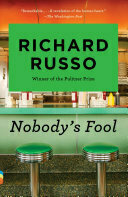
Currently reading: Nobody’s Fool by Richard Russo 📚My third or fourth time reading this wonderful book.
Cisco and NVIDIA did a technology integration deal this week—here’s why it matters: Cisco and NVIDIA want to take the hassle out of AI infrastructure. My latest article for Silverlinings.
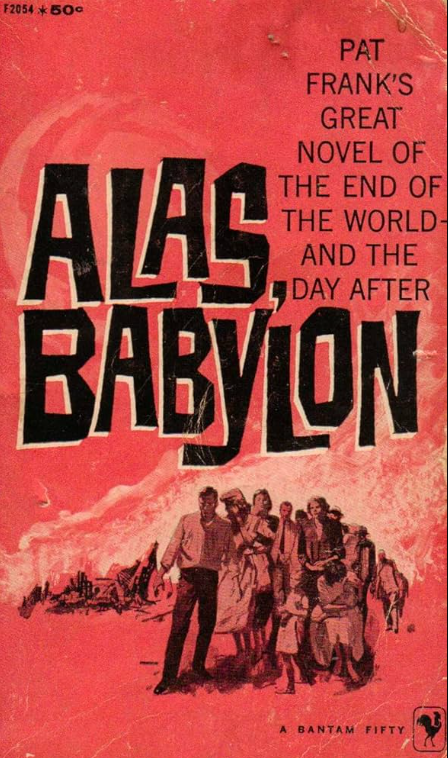
Listen to our talk about the novel “Alas, Babylon” on Seth Heasley’s Hugos There podcast
Thanks to the indomitable Seth, who had me as a guest to talk about one of my favorite novels, “Alas, Babylon,” by Pat Frank. Hugos There.
This 1959 novel tells the story of a civilization-destroying nuclear war through its effects on a single, fictional small town, Fort Repose, Florida, population 3,500. The hero, Randy Bragg, starts the novel as a day-drinking playboy lawyer and learns to grow up and take care of his little community.
This was my second appearance in Hugos There. Previously, we talked about “A Canticle for Leibowitz,” by Walter M. Miller Jr.—also one of my favorite novels, also dealing with the aftermath of a nuclear war, and published at roughly the same times as “Alas, Babylon.” But they are very different books.
I don’t, as a rule, gravitate to post-apocalyptic fiction, but the theme crops up in some of my favorite stories.
Clarkesworld: “Why Don’t We Just Kill the Kid in the Omelas Hole,” by Isabel J. Kim.
Via Pluralistic — thanks!
Today’s ephemera: Apple Vision Pro Version 2
Apple Vision Pro version 2

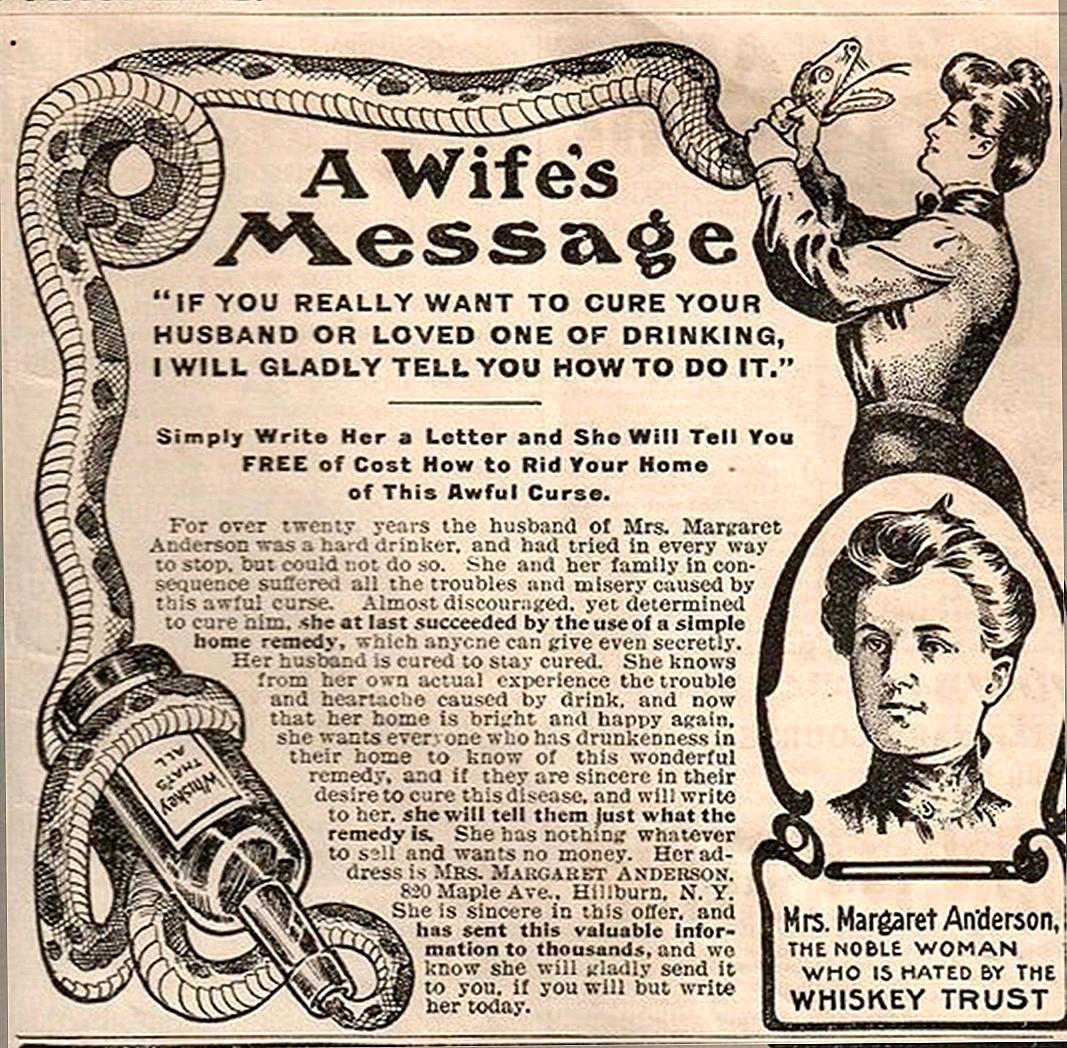
The Whiskey Trust Hates Her for this Simple Home Remedy! 1905
“The reader has very likely seen in the public prints an alleged picture of Mrs. Margaret Anderson of Hillburn, New York, who “cured her husband of drinking,” and wants to tell you how to cure yours, free. “She has nothing whatever to sell,” says the advertisement. True. But the Physicians’ Co-operative Association, a quack organization of Chicago, for which Mrs. Anderson is stool-pigeon, has something to sell. That something is Alcola. “The Conqueror of King Alcohol.” Mrs. Anderson’s correspondents are recommended by her, in a skillful imitation of a hand-written letter, to buy Alcola and be saved. Alcola is the same kind of fake as the rest of the “given in secret” cures.”
Samuel Hopkins Adams, “The Great American Fraud”, 1907
From a subsequent article about Alcola:
“The trial treatment comes swiftly. It is 3 tablets of yellow, chocolate color, and pinkish gray. They can be slipped into a gentleman’s coffee when he isn’t looking . The “complete treatment” costs $5. If you don’t order it in a reasonable time, you get letter after letter from the Physicians Cooperative Association, winding up with a “personal” letter from the “medical director,” Dr. Edward F. Stace, urging purchase of the stuff at specially reduced price. Well, the American Medical Association Journal, which prints the foregoing facts in its May 4 1907 number, has been analyzing the-tablets in its laboratory and has found that they contain poison. Says the Journal: Tablets No. 1 and No. 2 contain strychnine, while Tablet No. 3 contains tartar emetic to induce vomiting.”
Shakshuka is better than winning the Darwin Award
I had a meeting at 11 am at a local coffee shop. It’s been raining hard nonstop since Monday morning. This is not unusual back east, but it is unusual here, and because the drainage infrastructure isn’t built for it, it’s a cause for concern. We’ve had a lot of flooding. Not in my neighborhood—we’re fine—but elsewhere in San Diego, during another round of storms last week, cars were swept away and people had to be rescued.
I put on my rain jacket and hat and drove to the coffee shop. I got there about 20 minutes early. Every seat was full but that’s fine—I’m comfortable standing—so I stood there and drank my coffee.
A man wearing an Apple Vision Pro walked by me to approach the counter. When he walked by me the other way, I stopped him and I said, with no preamble or introduction, “Do you like it?” He knew what I was talking about, of course. He said he did like it. He said he edits video and he had two screens open and also his email. I said, “Now? While we’re talking? While you were at the counter?” He said yes. He was wearing the Vision Pro the whole time.
My meeting arrived a little early. A little more than half-hour in, every phone in the still-crowded coffee shop went off. We all looked at our phones. Tornado alert. Take shelter in a basement or somewhere away from windows. I happened to have gotten a table very far from the window, so I figured we were good.
I messaged Julie to check on her. She said she was going to get the dog and sit on the floor in the back hall, and try to get the cats too.
After a few minutes of no tornado, I thought about driving home. Could I beat the tornado? That seemed like maybe a bad idea, but on the other hand, I’m on a deadline today.
By now, it was after noon, and I decided to check and see what the place served for lunch. They had shakshuka. I love shakshuka. I thought about the options: Drive home during a tornado warning and not have shakshuka and maybe get killed and win a Darwin Award? Or stay in the coffee shop, have shakshuka, not get killed and not win a Darwin award? I went for the shaksuka option.
There was no tornado. It stopped raining. The shakshuka was delicious. The meeting was excellent. I left for home and arrived at about 1:15 pm. The sun was out, even though the forecast called for a solid wall of rain Monday through Thursday.
And that’s pretty much my day so far.