Posts in "Books"

The friendship worked, the physics didn't — a review of the novel "Project Hail Mary," by Andy Weir

Parts the novel “Project Hail Mary,” by Andy Weir, were compelling and even moving. Those were the parts that involve interactions with the characters and advancing the plot, particularly the warm friendship that grows between the human hero and alien Rocky.

I found the speculative technology and science less compelling. I know that it was meticulously and scientifically worked out, but it all read like Star Trek or Doctor Who technobabble to me and I found my eyes skating over pages and pages and pages without taking in anything I’d read.

Overall, I found the book enjoyable and even gripping in parts, but I don’t know whether I will read another Andy Weir book. I am not the audience.

There was one hugely implausible element to the book: The premise that all the nations of the world might come together to save the world against an invisible threat. Given how many people still believe Covid was a hoax, I fear that’s not how it would work out.

I had the same problem with the otherwise brilliant Last Policeman trilogy by Ben Winters, which is a series of police murder procedurals set in a small Massachusetts city during the final six months before an asteroid is due to strike the Earth and wipe out all life. Everybody in the world knows the asteroid is going to hit and the novel is about what you’re going to do when you know the world will come to an end in two years. I don’t remember any of the characters in the novel saying the asteroid is a hoax — astronomers go on TV to announce the news and everybody just believes it to be true.

2001 profile of Vernor Vinge, the brilliant science fiction writer and computer scientist. By Katie Hafner at The New York Times:

A linchpin of his thinking is what he calls the “technological singularity,” a point at which the intelligence of machines takes a huge leap, and they come to possess capabilities that exceed those of humans. As a result, ultra-intelligent machines become capable of upgrading themselves, humans cease to be the primary players, and the future becomes unknowable. Dr. Vinge sees the singularity as probable if not inevitable, most likely arriving between 2020 and 2040.

Vinge passed away in 2024, after a struggle with Parkinsons. I wonder what he would have made of AI today. Would he have thought we were truly on the verge of the singularity? Would he have thought we had already passed it? Or would he have thought it was all a Ponzi scheme?

Via Cory Doctorow @pluralistic@mamot.fr — thanks!

I read three print books and have no big thoughts about it.

I have done nearly all my book reading as ebooks since 2010. However, I was unable to find ebook versions of the “Funny Papers” trilogy by Tom De Haven, so I bought print versions.

The experience reading print books after years of electronically was … fine.

It confirmed I prefer ebooks, not for any grand philosophical or esthetic reason, but just because they’re more convenient.

But faced with the same choice again — wanting to read a book that is not available as an ebook — I’ll get the print book in an instant.

Book review: The boy in the derby hat — Tom De Haven's "Funny Papers" trilogy

Tom De Haven’s Funny Papers trilogy is a sprawling, picaresque romp through the lives and neuroses of the men responsible for creating a wildly popular comic strip over a period spanning more than a century.

The first novel in the series, “Funny Papers” tells the story of Georgie Wreckage, a dour but oddly likable illustrator for the yellow scandal newspapers of 1890s New York. In the era before newspapers could publish photos, Georgie rushes to the scene of grisly crimes and disasters and draws them for the benefit of readers. The work suits Georgie’s gloomy demeanor and he loves it.

One day, Georgie finds an odd-looking boy at the periphery of a murder scene, a bald kid wearing a derby hat and nightgown, with a dog named Fuzzy. Georgie draws the boy and dog and suddenly the artist finds himself a celebrity cartoonist — rich, famous, and miserable. The boy, whose name is Pinfold, is baffled, meanwhile, to find that a fictional version of himself is now famous.

There is nothing cute about Pinfold in real life. He’s bald because a gang of boys set him on fire for sport and he’s wearing a nightshirt because his street clothes were soaked in blood during the murder.

Despite the grim events, Funny Papers is joyful and energetic, exploring the streets of 1890s New York and its denizens, easily following a dozen colorful characters.

The sequel, “Derby Dugan’s Depression Funnies,” jumps 40 years in the future, to 1936 New York. Each book in the series stands on its own — I read the second book first, unaware that was part of a series, and I’ve reread it several times over the past 30 years.

The boy in the derby hat now has a new name, Derby Dugan, and new creators. Al Bready, the first-person narrator of the novel, writes the scripts for the strip, with another man serving as boss, artist and the public face of the team. They are close friends, though Bready denies it and claims he doesn’t even like his boss. Bready certainly has no reason to like the artist, who has achieved fame and fortune from Derby Dugan, goes to fashionable parties, beds beautiful women and lives in a mansion, while Bready toils in anonymity, lives in a one-room apartment and only owns one pair of shoes. And yet Bready is happy, and why shouldn’t he be? He’s young, healthy and a prince of the city.

The story is reminiscent of Damon Runyon — or a comic strip — filled with colorful characters and told in Bready’s snappy, street-smart voice. He’s a pulp writer and an autodidact but he knows how to use a semicolon

I reviewed Derby Dugan’s Depression Funnies in 2010: A talking dog and puckered shoes: Derby Dugan’s Depression Funnies

Gotta admit I didn’t care much for the third novel, “Dugan Under Ground,” which jumps ahead 30 years to the early 60s and 70s and then jumps ahead again to the year 2000. Derby Dugan has been canceled due to poor circulation, but revived in an unauthorized underground comic. He’s now the Imp Eugene, whose X-rated adventures have a cult following of maybe about a dozen people. Like the first two novels, the main characters of “Dugan Under Ground” are the comic’s neurotic creators, but unlike the first two novels I just didn’t enjoy spending time with these sad sacks. “Dugan Under Ground” leaves midcentury New York — a place and time I have a lifelong romantic attachment to — and follows the characters from suburban New Jersey to late 60s hippie San Francisco and back.

The author, Tom De Haven, has also written a novel about Superman, “It’s Superman,” which alters the core mythology in intriguing ways that I think work even better than canon. “It’s Superman” is based on the comic strip’s very early days. He’s also written a history of the Superman character, “Our Hero: Superman on Earth, which sounds almost like another volume of Derby Dugan; it’s high on my to-be-read list.

Something I noticed re-reading Roger Zelazny's "Doorways in the Sand"

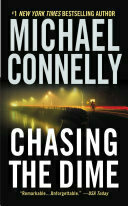
I recently re-read Roger Zelazny’s “Doorways in the Sand,” which I last read when I was a teen-ager. I loved it as much today as I did then. One of my favorite Zelazny books, which makes it one of my favorite books.

In that novel, a character in his 60s is looking back on his life and says that the world goes through one massive change after another—but they happen one at a time, spaced out at long intervals, and after each change life goes back to pretty much what it was before, so you can convince yourself nothing has changed.

Then you look back over the course of 40+ years and the world is completely different from when you were 20 years old.

I glided over that passage when reading it first as a teen, but re-reading it again over the past few months it hit me hard.

In my adult lifetime, we’ve seen the emergence of he Internet, smartphones, the rise of China, the end of the Cold War, Covid, Donald Trump, the fall of the USSR—after each of these events, we could say, “That was a big deal but still our day-to-day lives are not much different than they were before” And yet you put it all together and the world is very, very different than it was in 1981.

This rule does not apply if you or someone close to you is personally affected by any of these global changes. And these changes can affect hundreds of millions of people — that’s what makes them global. But billions of people are not directly affected by these changes. For them, each individual change is a jolt and then life goes on mostly as it has done before.

My 15 minutes of badass literary scholarship

In another online community, somebody asked for the title and author of a story about humans encountering another race that seemes to live a simple agrarian life. When asked how they generate electricity, or other questions about advanced technology, the agrarian person responds that they don’t know. 

Later, it becomes clear this other race is far advanced of humans, with great psychic powers. Asking them about electricity and such is like asking us about the best kind of wood to rub together to start a fire—something our distant ancestors knew but almost nobody today does. 

Other people on the community had their guesses, even asking ChatGPT. But I said to myself, “That sounds like a story I read when I was a kid. The author was John Campbell.” And I did about 15 minutes of Googling and replied thus:

Sounds like “Forgetfulness” by John W. Campbell, writing as Don A. Stuart, in Astounding Stories, June 1937 https://archive.org/details/Astounding_v19n04_1937-06_-ibcbc_fiche-paper

I am feeling hugely badass about this successful act of Internet research. 

The original questioner misremembered at least one key detail: The star travelers aren’t humans—they are aliens from a civilization in the distant future. They land on a planet called “Rhth” (get it?) and believe the simple agrarian folk to be the degenerate descendants of a once mighty high tech empire. They pity the simple agrarian folk, but then learn better. 

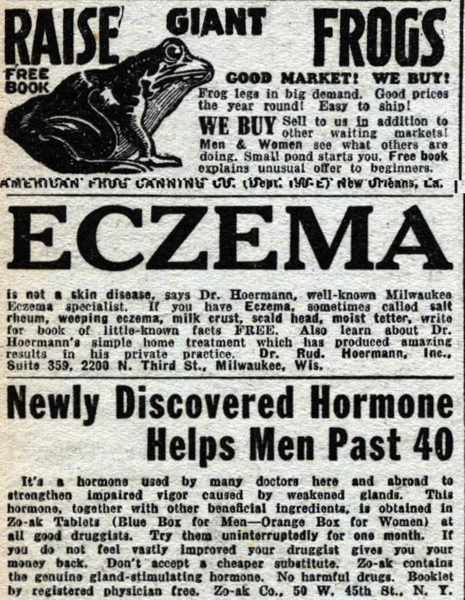
The above link is worth following for the ads alone. The magazine has a gajillion small ads, and they are all like this: