
Sitthroughable
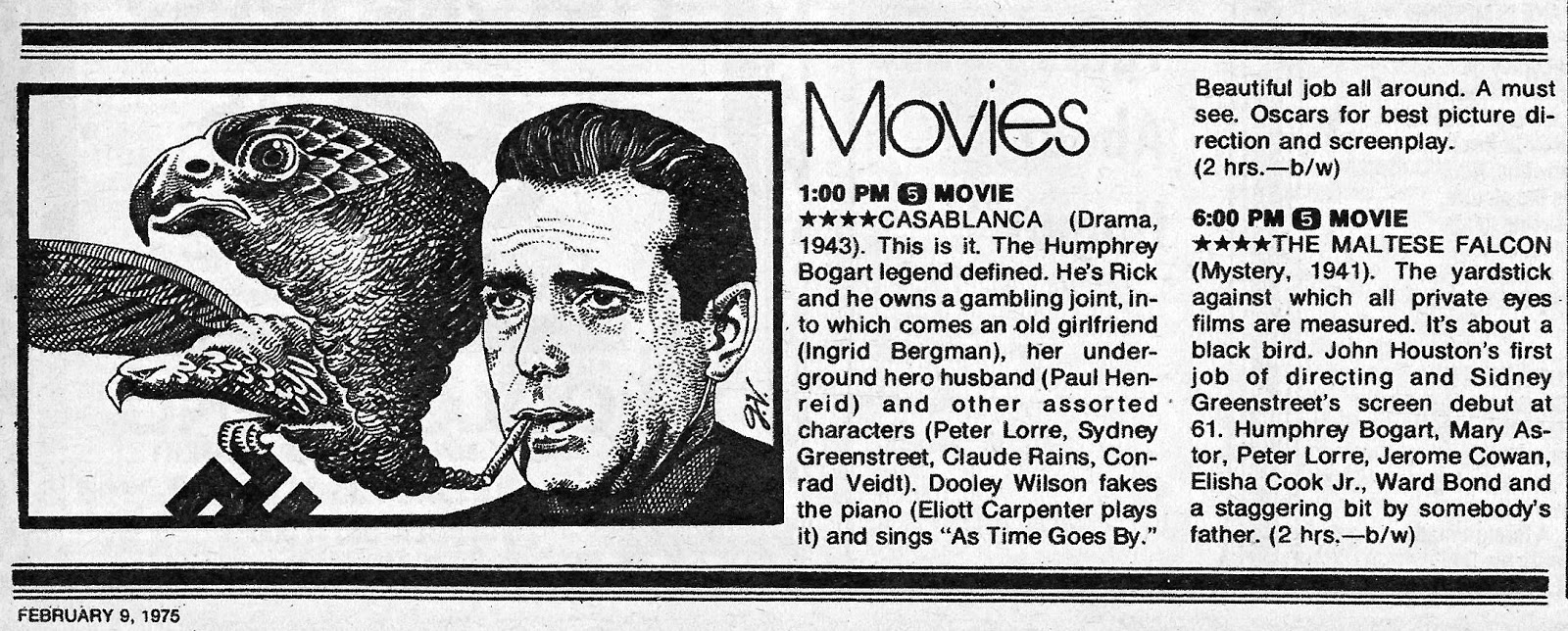
Growing up on Long Island in the 1970s, I loved reading the capsule movie reviews that ran in the television guide for the daily newspaper, Newsday. The reviewer, who worked anonymously for much of his career, wrote little jewels, often deliciously snarky, just a few words or a couple of sentences long, that summed up the movie and his opinions of it.
His trademark was the word “sitthroughable,” which is self-explanatory. He also had other catchphrases, including: “Buy the premise, buy the flick,” to describe horror movies and other genre oddities.
Examples of his reviews:
The Americanization of Emily (1964) “The political ethics of the military are stomped in this wartime morality story written by Paddy Chayefsky. It concerns some Navy brass maneuvers and a running love/hate affair between James Garner and Julie Andrews. Cynical, witty and wise.”
Blood on the Arrow (1964) “If you don’t think an attempt to rescue a small child from a band of Apaches can be dull, try this.”
Cleopatra (1963) “The best and the worst that can be said about this celebrated expenditure of money, time, effort and talent is that it is dull. And, despite what you’ve heard, it’s Rex Harrison’s picture, if he wants it. Elizabeth Taylor is beautiful. Richard Burton too often acts like a man who can’t find the men’s room. The pomp and circumstance is there, but for the other two hours it drags.”
Creatures of Destruction (1968) “A hypnotist seems to have mystic powers. There is no doubt that he can put you to sleep.“
The Dark Angel (1935) “Merle Oberon loves both Herbert Marshall and Fredric March, who both love her. WWI arrives to further complicate things. Top grade soap.“
The Devil’s Rain (1975) “Concerns a group of devil worshipers (Ernest Borgnine plays the head devil’s disciple) somewhere in the Southwest who have traded their souls for wax bodies and tar-filled eye sockets, which melt and gurgle at the slightest provocation. The best that can be said is that it is not quite the worst movie ever made.”
And so on and so on.
A blogger has painstakingly assembled more than 900 of these reviews, along with a few scans of the actual TV guides in which they appeared, and I have read and enjoyed every one. The blog is called, appropriately enough, “Sitthroughable.”
The author of the Sitthroughable blog is apparently anonymous — if he gives his name, I can’t find it.
And like the blogger, the Newsday movie reviewer worked in anonymity for much of his career. But he eventually de-cloaked and revealed himself to be John Cashman, who previously worked for Newsday as Nassau County day editor, wrote four books, had written more than 4,000 reviews for the TV Book as of 1974, and kept going for years after that. He was nominated for a Pulitzer in 1964 for a piece titled “Negroes Without Schools,” owned a bookstore, taught school and died in 1985.
The artist who illustrated many of these reviews was named Gary A. Viskupic, and he did a fantastic job.
The author of the Sitthroughable blog notes correctly that these reviews are evocative of a bygone era in mass media, where you had a half-dozen channels of TV (fewer than that in smaller markets), no streaming, no movie rentals, so if you wanted to watch TV, you turned on the box and took your pick of the meager offerings available. Sometimes you found a jewel like “The Maltese Falcon.” Sometimes it was a mediocre, sitthroughable bit of cinema that passed the time and maybe had one or two great scenes or snatches of dialogue.
In addition to the Cashman blog, the Sitthroughable author hosts another blog, with the excellent name “Don’t Parade on My Rain,”where he posts scans from his collection of Newsday TV Books from 1974-83. The design of those books was outstanding, evocative of the 70s without being kitschy. He has a Facebook page too.
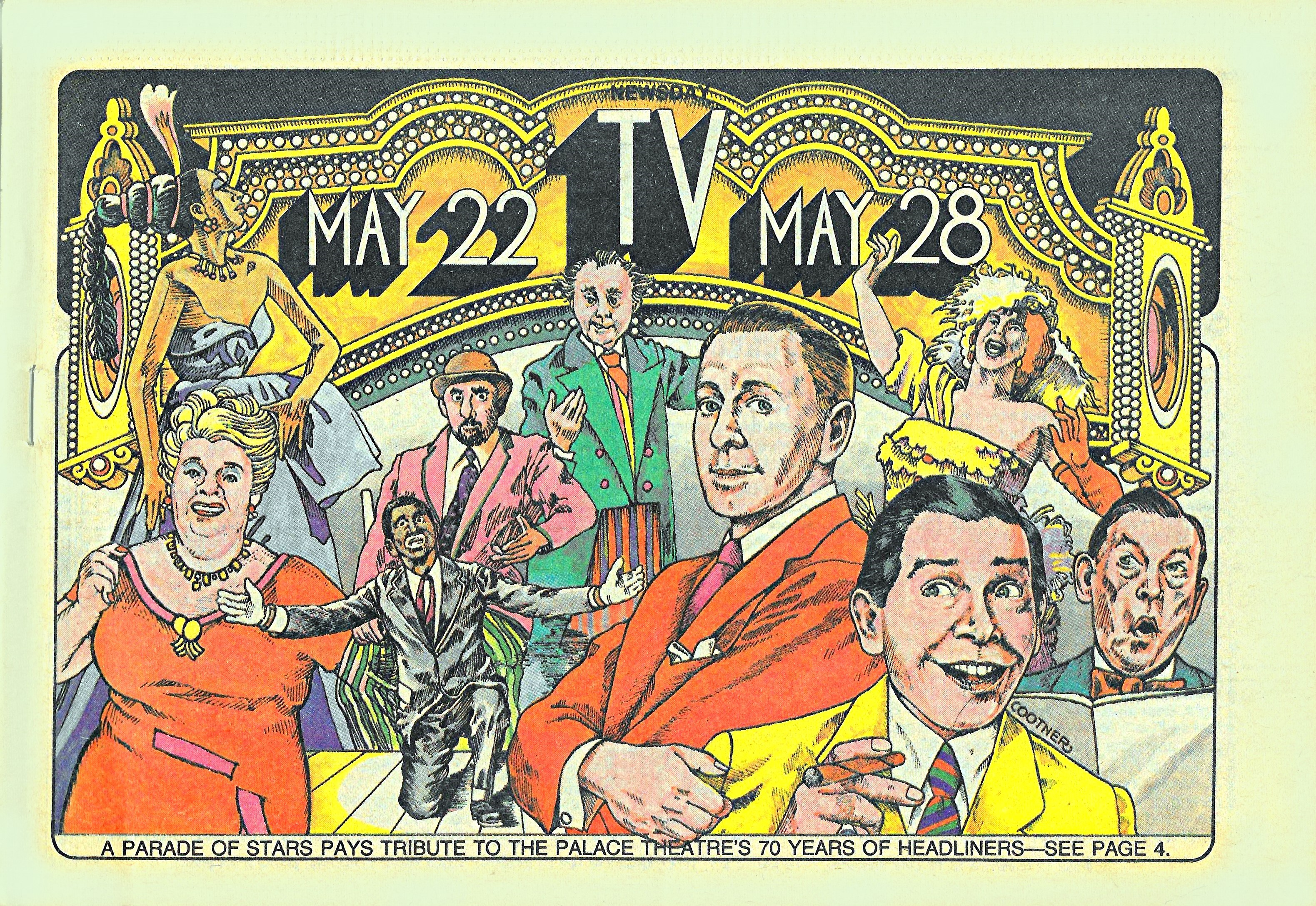
The two blogs are are artifacts of the good old web — still surviving and going strong but easily lost in the shadow of Facebook, YouTube, TikTok and the other big social silos — where you could build a website, maybe about some weird niche interest, and that site would not get buried in the constantly updated feed, but would instead hang in there for 20 years until somebody like me came along to appreciate it.
And Chapman’s career is an artifact of the good old days of newspaper journalism, when a writer could master an idiosyncratic form of short-form writing comparable to haiku, sonnets — or today’s microblogging — and share it with local readers.